Monday 8 June 2026, 9-12 am
I had the pleasure of taking Moss Safari to Leechpool Primary School for a full morning of moss, microscopes and microscopic animals.
Across the morning, three groups of about 20 pupils took part in the Moss Safari experience. After an introductory assembly, each group completed three linked sessions: a hands-on microscope session, an outdoor moss hunt (one group had to do the alternative indoor activity due to rain!), and a classroom based activity on adaptations of moss and the animals that live in it.
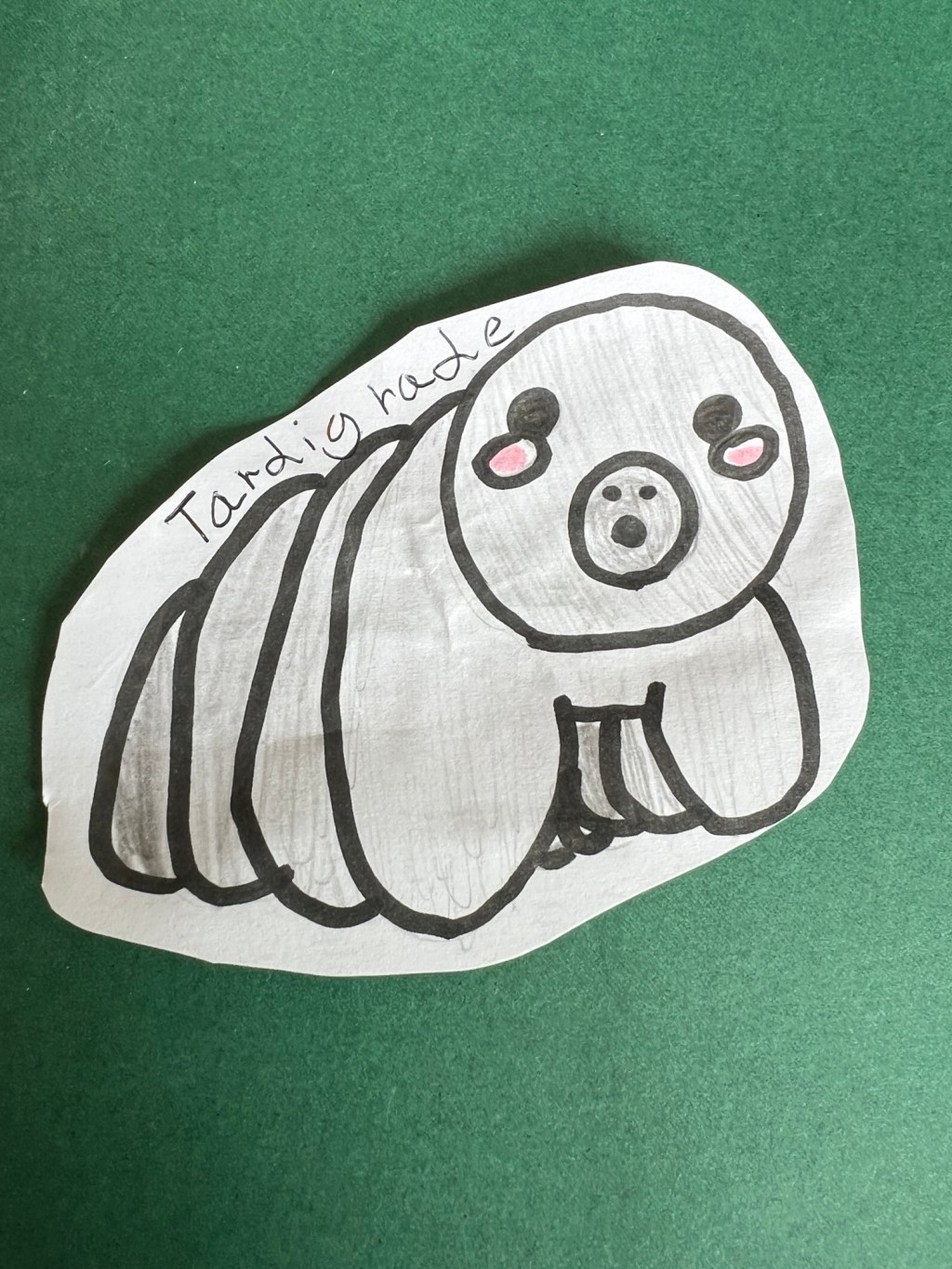
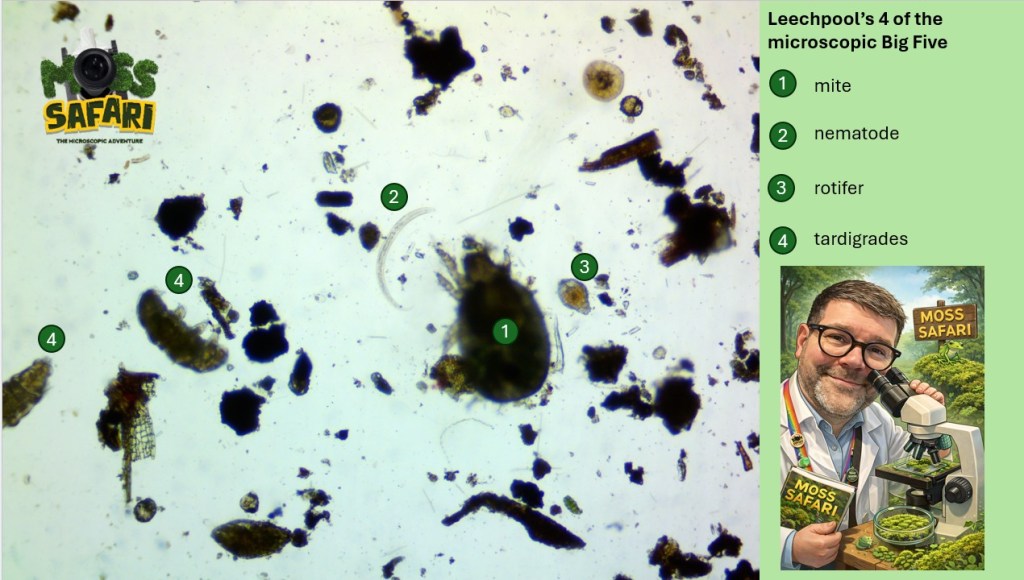
It was a brilliant morning. The pupils were curious, thoughtful and wonderfully enthusiastic. There were plenty of “wow” moments, but one stood out in particular: on one microscope slide, we found four of the Microscopic Big Five. One slide. Four of the five. That does not happen every day.
Thankfully, we managed to capture the moment in a photograph and some video.
Moss Safari Aim 1: Connecting with nature
One of the main aims of Moss Safari is to help children connect with nature in a new way.
Moss is easy to overlook. It is small, soft, green and often just part of the background. It grows on walls, paths, trees and roofs. Most of us walk past it without thinking too much about it.
But when pupils look more closely, moss becomes something very different. It becomes a habitat.
During the sessions, pupils discovered that a small piece of moss can contain a hidden world of living things. Their feedback showed how powerful this was. Many pupils said the most interesting part of the day was seeing “tiny creatures”, “little animals”, “bugs”, “water bears” and “what lives in moss”.
That is exactly what Moss Safari is about. It helps pupils realise that nature is not only found in woodlands, ponds, beaches or nature reserves. It is also there in the cracks in the pavement, on the school wall, and in a handful of damp moss.
Even with the rain affecting one group’s outdoor moss hunt, pupils still experienced moss as a living microhabitat. Sometimes the most exciting wildlife encounter starts with something you have probably stepped over hundreds of times.
Expedition notes
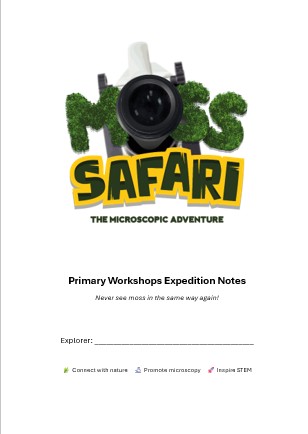
Ahead of the session, the school gets a bespoke Expedition booklet to copy for each participating child. The children fill this in during each activity, keeping all their notes in one place.
All activities are curriculum linked
Moss Safari Aim 2: Promoting microscopy
The second aim of Moss Safari is to promote microscopy and hands-on science.
For many pupils, using a microscope is still a rare and memorable experience. At Leechpool, the microscopes were a clear highlight. Pupils loved preparing samples, looking carefully, spotting movement, comparing what they saw, and calling others over when they found something exciting.
The feedback was striking. Almost every pupil said they enjoyed the sessions, and 92% said they would like to use a microscope again.
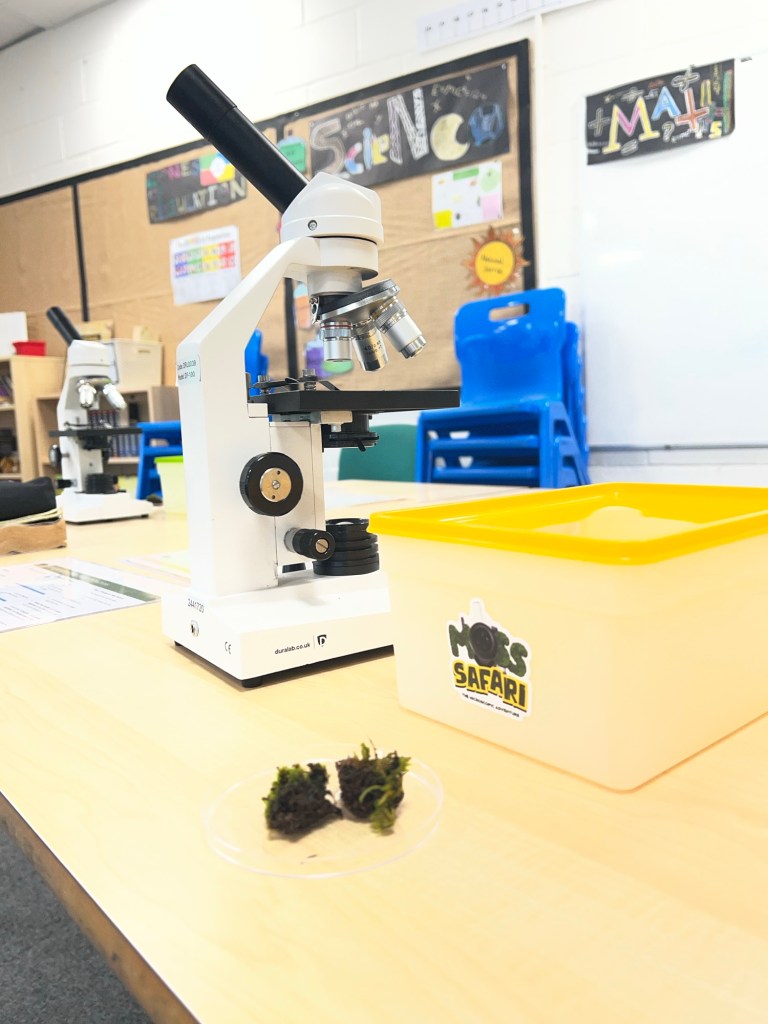
Microscopy gives pupils direct access to a world they cannot normally see. It slows them down. It asks them to look carefully. It encourages patience, observation, comparison and discussion. It also gives children the feeling that they are doing real science, because they are.
There is something very special about hearing a pupil say, “I’ve found something!” and then seeing a small crowd gather round the microscope. The excitement comes from genuine personal discovery.
The slide with four of the Microscopic Big Five was the perfect example. Pupils were not just being shown pictures of microscopic animals. They were seeing them for themselves.
Moss Safari Aim 3: Inspiring STEM curiosity
The third aim of Moss Safari is to encourage pupils to see science as something they can do, enjoy and perhaps continue exploring as a hobby, interest or future career.
At Leechpool, we focused particularly on adaptations. We used a simple structure: feature, function and benefit.
In the assembly, pupils were introduced to the idea that an adaptation is a feature that helps a living thing survive. We then returned to this idea during the microscope session. Pupils were encouraged to look at what they could see and ask:
- What feature can I see?
- What does it do?
- How might it help the organism survive?
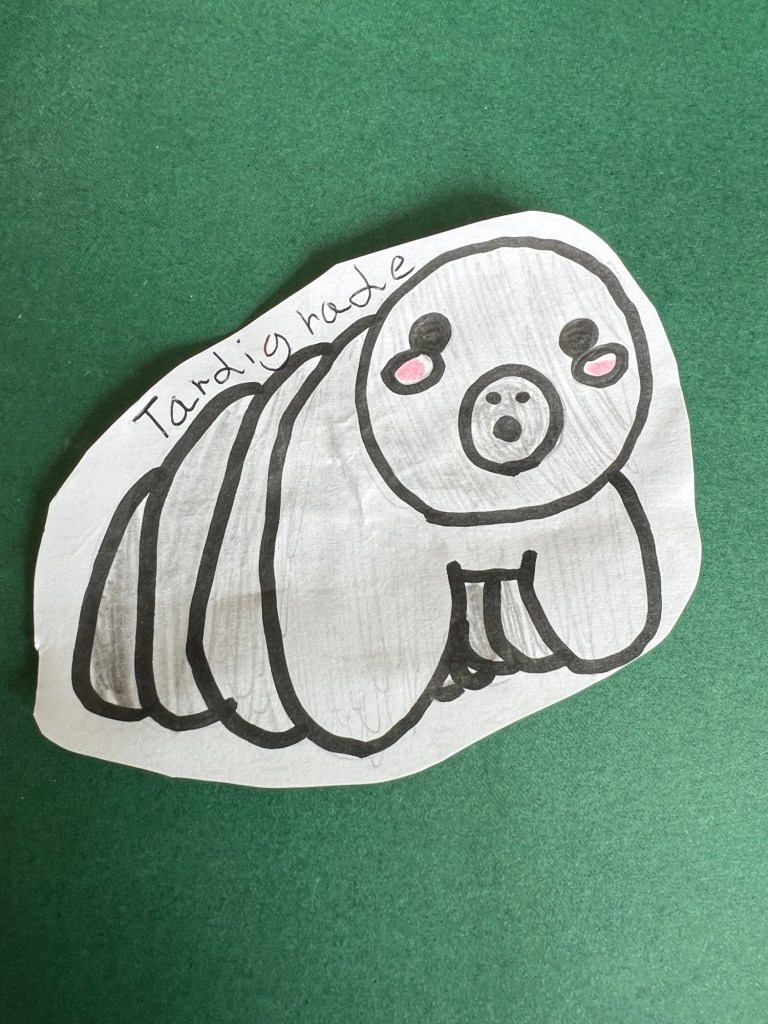
This worked particularly well with the Microscopic Big Five. Pupils noticed and discussed examples such as tardigrades forming a tun to survive drying out, rotifers using their wheel-like structures to create currents and collect food, and moss being able to grow in small spaces where other plants might struggle.
Some pupils were already beginning to use the language of adaptation clearly in their feedback. Others were still at the stage of naming organisms or spotting features, which is exactly where this learning begins. The important thing is that they were observing, questioning and trying to explain.
Teacher support
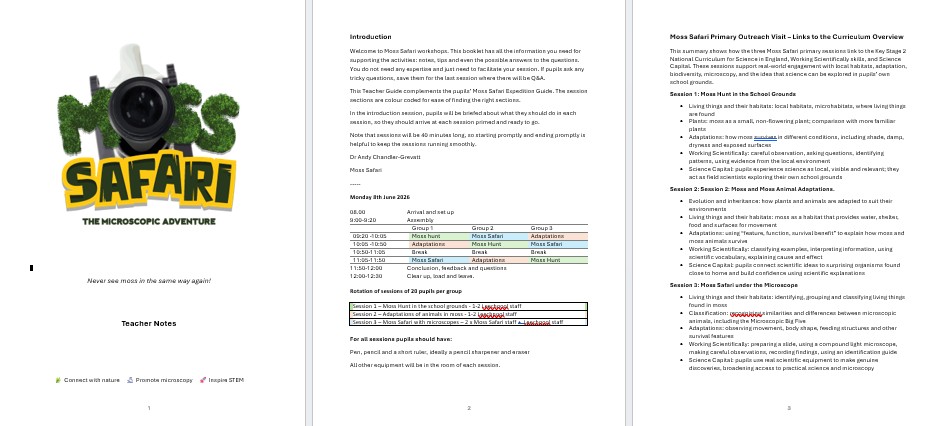
Teachers get their own guide with the session plan, questions and answers to support the activities
Start the day prepared
What did the pupils say?
The pupil feedback was extremely positive.
- 98% said they enjoyed the Moss Safari sessions.
- 92% said they learnt something new about moss.
- 92% said they would like to use a microscope again.
When asked what would make the sessions even better, the most common answer was simple: more time.
More time on the microscopes.
More time finding creatures.
More time doing Moss Safari.
That is probably the best kind of improvement suggestion.
Pupils also wanted to see all of the Microscopic Big Five, find more tardigrades, discover a gastrotrich, and keep exploring. Several pupils mentioned the rain too, which was fair enough. Even Moss Safari has not yet found a reliable adaptation for stopping British weather.
Why this matters for schools
Moss Safari works well in primary schools because it brings together several powerful parts of science learning.
- It is hands-on.
- It is accessible.
- It uses real living organisms.
- It links directly to habitats, adaptations, classification, observation and working scientifically.
- It gives pupils an experience they remember.
The Leechpool pupils did not just learn that moss is a plant. They discovered that moss can be a miniature ecosystem. They did not just learn that animals have adaptations. They looked at tiny animals and tried to work out how those features might help them survive. They did not just hear that microscopes are useful. They used them to reveal a hidden world.
For schools, Moss Safari can support science curriculum learning while also adding something distinctive, memorable and exciting. It is particularly powerful because it uses something ordinary and local. You do not need a rainforest, coral reef or safari park to find fascinating wildlife. Sometimes you just need moss, water, a microscope and curiosity.
Impact review
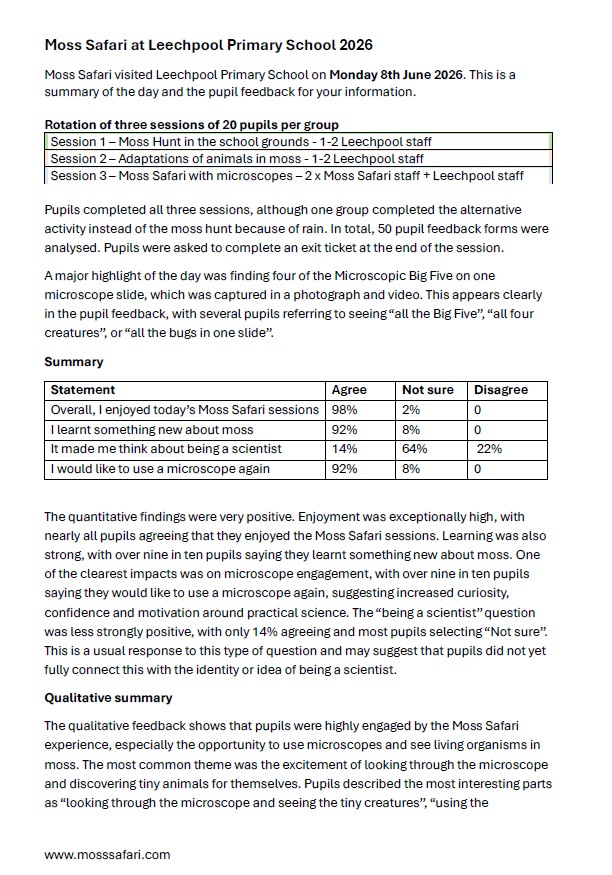
The pupils complete an exit ticket to help us evaluate the impact of Moss Safari, celebrate the successes and identify improvements for future events. This is shared with the school to help inform their planning.
A huge thank you
Thank you to Leechpool Primary School staff for welcoming Moss Safari, and to the pupils for their enthusiasm, careful observations and excellent questions. Also to Sarah Poore and Piper the Brighton University Technician who looks after the microscopes.
As ever, this event is only possible because of the generosity of VITTA Education in donating the fantastic microscopes for Moss Safari outreach. We use the BMS DF-100 Classic Monocular Microscope, the perfect microscope for an enthusiastic Year 6 going into Year 7.
The morning reminded me why I love doing this work. Put a microscope in front of a child, show them how to look closely, and moss is never just moss again.
If your school would like to host a Moss Safari session, I would love to hear from you. Moss Safari visits can be adapted for different year groups and can include assemblies, microscope workshops, moss hunts, adaptation activities and links to the science curriculum.
Who knows what your pupils might find in a handful of moss?


