Overview
I like to review the work of Moss Safari at the end of each calendar year. It is, in reality, just me and my passion (some might say obsession) to get mosses to the masses. I have a couple of people who actively help me, Sarah Poore and Jude Dean, but the bulk of the work behind the scenes is just me, encouraged by you, the people who engage with and use Moss Safari and its resources.
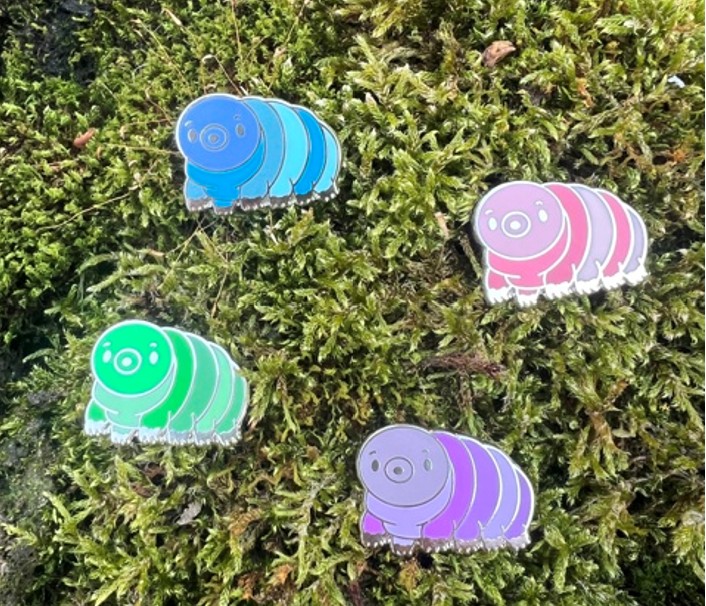
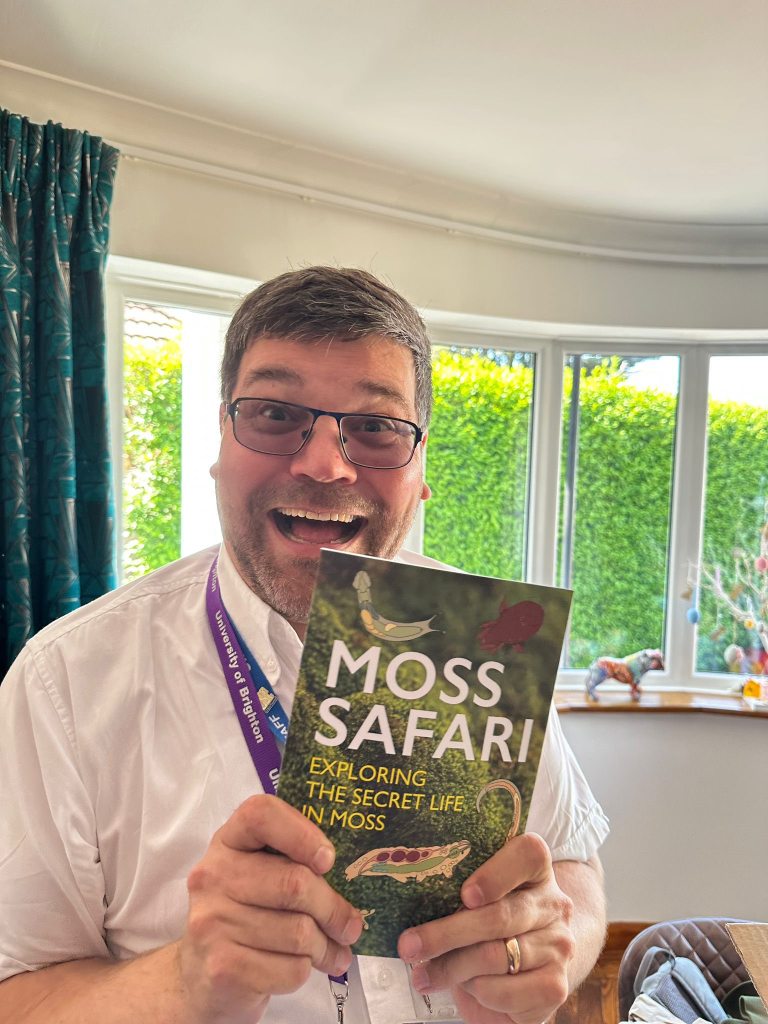
This year had two significant milestones: after two years of writing, the Moss Safari book was published by Pelagic Publishing and, alongside the free resources, Moss Safari now has its own merchandise to help finance some of the activities.
I work part-time, with my “proper job” training science teachers at the University of Brighton. I use some of my two days each week to develop Moss Safari. In 2025, Moss Safari delivered a programme of public engagement, education outreach, professional development, and digital dissemination. Activity spanned schools, national conferences, public science festivals, academic and professional audiences, and a growing international online community.
Full details of all the activities are in the Appendix at the end of this blog.
Live engagement and outreach
Professional and conference engagement
Moss Safari contributed to teacher and technician professional development in 2025. At the ASE Annual Conference, three sessions engaged at least 100 education professionals, including teachers, educators, and science technicians, focusing on microscopy, science capital, and practical delivery. Further professional engagement included a training session for the Botanic Gardens Education Network (approximately 20 participants) and participation in the Centre for Environment and Society (CES) Conference, engaging 70 academic and professional stakeholders.
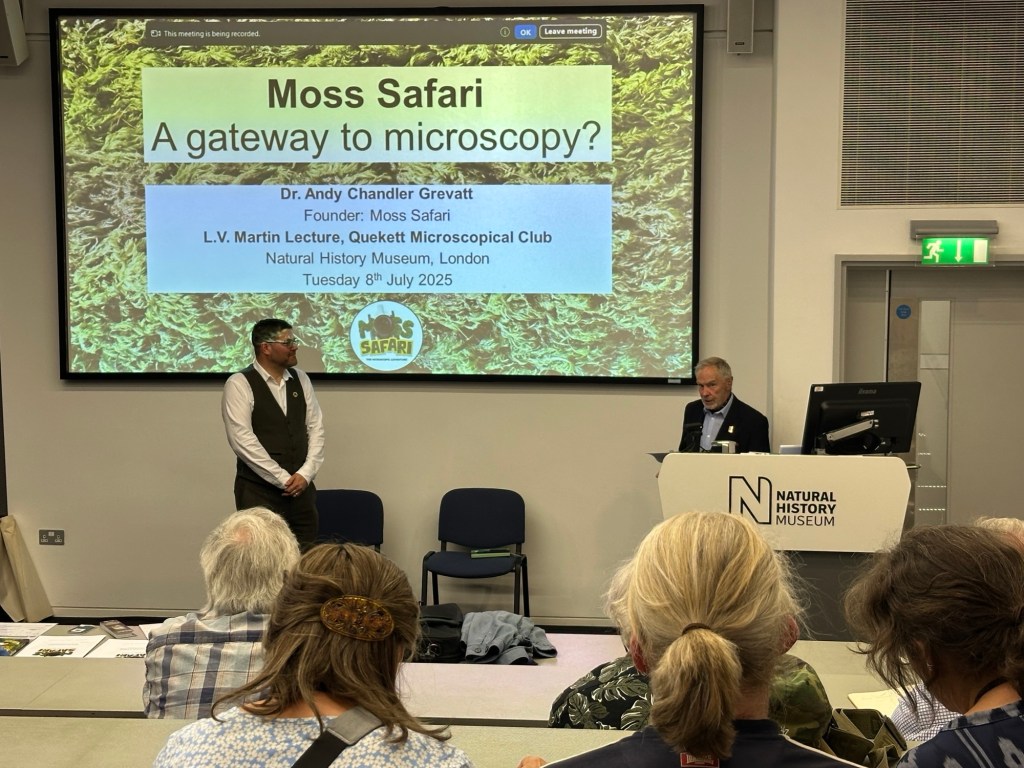
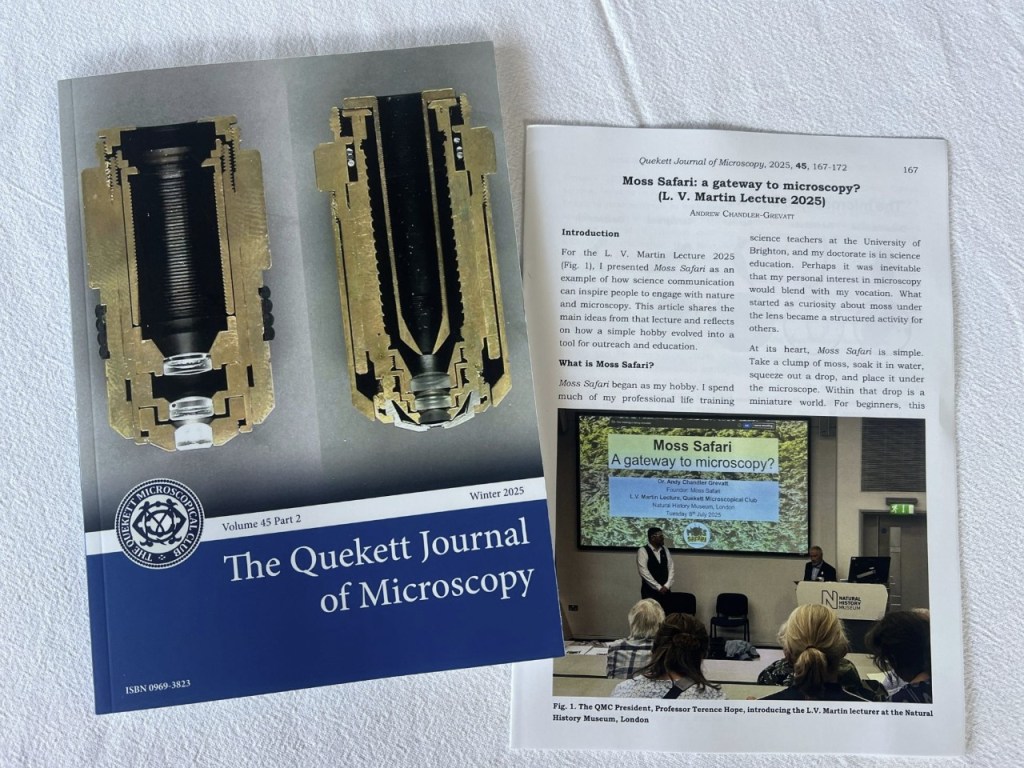
A particular highlight for me was being invited to give the L.V. Martin Lecture for the Quekett Microscopical Society at the Natural History Museum in June, which reached approximately 60 participants, including 15 in-person attendees and an international online audience of around 45.
Schools and further education outreach
Activities included:
- 23 Year 4–5 pupils participating in In Search of the Water Bear
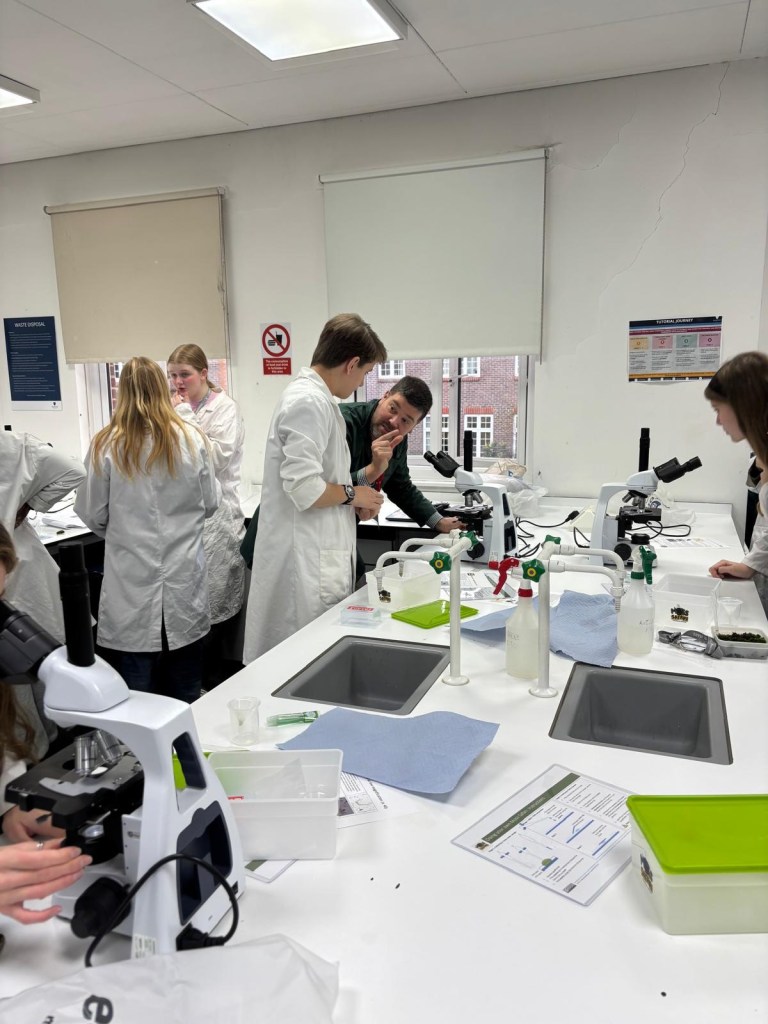
- 88 Year 6 pupils and 6 teachers engaged in a primary school Moss Safari hosted by the University of Brighton
- 100 Year 9 students at Lewes Old Grammar School
- 22 post-16 students (T Levels) at Plumpton College
In total, Moss Safari directly engaged 233 pupils and students and approximately 30 school-based teachers through curriculum-linked outreach.
Thanks to the 15 microscopes gifted to me by VITTA Education, I am able to run many of these sessions, bringing good-quality school microscopes to places where they do not have them.
Public engagement
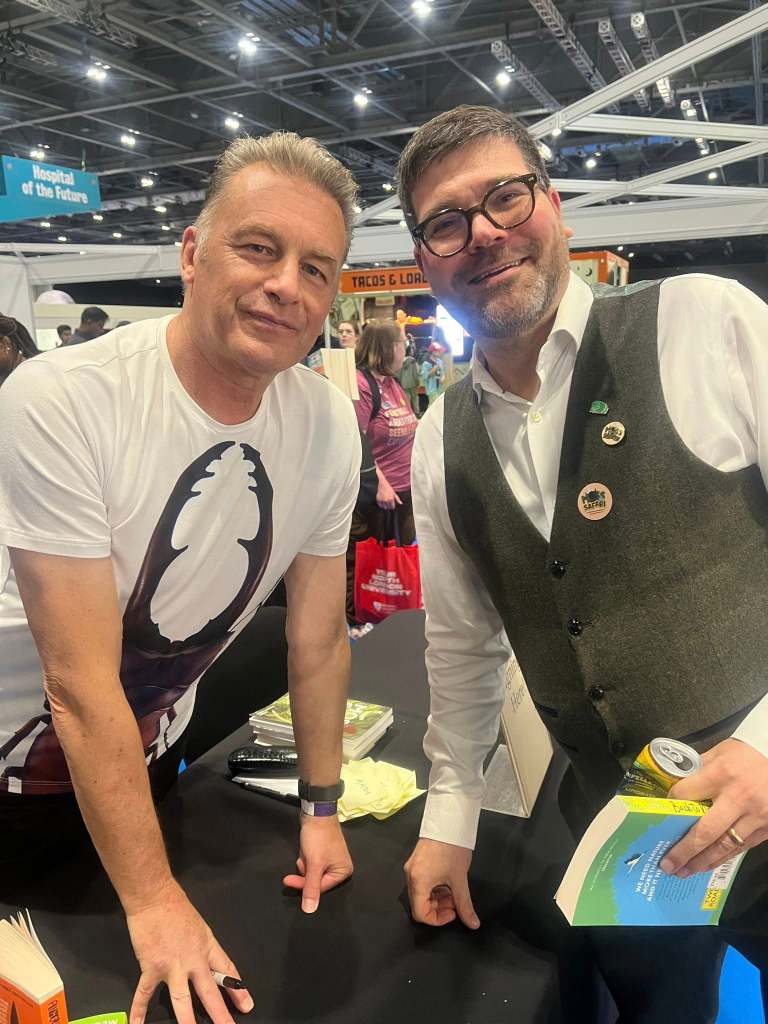
The online book launch for Moss Safari attracted 120 registrations, with 32 members of the public attending live. Moss Safari also participated in New Scientist Live 2025, with an estimated 300 public interactions. Plus, I got to meet briefly the wonderful Chris Packham.

Digital reach and resource use
Website reach
In 2025, the Moss Safari website received 28,800 views from over 8,000 visitors. Over one-third of all website views since launch occurred in 2025 alone. Twenty-four new posts were published. Key pages driving engagement included the Resources page, How to do a Moss Safari, and Events & Projects.
Educational resource downloads
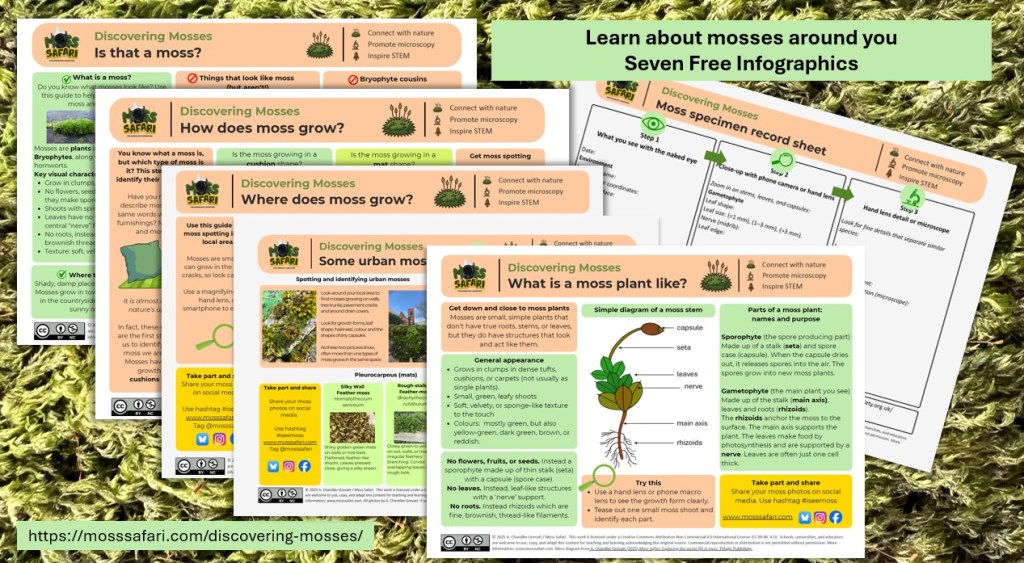
The new Discovering Mosses resource series was downloaded hundreds of times, with individual resources regularly exceeding 100 downloads. Professional development materials linked to the ASE Conference were also widely accessed, with 50–65 downloads per resource.

Moss Safari: the book
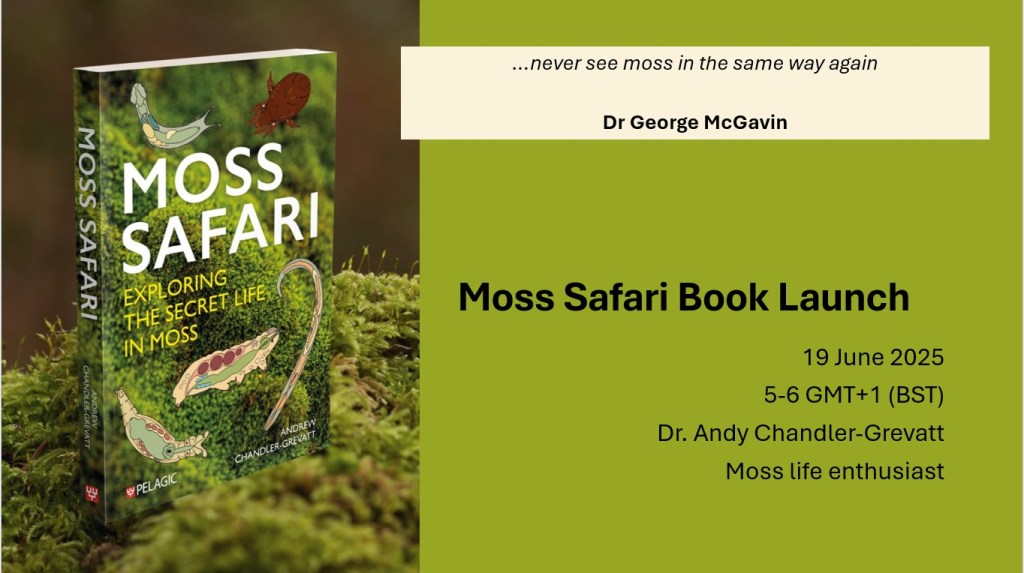
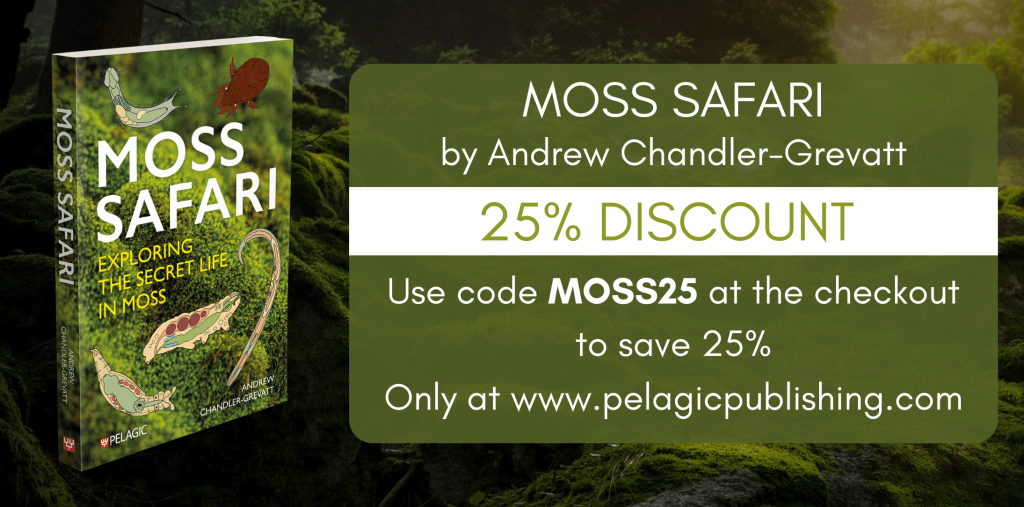
The book was available for pre-order in February 2025 and was published in the UK in June 2025. I held an online launch, which was well attended. Since its launch, I have had lots of interest from organisations and individuals regarding the book, Moss Safari, outreach, and science communication.
In December 2025, it was announced that the Moss Safari book has been shortlisted for the Association for Science Education’s Book of the Year Award 2025. The winner is announced in January 2026.
Reviews
There has been widespread support for the Moss Safari book, with five 5-star reviews on Amazon and a number of reviews by peers in the microscopy, biology, and science education disciplines. These include:
- Follows, M. (2025) Moss Safari: Exploring the Secret Life in Moss, review, The Biologist: Royal Society of Biology Book Reviews, 5 December. Available at: Royal Society of Biology (accessed 31 December 2025). thebiologist.rsb.org.uk (Open access)
- Ramaswamy, E. (2025) Review of Moss Safari: Exploring the Secret Life in Moss by Andrew Chandler-Grevatt, Primary Science, 186 (September), p. 32. http://www.ase.org.uk (Open access)
- Samworth, M. (2025) Book Review: Moss Safari: Exploring the Secret Life in Moss. Balsam Post, The Newsletter of The Postal Microscopical Society, 149 (October 2025), pp. 21–22.
- Brighton lecturer’s new book reveals the hidden universe living beneath our feet – and why it matters to us all (2025) University of Brighton News, 20 June. Available at: University of Brighton (accessed 31 December 2025).

Publications
As well as the Moss Safari book, this year saw two articles published that spread the word of Moss Safari:
- Chandler-Grevatt, A. (2025) Moss Safari: a gateway to microscopy? (L.V. Martin Lecture 2025). Quekett Journal of Microscopy, (45), pp. 167–172. (Member only)
- Chandler-Grevatt, A. (2025) ‘Moss Safari: Unlocking the microscopic world for young explorers’, Primary Science, 185 (May), pp. 15–18. (Open access)
International reach
Moss Safari reached audiences in over 70 countries, with strongest engagement from the United Kingdom, United States, and across Europe, as well as Australia, New Zealand, and India. Particular favourites include a teacher in Peru who showed me a picture of a tardigrade her students had found, and a fellow natural history enthusiast who shares Moss Safaris from the trees in New York, USA.
Headline quantitative impact
Moss Safari directly engaged approximately 850 people through live events and outreach. This included 233 pupils and students, more than 150 teachers, technicians, and education professionals, and around 400 members of the public. The website received 28,800 views alongside hundreds of educational resource downloads.
Personal development
I do continue to do my own Moss Safaris, exploring mostly the moss that falls from my roof. I am starting to develop a better understanding of moss itself and am learning to identify different species more confidently. I continue to be surprised and flummoxed by the organisms and objects I find on my own adventures.

Looking ahead
In January 2026, as part of the Association for Science Education’s Annual Conference 2026, I will be launching the updated, new-look Moss Safari free downloadable resources and infographics.
I am finding that my online Moss Safari sessions are the most practical way to get Moss Safari to individuals. At £100 for a 60–90 minute session, this is a great way to share Moss Safari with small audiences. I have several lined up for the coming year and have space for more, so do get in touch.
School visits are restricted to the Sussex area, due to the time and practicalities of transporting microscopes. I am very happy to visit schools to do Moss Safari at primary, secondary, and tertiary levels.
I am available for keynotes on aspects of microscopy (including any of the Big Five or moss itself), science education, science communication, and curriculum design.
There are a couple of major projects bubbling in the background that I hope will take off this coming year, so watch this space.
Thanks again to everyone who supports and uses Moss Safari. I wish you a very happy new year and adventures in 2026.

Appendix
The Biologist: Moss Safari Book Review
5 December 2025
Follows, M. (2025) Moss Safari: Exploring the Secret Life in Moss, review, The Biologist: Royal Society of Biology Book Reviews, 5 December. Available at: Royal Society of Biology (accessed 31 December 2025).
Open Access
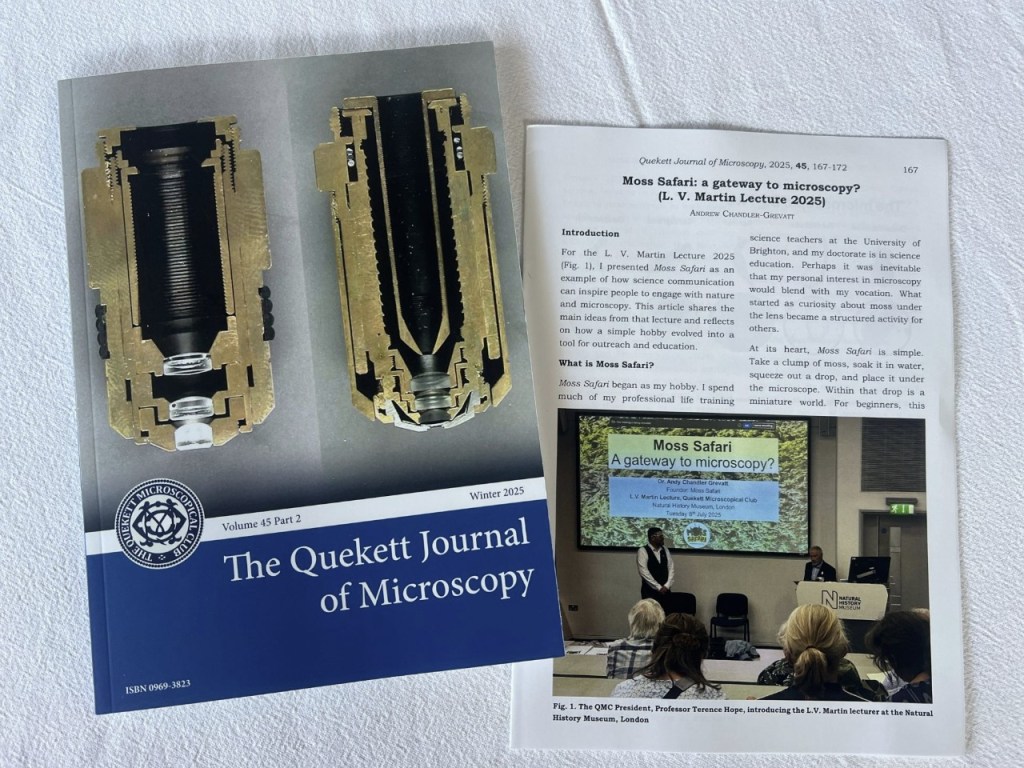
Publication – Article
Chandler-Grevatt, A. (2025)
Available to members only

Moss Safari Book Review
October 2025
Samworth, M. (2025) Book Review: Moss Safari, Exploring the Secret Life in Moss. Balsam Post, The Newsletter of The Postal Microscopical Society, 149, Oct 2025, pp. 21-22
Membership required for access

Plumpton College: T-level Animal Care and Management
Wednesday 19 November 2025
2 hour visit
Moss Safari Book Short-listed for the ASE Book of the Year 2025 Award
Monday 10 November 2025
Winners announced on Thu 8 Jan 2026 at the ASE Conference 2026
Discovering Mosses Series 1 Launched
October 2025
Seven infographics and five blogs form the basic introduction to discovering mosses in you local area. All free to download.

Moss Safari at New Scientist Live
with Quekett Microscopical Club
Saturday 18- Monday 20 October. Live event at Excel London.
Find out more about our stand!
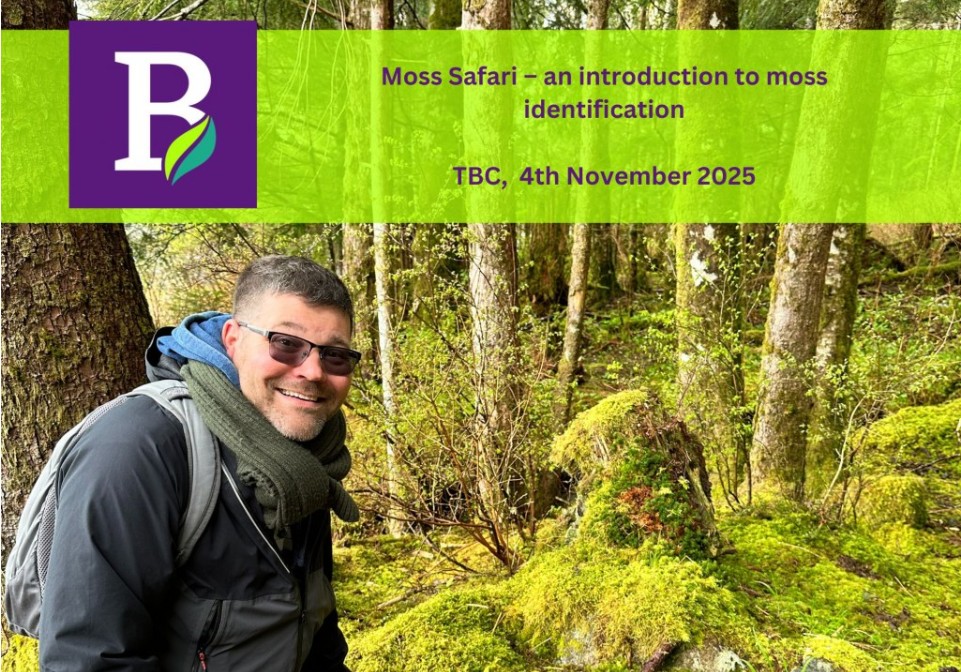
Training Session with BGEN
Tue 4 Nov 2025, 10-11 AM
Botanic Gardens Education Network. Online. Dr Andy Chandler-Grevatt will join us to provide training on Moss Safari – an introduction to moss identification

Lecture: Quekett Microscopical Society
Tue 8th July 2025 – 5:00 to 7:00 p.m. – London, Natural History Museum, South Kensington, London.
The L. V. Martin Lecture
“Moss Safari: a gateway to microscopy?” – given by Dr Andrew Chandler-Grevatt
Neil Chalmers Seminar Room
Press Surrounding Moss Safari Book Launch
Fri 20th June – University of Brighton
Wed 25th June – The Argus
Centre for Environment and Society (CES) launch event, University of Brighton
Fri 27th June 2025 12:30-5pm
Moss Safari will showcase its work and research ambitions on a stand and in a 10 minute presentation.
Online Book Launch
Thu 19 June 2025
5-6PM (BST)
Join Andy for an online book launch to celebrate the publication of Moss Safari: Exploring the secret life in moss. Pelagic Publishing.
Sign up with Pelagic Publishing
Publication
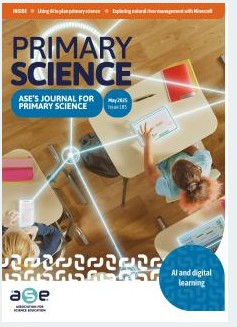
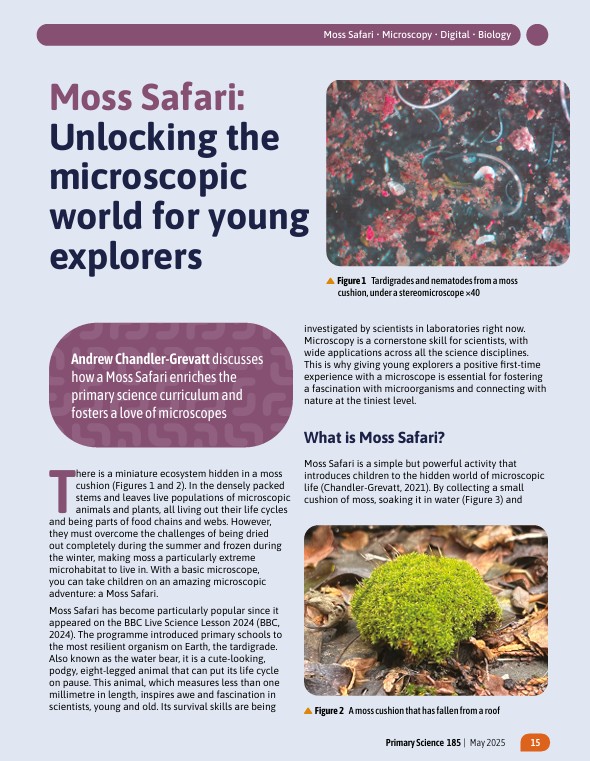
Four page article on Moss Safari for primary schools in Primary Science – ASE’s Journal for Primary Science.
Chandler-Grevatt, A. 2025. Moss Safari: Unlocking the microscopic world for young explorers. Primary Science. 185. May 2025. pp 15-18.

Private Outreach Event
Wednesday 4 June 2025
Lewes Old Grammar School (LOGS)
Year 9 Enrichment Live Moss Safari and Microscopes
The science isn’t done yet!

Project: Academic Partner
June 2025
Moss Safari with light microscope and SEM microscope
Private Outreach Event
Mon 9 June 2025
Telscombe Cliffs Academy, Peacehaven
Year 6 Moss Safari event at the University of Brighton
What will you discover?

Private Outreach event
Wed 28 May 2025
Year 4-5 Original Minds Circle
In search of the Water Bear
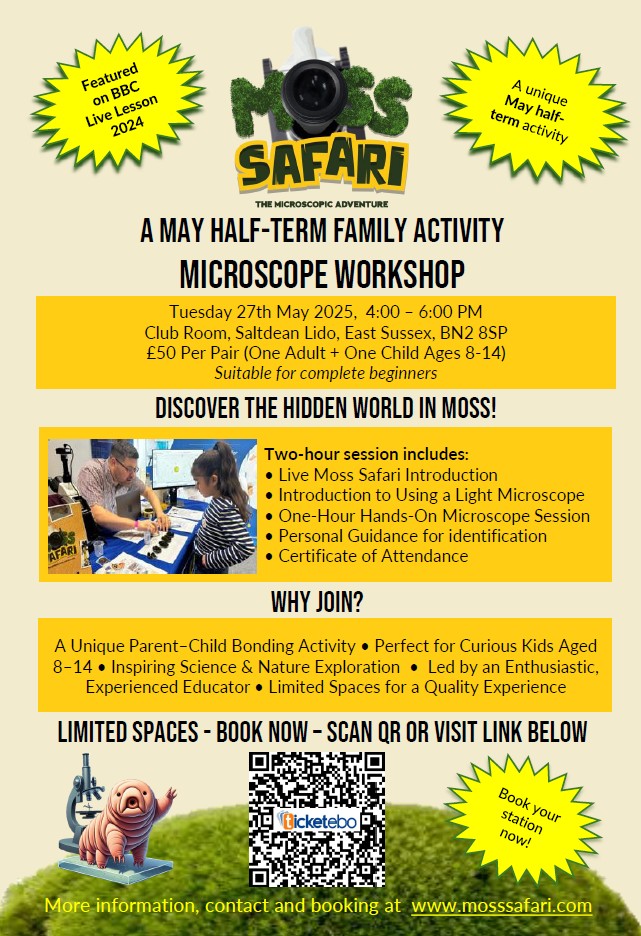
Public Ticketed Event: Family Microscope Workshop
A May half-term unique Family Experience.
Tues 27 May 2025
16:00 -18:00
Saltdean Lido, Brighton
Canceled: Due to low numbers.
Ticket holders have been emailed and a refund will be sent.
Thank you for your support.
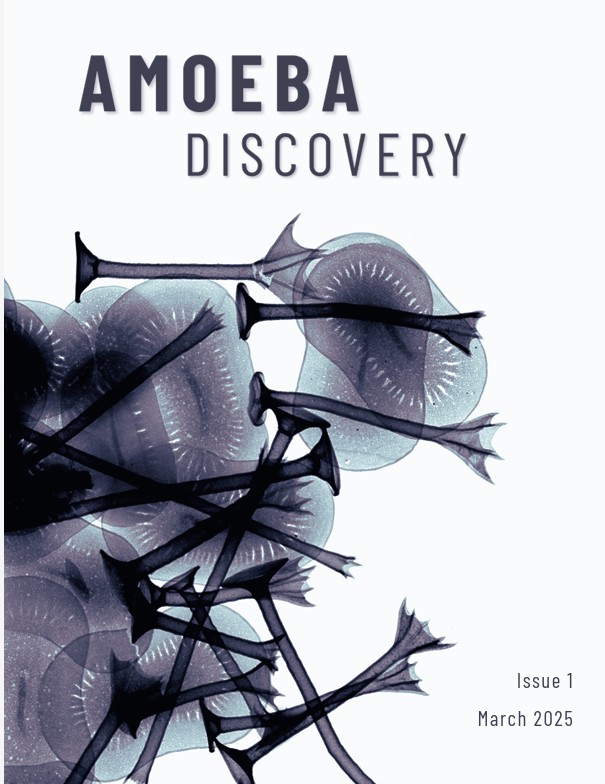
Interview in Amoeba Discovery Magazine
Thur 27 March 2025
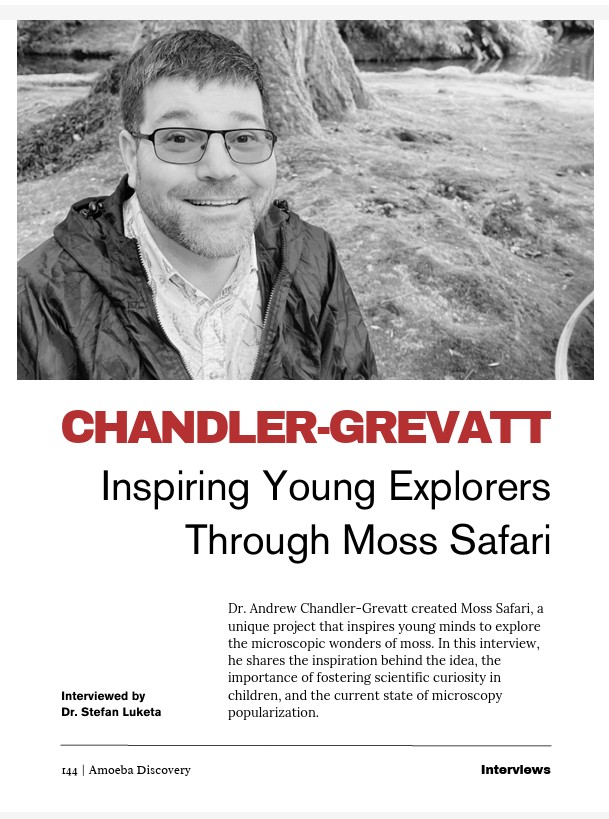
I was interviewed about Moss Safari by Stefan Luketa for the first issue of Amoeba Discovery.

Made for British Science week. Ideal for use anytime of the year.
British Science Week 2025
To support the focus of Change and Adapt, Moss Safari have produced three ‘Follow-up’ tasks. These tasks focus on environmental and climate change on moss, rotifers and tardigrades.
Subscribe to Moss Safari for free and access these three exciting resources here.
Aimed at high KS2 and lower KS3. Age range 10-14
27 May 2025
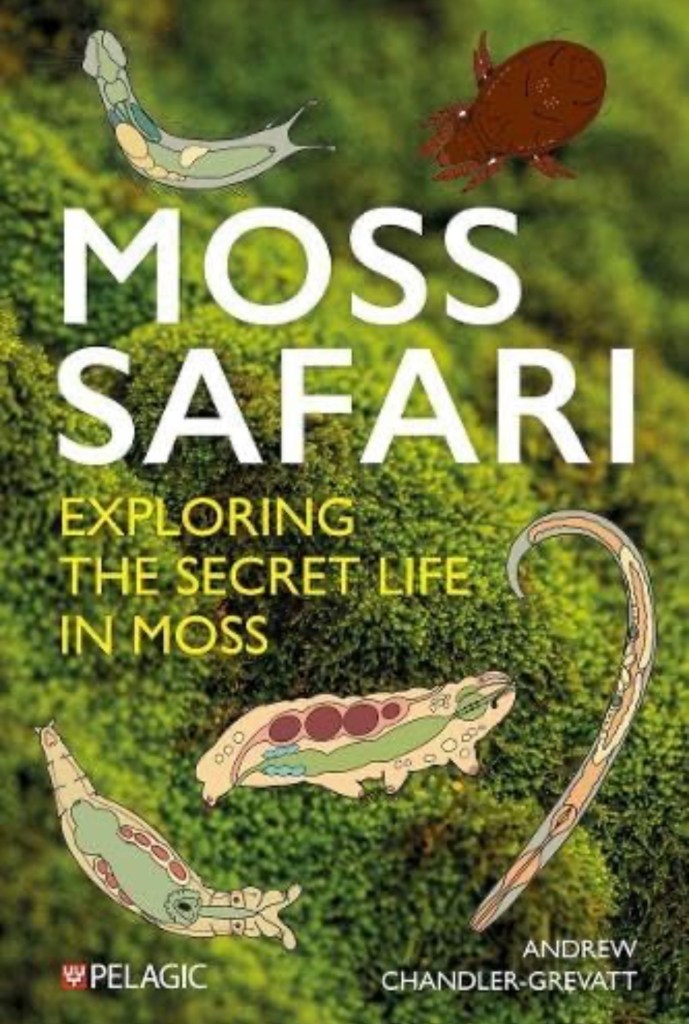
Moss Safari: Exploring the secret life in moss.
Pelagic Publishing
Released for pre-sale (7 Feb 2025).


Event Sat 11 Jan 2025
ASE Annual Conference 2025
8:45-9:30 Moss Safari Live: Change and adapt
Location: Pope LT C15

Event Fri 10 Jan 2025
ASE Annual Conference 2025
12:15-13:00 Moss Safari behind the Scenes. Secrets and Tips for technicians.
Location: Chemistry LT X2

Event Thur 9 Jan 2025
ASE Annual Conference 2025
15:45- 16:30 Microscopes as science capital? Challenges and Opportunities
Location: Pope A34
As part of the RSB Biological Education Research Group
 Moss Safari