Event report: Saturday 23 May 2026
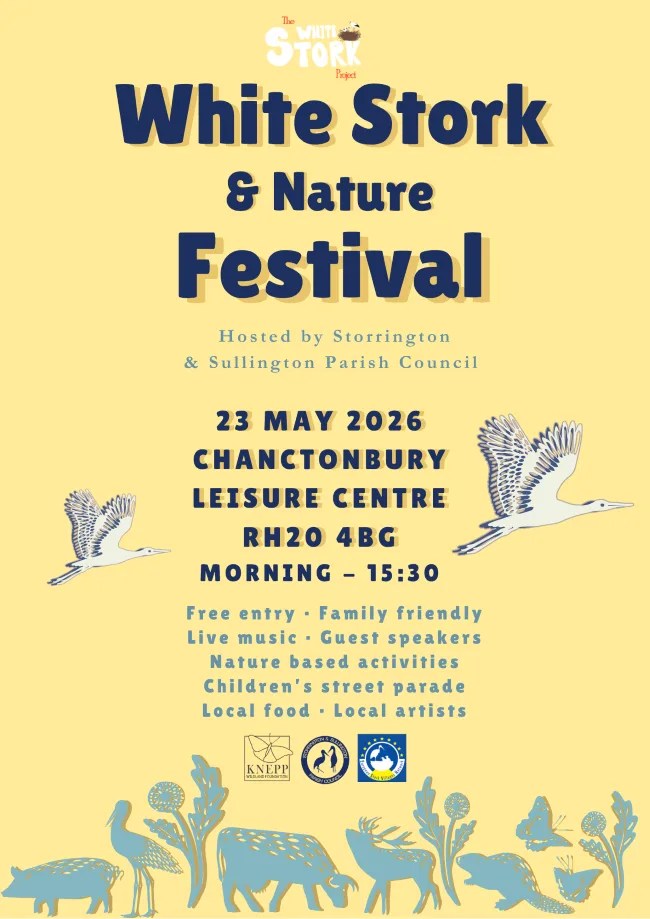
On the hottest day of the year so far, I spent the day at this delightful event with my two enthusiastic volunteers: Jude Dean, an undergraduate chemistry student at the University of Sussex, and Andrew Sayers, a postgraduate MSci student at the University of Brighton.
Laura Vaughan-Hirsch, the White Stork Project Manager at Knepp, invited Moss Safari to be part of the Activities Tent at the festival. Here we joined a human fruit machine, a table of skulls, stork pellet dissection, and drawing and colouring mats to engage visitors in the natural world.
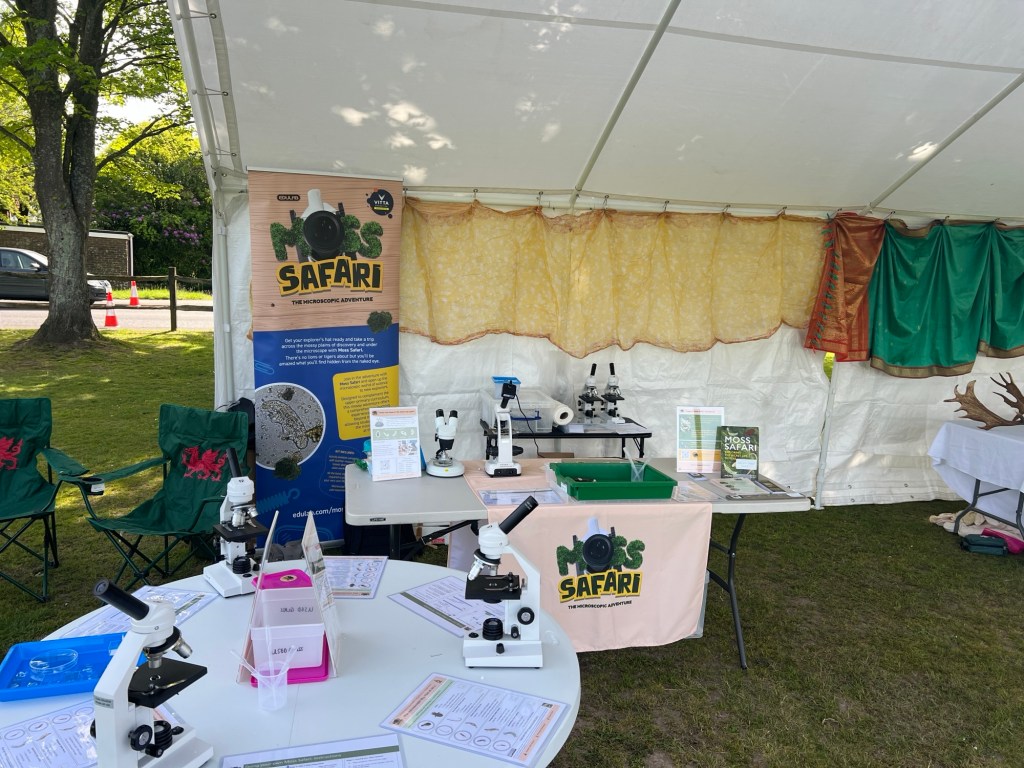
This was the first time I had brought Moss Safari quite so literally into the field. We had no power, just two tables, my usual microscope and laptop, and four microscopes for visitors to use for their own Moss Squeezes. It was a relaxed event, but we were quite busy, which meant we did not take any photographs beyond one of the initial set-up.
Here are three reflections on the day.
Reflection 1: Children are drawn to microscopes when they can do the science themselves
Children aged around 8–11 years old were especially drawn to the microscopes. They were very keen to have a go at sampling from the wet moss, making slides and observing what they found under the microscopes.
We had two or three children who stayed at the stand for a good hour, searching, identifying and asking questions. I spoke to the dad of one of them, who said they had a microscope at home and were going to try Moss Safari for themselves. Others, who did not have microscopes at home, asked about which one to get. I directed them to my blog on this subject. And don’t forget all the resources are free to download from this website.
That felt like a real success. Moss Safari is not only about showing people something interesting on the day. It is about giving them the confidence and curiosity to go away and explore for themselves.
Reflection 2: Science communication grows through practice, confidence and curiosity
Jude and Andrew had not met before, but they had one thing in common: an interest in Moss Safari and a desire to develop their science communication skills.
I came back from lunch to see a crowd of children and adults around the microscope table. It was a hive of activity. Both Jude and Andrew were guiding and encouraging the children, while also talking to the adults. It takes confidence and skill to engage both audiences, and they were doing this so well. I felt a real moment of pride.
We found that the table was too tall for some of our younger visitors to see through the microscope comfortably, so we put one of the microscopes on the ground, where they could kneel and look through the eyepiece. At one point Andrew was also kneeling at ground level, supporting a young lad of about six or seven years old who was captivated for a good half hour.
I was also impressed by how Jude, who has joined me for a few Moss Safaris now, has absorbed many of the facts I share with visitors and put them into her own patter to engage people. That is when science communication really starts to work: not when someone repeats a script, but when they understand the ideas well enough to make them their own.
Reflection 3: Adults love moss, microscopes and tardigrades too
It is easy to assume that Moss Safari is mainly for children, but the day was a lovely reminder that adults are just as fascinated by the microscopic world.
I had several adults who came over specifically to see a live tardigrade. We could offer this for the first half of the day, but then could not find any from lunchtime onwards. That is live microscopy for you. The microscopic world does not always perform to order.
One interested visitor told me she was 83 and had never realised what lives in moss. I love these moments of sharing the microscopic world of moss with people of all ages: opening up a new world and a new connection with nature.
A handful of moss, a drop of water and a microscope can completely change how someone sees a wall, a roof, a path, a tree trunk or a garden. Moss stops being background greenery and becomes a habitat. It becomes a miniature landscape full of animals, movement, survival strategies and ecological drama.
What the day showed me
As I said, this was our first field event and I am very grateful to Laura for accommodating us in the Knepp Activities Tent. Being part of a wider nature festival gave Moss Safari a brilliant context. People were already there because they cared about wildlife, landscapes and conservation. We were able to add a microscopic layer to that experience.
If I were to run a similar event independently, there are practical things to think about. A gazebo would be essential, especially for shade and weather protection, although that is not something current Moss Safari funds can quite stretch to yet. We would also need to think carefully about table height, power, photography, signage and how best to manage busy periods.
But in terms of meeting the Moss Safari aims, the day worked beautifully. We were able to connect people with nature at a microscopic level, promote microscopy, and encourage STEM hobbies and careers.
Not bad for two tables, a few microscopes and a very hot day in May.
Acknowledgements
Thank you to Laura Vaughan-Hirsch, for inviting me to this event. Thanks to Jude and Andrew for their support. There were lots of volunteers at the event who assisted with parking, unloading, security, tables and general organisation. The friendliness and support was really appreciated.
VITTA Education kindly donated the microscopes that made this possible and the ESH technicians at the University of Brighton keep them maintained and ready for use.
Moss Safari: The Book
Shortlisted for the Association of Science Educations Book of the Year Award 2025!
Get your copy now and join the adventure
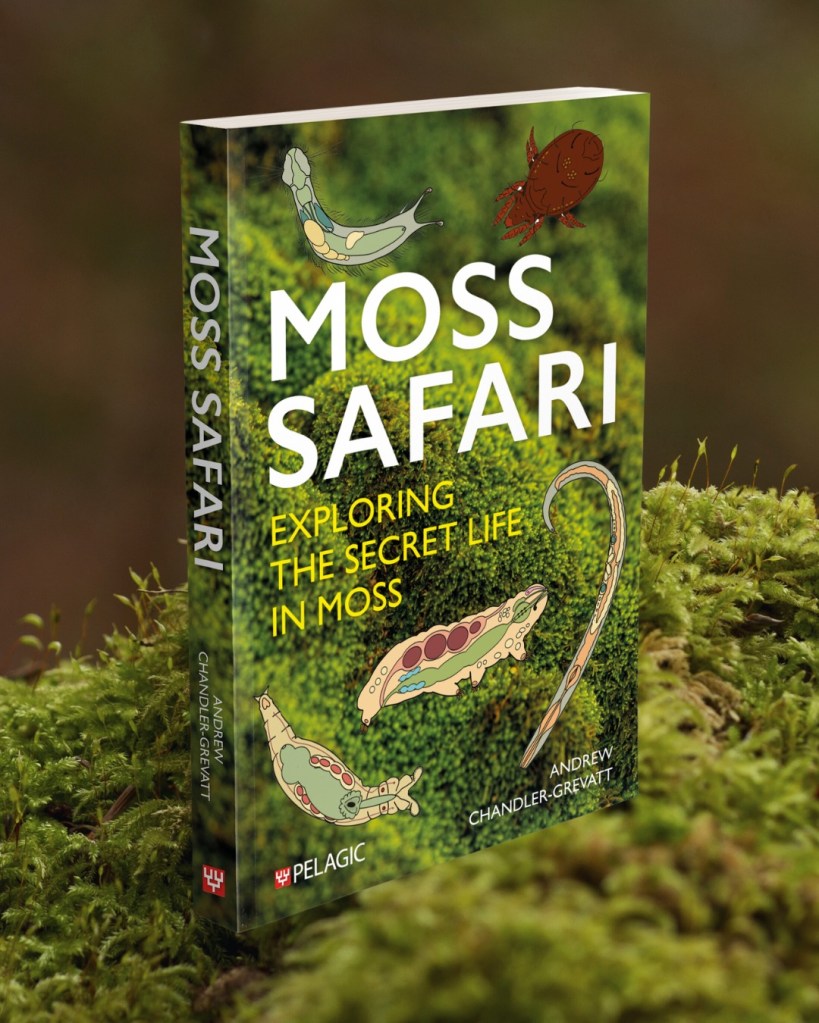
Moss Safari: Exploring the secret life in moss is now out in the wild.
Go on a microscopic journey through moss to discover five extraordinary organisms. They share one thing – being able to survive in moss – and with that a host of incredible adaptations. Not only that, they each have amazing stories from their parts in evolution, geological history and human history. To witness these marvels, you do not need to travel far. Just find a piece of moss and use a basic microscope to reveal these animals, and many others, to you in real life.
Read the interview by Pelagic Publishing
Buy your copy now
Order from Pelagic Publishers (25% discount with code: MOSS25)
Amazon order or add to your wish list (via Amazon associates – I get some commission from this link)
Personalised signed copies with free vinyl stickers available directly from the author.

