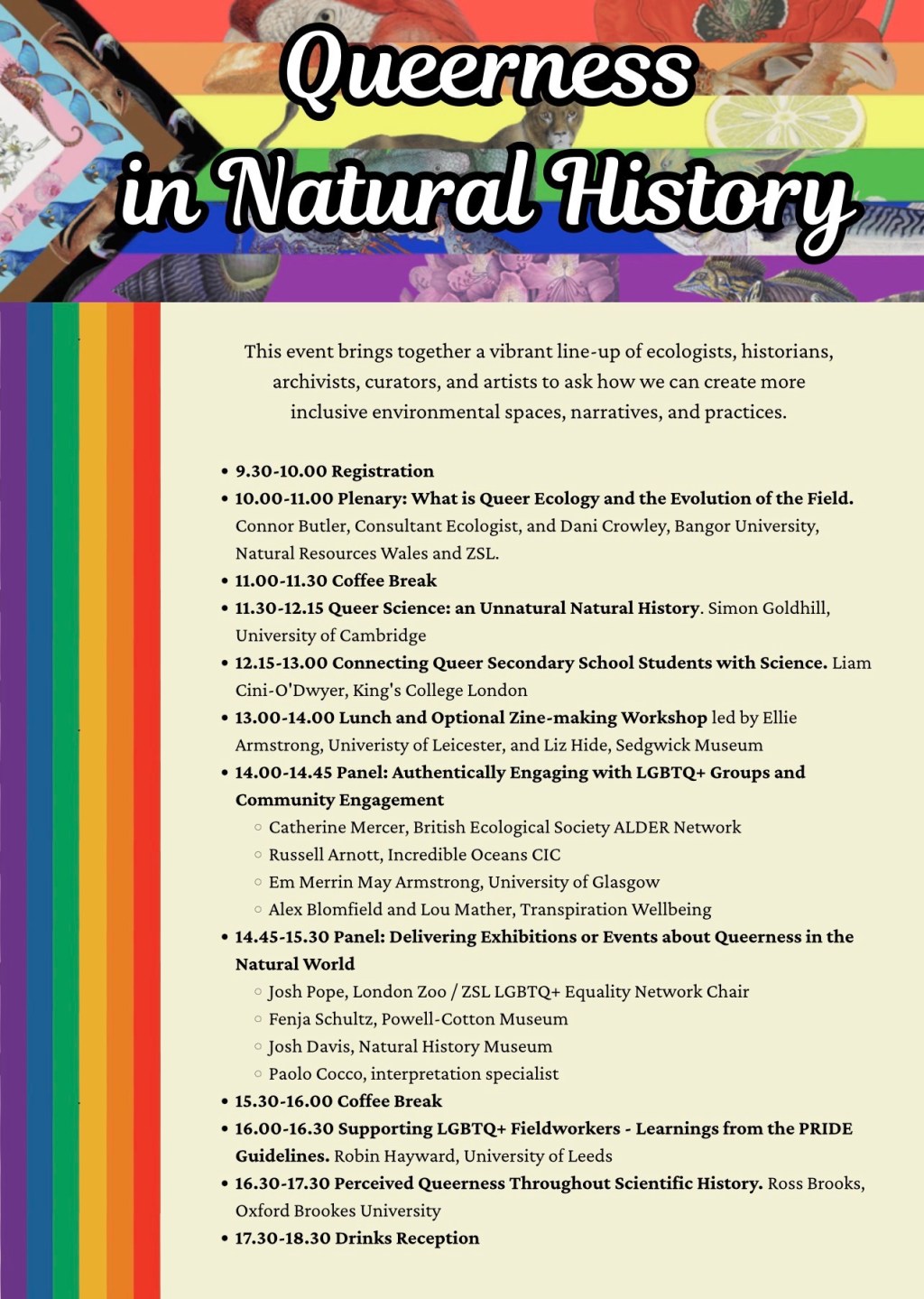
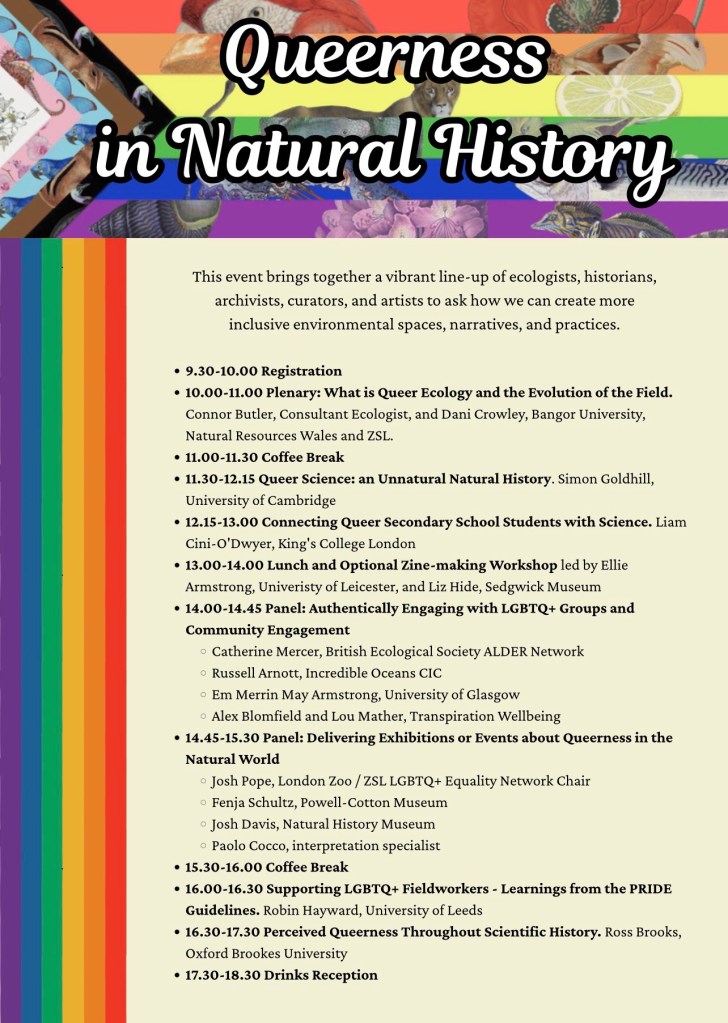
Microscopy brings together people from all walks of life. Through this hobby, and through developing Moss Safari, I have met many remarkable individuals. A few weeks ago, I attended the Natural History Queer Symposium at The Linnean Society of London. The experience helped crystallise many of my thoughts about moss, microscopy and how we interpret the natural world.
Microscopical Context
Before describing the event, consider a few questions:
- Who do we consider the great microscopists or microbiologists?
- Who are the professionals we read about?
- Who are the amateurs we admire?
- How many are men or women? People of colour? LGBTQ+? Neurodivergent?
And does it matter?
Based on both experience and the broader literature on representation in science, it is likely that most historically recognised microscopists have been white, male, and heterosexual. Neurodiversity may be more represented in microscopy than in the general population, though the evidence is still emerging.
This matters because we study a world defined by diversity. If we view it through a single dominant lens, our interpretations risk being partial or skewed. It also matters because visibility shapes participation. If only one group appears to “belong” in microscopy, others may feel excluded.
With Moss Safari, I want to lower barriers and broaden participation. Visibility and support are key. When people see themselves reflected, or feel genuinely welcome, they are more likely to engage.
Personal Context
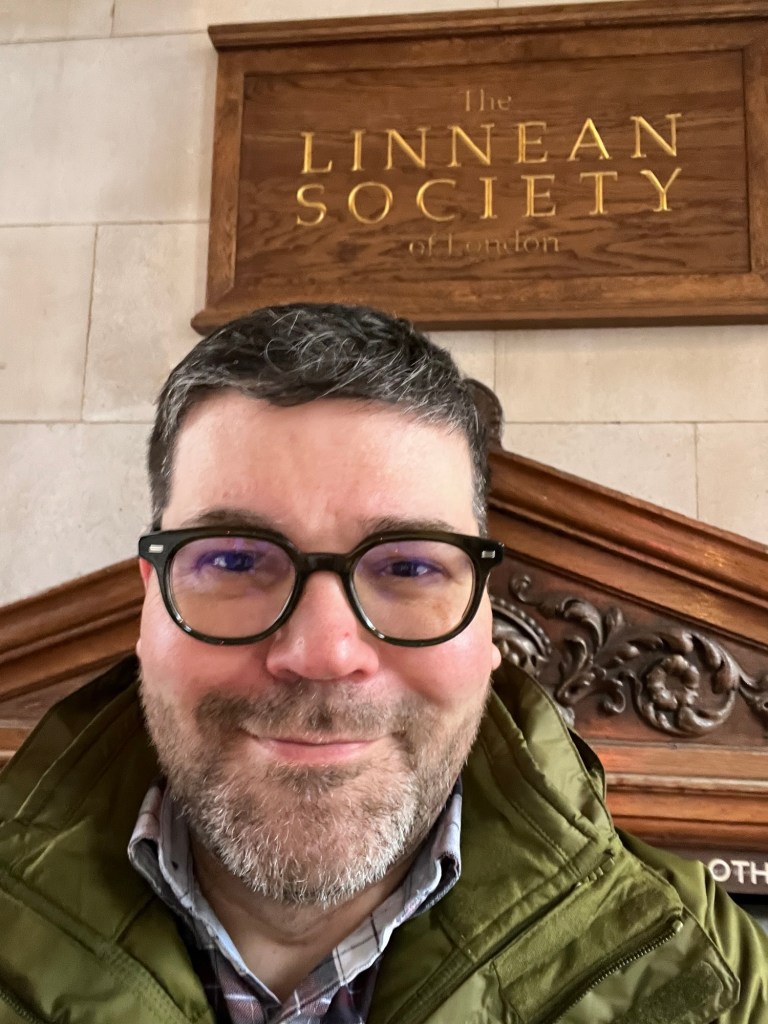
I grew up in the 1970s and 80s, when “queer” was commonly used as a slur. In hindsight, I was growing up queer, sensing difference without fully understanding it. I am now a gay man, fortunate to live openly and authentically in my personal and professional life.
So what does this have to do with microscopy and moss?
Who we are shapes how we see the world. Before we even look down a microscope, we are already looking through another lens: our assumptions about what is “normal”. These assumptions influence how we interpret what we observe.
Four Reflections from the Symposium
1. The Nature of Queer Ecology
The opening session by Connor Butler and Dani Crowley expanded my understanding of queer ecology. It can function as a noun, an adjective, and a verb. At its core, it challenges the idea that our observations of nature are neutral.
Instead, they are shaped by historical and societal assumptions, particularly around what counts as “normal” in biology and behaviour.
2. Queer People in Natural History
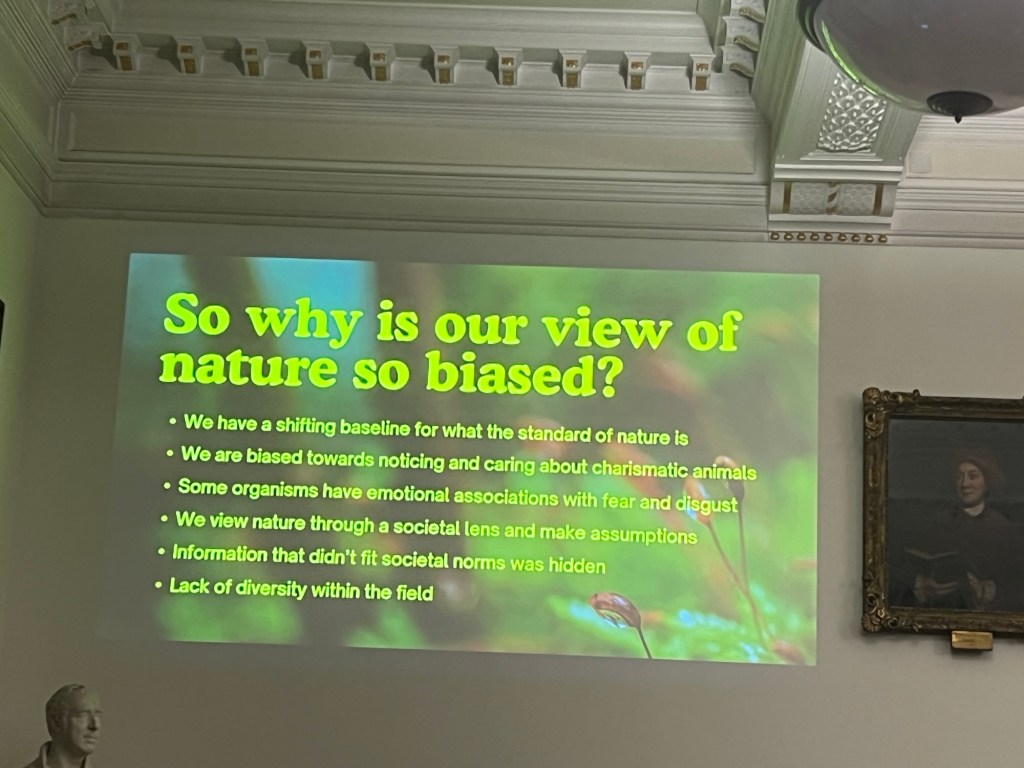
Sitting in the lecture theatre at the Linnean Society, one detail was hard to ignore: the portraits. Figures such as Charles Darwin, Alfred Russel Wallace and Carl Linnaeus line the walls. All giants of natural history, but all reflecting a narrow demographic: white, European men.
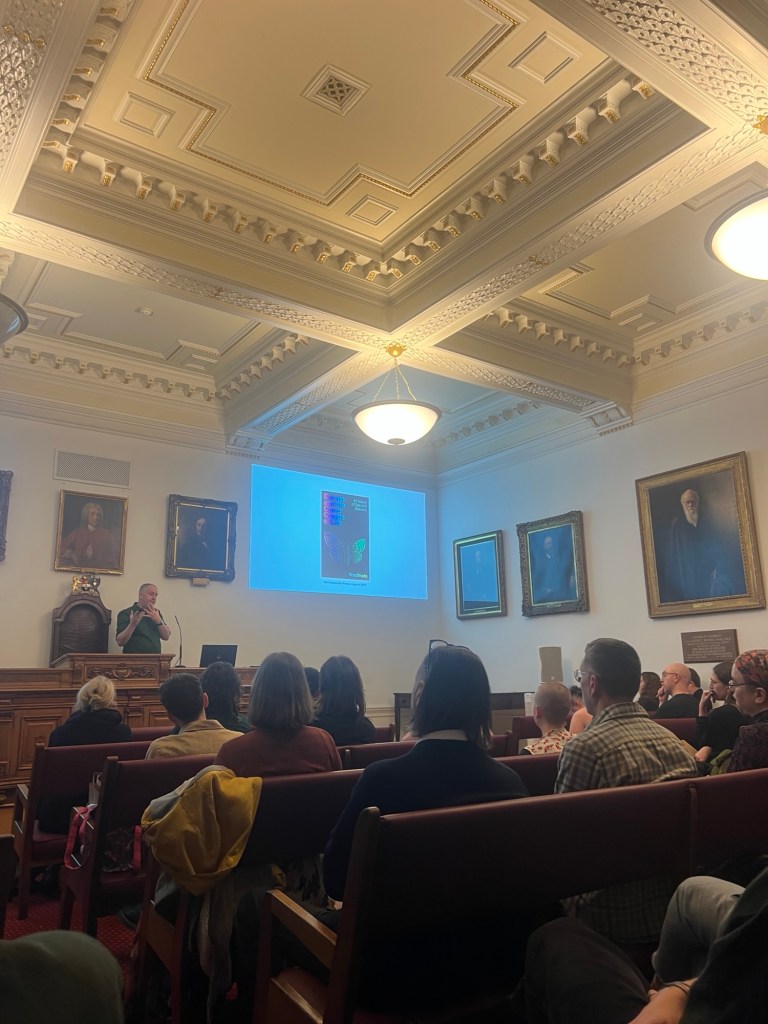
Historically, these were the individuals with access and recognition. Yet many others contributed: women, people of colour, and likely LGBTQ+ individuals whose identities were hidden or erased. Their stories are largely absent from the dominant narrative.
As a science educator, I was aware of gender disparities in STEM, but I had not fully appreciated the lack of LGBTQ+ visibility. Research presented by Liam Cini-O’Dwyer (UCL) highlighted that:
- Students in STEM are less likely to feel able to be “out” than those in the arts
- Science is often perceived as masculine, objective and exclusionary
- Even silence on LGBTQ+ identities can be experienced as exclusion
A key implication is clear: science education must explicitly acknowledge human diversity, including in topics such as reproduction.
3. Seeing Queerness in Nature
This was the central idea that drew me to the symposium.
Em Merrin May Armstrong offered a useful definition of “queer” as anything “at odds with” societal norms. Applied to biology, this becomes powerful.
We often assume binary sex, fixed roles, and predictable reproductive strategies. Yet across the tree of life, these assumptions break down repeatedly. In many ways, it is humans who are the outliers.
Queer ecology walks, led by Connor Butler, make this visible by highlighting how plants, fungi, and microorganisms routinely defy human expectations.
Recognising this is not just philosophical, it is scientific. If we impose human norms onto non-human systems, we risk misunderstanding them.
4. Emerging Narratives
There is an untold history within natural history: the contributions of women, LGBTQ+ individuals, and neurodivergent thinkers whose voices have been marginalised.
This is beginning to change. Figures such as Josh Davis, author of A Little Gay Natural History, [Amazon Affliate Link] and Robin Hayward, who has developed guidance for supporting trans researchers in fieldwork, are helping to expand both visibility and practice.
These shifts are not just about representation. They also open space to question the assumptions embedded in how we study nature.
What This Means for Moss Safari
Moss Safari lends itself naturally to a queer lens.
Mosses themselves defy conventional expectations of plants. Their dominant life stage is haploid, and they produce motile sperm, traits that sit outside typical understandings of what plants do and are.
The microscopic life within moss challenges assumptions even further.
Take bdelloid rotifers. They reproduce asexually and appear to have done so for millions of years. There are no males. Concepts such as “male” and “female” are effectively irrelevant. Instead, they reproduce clonally and can incorporate genetic material from their environment.
Viewed through a heteronormative lens, this is anomalous. Viewed through a queer lens, it is simply another valid expression of life.
I would argue that many of the Microscopic Big Five are better understood this way.
The End, and the Beginning
This symposium was one of the most thought-provoking events I have attended in years. It brought together scientists, artists, educators and philosophers, all exploring what queer natural history might mean.
For me, it marks a starting point.
In future Moss Safari sessions, I plan to explore different conceptual lenses, including a queer perspective, to challenge assumptions about both science and society. I have started this with the Moss Safari Monthly series and a presentation at the Quekett’s World Microscopy Day.
I am also increasingly interested in pedagogy. How do we teach biology in ways that are both accurate and inclusive? Even something as simple as the pronouns we use for organisms carries implications worth examining.
There is much more to explore.
If you would like to discuss any of these ideas further, I would be very glad to continue the conversation.
Acknowledgements
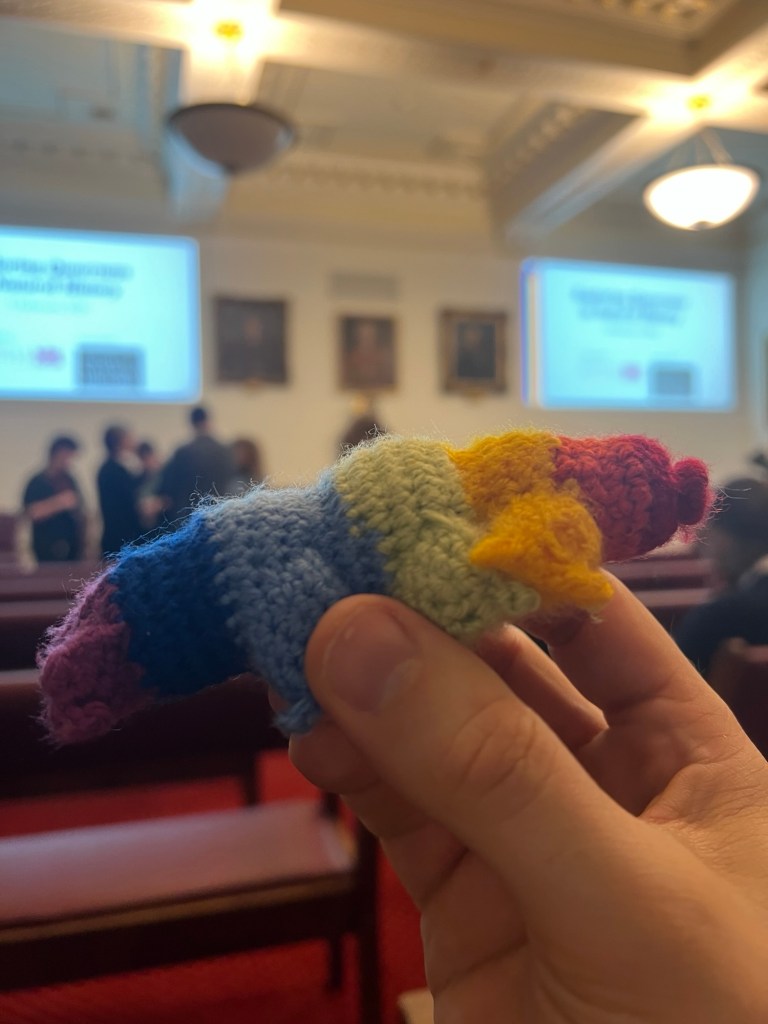
Thanks to the Linnean Society of London for hosting this unique and important event. Thanks to Connor and Dani for organising it and bringing an eclectic group of people. It was great to catch up with familiar faces including a colleague, Amy Brewer, who was knitting and made this fantastic rainbow tardigrade!
 Moss Safari