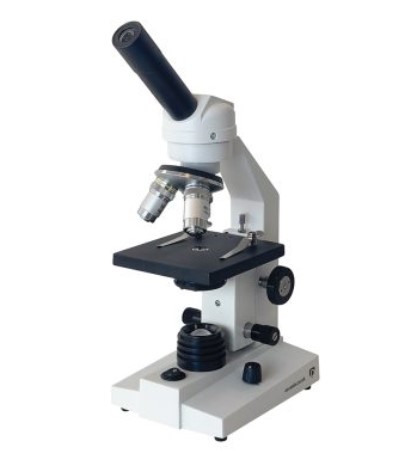
I arrived at Cradle Hill CE Primary School in Seaford, East Sussex to introduce 90 Year 6 (10-11 year old) children to the wonderful world of moss. We arrived with 15 Duralab compound microscopes for the children to use. This blog describes the visit, the feedback and some reflections. You too can do your own Moss Safari at primary school, read below for details.

The timetable
We tailored the visit to the needs of the school:
9:10 – 9:35 Assembly with Year 6: focus on evolution, moss, the animals that live in moss and doing your own Moss Safari.
3 x 35 minute sessions in rotation – approx 30 children per group.
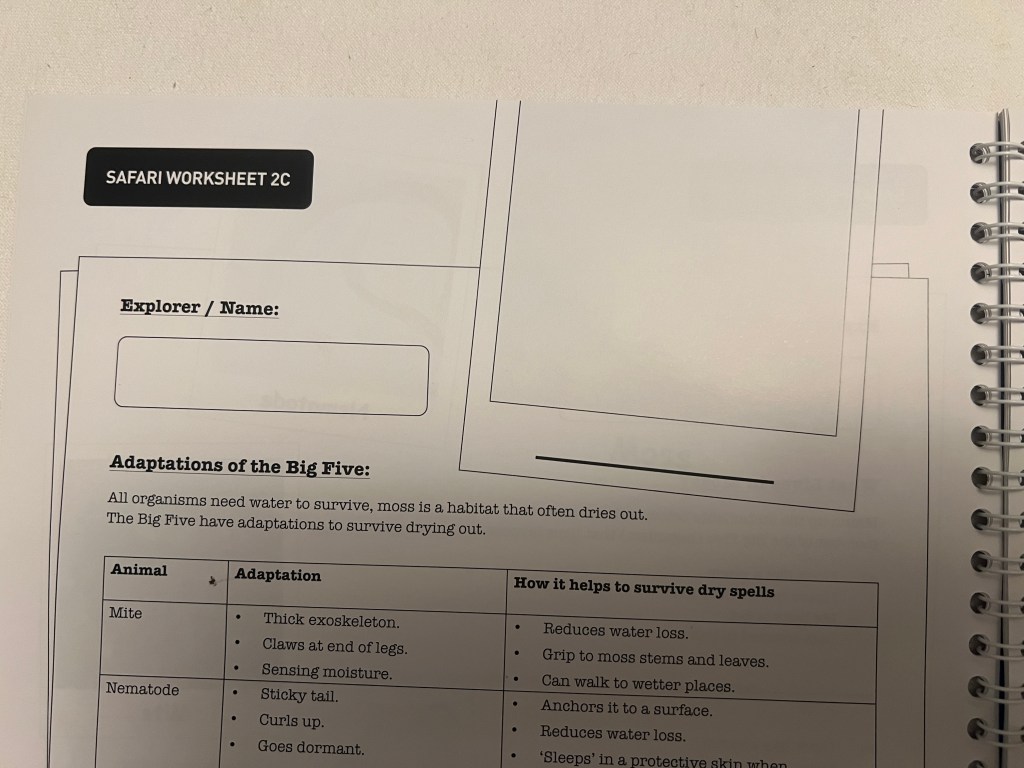
Session A: exploring moss around the school site supported by tasks from the Moss Safari Expedition Guide (images below).
Session B: learning about the adaptations of the Big Five moss organisms through Activities XX from the Moss Safari Expedition Guide.
Session C: Doing a Moss Safari. With one microscope per pair of children, Dr. Moss took the children step by step with setting up a slide and using the microscope to find the Big Five. The class teacher, Sarah Poore and Dr. Moss supported the children with focusing and identifying what they had found. All moss was from the school grounds.


What happened
In the assembly the children reported that a majority of them had used some kind of microscope before, but few had used a good quality compound light microscope as the ones we brought with us.
We were briefed to cover KS2 evolution, which we did using examples of adaptations of the Big Five, the Tree of Life (vertebrates and invertebrates), evolution as a change over a very long time, using tardigrade as an example.
I didn’t experience Sessions A and B, but those groups that attended the Moss Safari, session C after doing Sessions A and B brought the moss they had collected themselves from the school grounds, had a good idea of the animals they were looking for and a strong sense of ownership of their moss and the animals they found.
In the Moss Safari session, it was quite a tight time frame but once the children were taken step by step through the slide preparation and how to focus the microscope, most made at least two slides and observed them.
A lot of good finds were made, including a tardigrade shed skin, a tardigrade, an actively feeding rotifer, a moving mite, a wriggling nematode. That’s collectively four out of the Big Five. Great work. There was also a segmented worm, various microscopic moss leaves, and several unidentified microscopic blobs.
The feedback
From the children:
Quotes from children:
I loved the microscope bit, it was amazing! I just wished it was a bit longer!
I liked] the microscope because it was fun collecting moss
I learnt that animals live in moss. Moss grows in different places.
I learnt that moss is like a mini forest
[I learnt that] There are animals in moss and they are smaller than a millimetre.
[I learnt] The different living animals in moss. Different types of species. How to use a microscope.
[I learnt] Different types of microorganisms. How to use a microscope. How biodiverse moss actually is.
[I learnt] That you can study moss.
[I learnt] About the animals that live in moss. Where moss likes to grow and you can use a microscope as your job
From the staff:
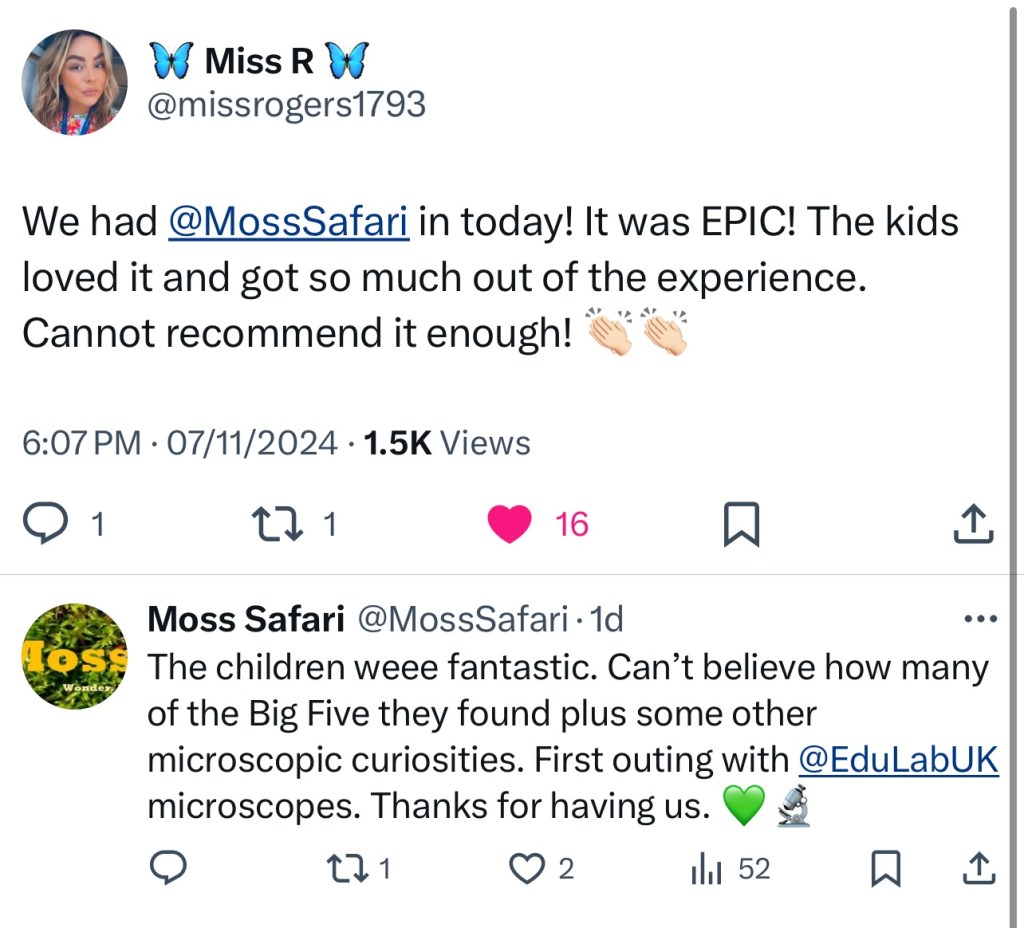
Children LOVED this opportunity and would’ve loved more time to explore the moss under the microscopes. This is something they would never get the chance to do usually so it was very exciting for them. They’re still talking about it now! They could identify all of the different living organisms by the end of the session with Mr Moss.
Thoughts, reflections & opportunities.
This was our first school visit with the fifteen microscopes. It was very successful but of course, we have learnt some things along the way. The sessions worked, but were fast and rushed, and so in the future, I’d like 45 min-1 hour per group and a good 45 min assembly.
The children on the whole were completely taken in by the experience, they got stuck in, they asked questions, the could identify the mostly new-to-them animals they were seeing. For most of them, it was their first experience with a microscope.
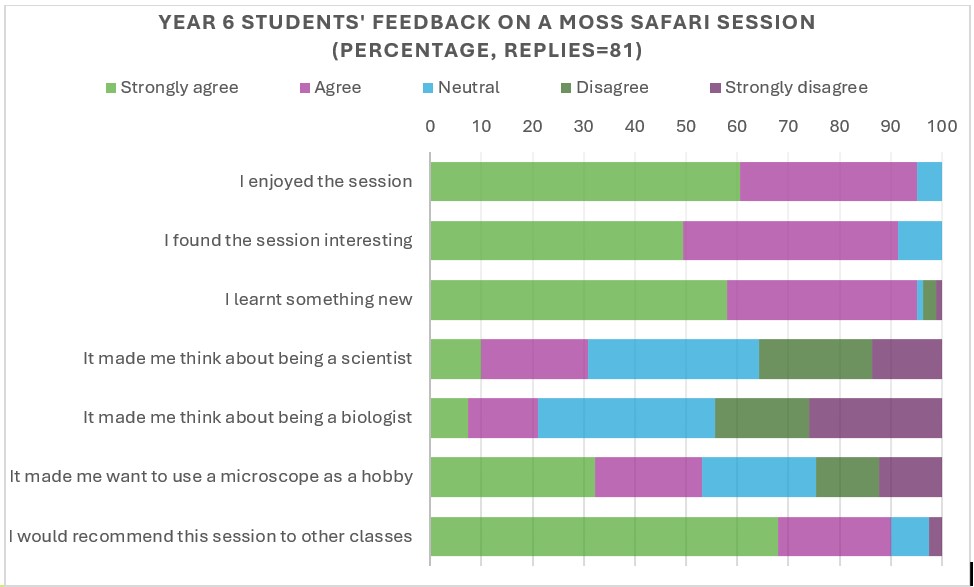
I was impressed with how much they learnt and how quickly they learnt to prepare a slide and focus it under the microscope. I was impressed with how durable the microscopes were dealing with inexperienced hands operating them. Over 95% of the children enjoyed the session and claimed to have learnt something new. In the longer view, Moss Safari aims to raise aspirations for children to go into STEM careers, particularly (micro)biology and microscopy. About a third of the participants thought about being a scientist as a result of the session and this was supported by a couple of comments about getting a job using a microscope. I was also pleased that over 50% of the group considered doing microscopy as a hobby.
The model works, so I will be finding ways to involve other local primary schools. This is a great way to increase engagement in microscopy and STEM.
Acknowledgments
Thank you to Peri Kusadali for the invitation to visit Cradle Hill school. We were warmly welcomed by all the staff we met and were well supported by the Year 6 staff and friendly students. The IT guy was helpful with setting up the assembly.
Sarah Poore for being an excellent support with charging the microscopes, supporting photography through the school’s iPads. Josh Leonard, senior laboratory technician at the University of Brighton for all the technical assistance with the microscopes.
Finally, VITTA Education for supplying the 15 Duralab microscopes to use in Moss Safari Outreach.
Doing your own Moss Safari

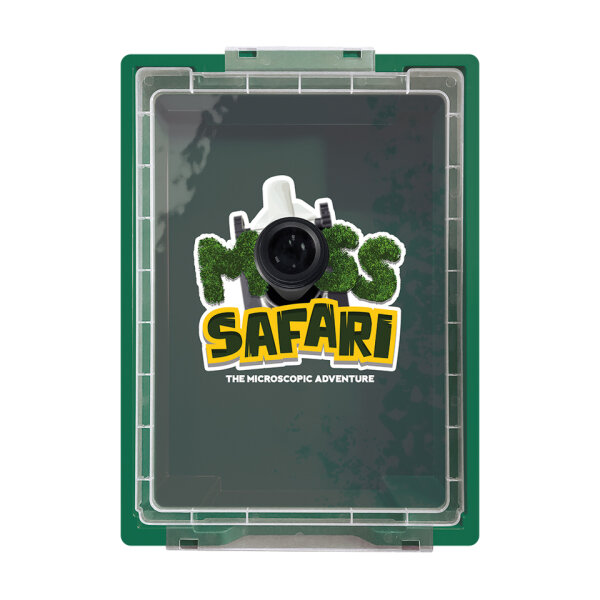
Specially tailored resources that we used are from the Moss Safari Expedition Guide, available here.
The Expedition Guide resources come with all the equipment you need for 2-3 children to do Moss Safari in the Edulab Moss Safari kit.
The Duralab microscopes that I use for primary and secondary outreach are here.
Free downloadable resources are here.
 Moss Safari