Today ten primary classes joined Moss Safari for a special live online Search for a water bear. Following on from the cBBC Live lesson on which Moss Safari featured, primary school children have been wanting to know more about these fascinating microscopic organisms. This blog outlines our recent live onliine expedition hosted by the Association for Science Education, and it took a while to find a water bear!
The Expedition
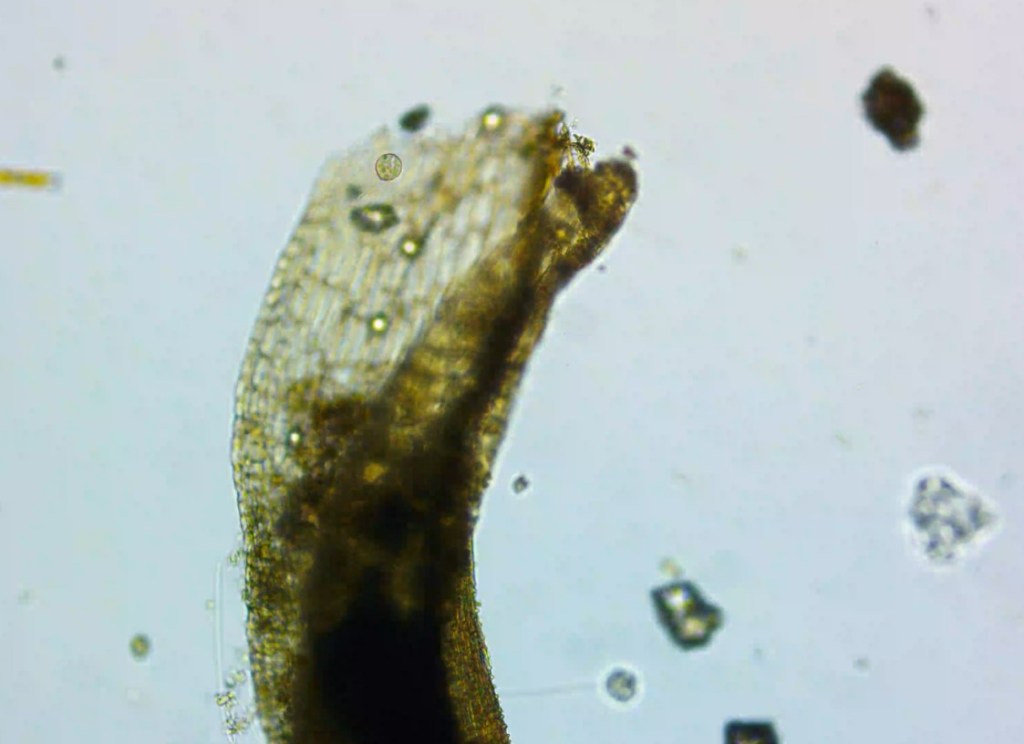
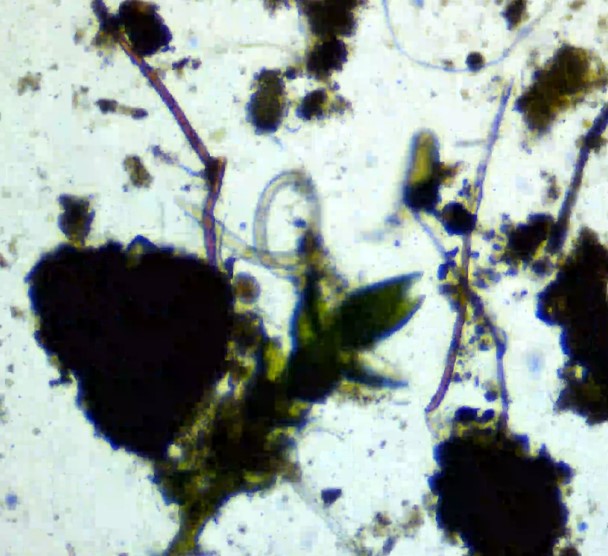
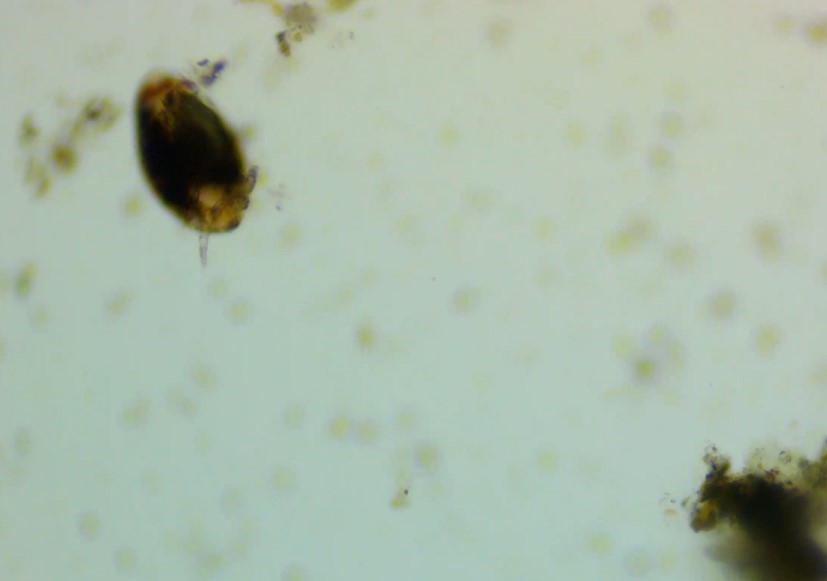
After a 15 minute pre-expedition introduction, we started our Moss Safari. We managed to find four of the Big Five, but the tardigrade only appeared at the very last minute. We also saw a single celled organism called a ‘vorticella‘ that waves it’s cilia to catch food and has a long stalk that it attaches to the surface. When disturbed, it springs back. We observed a lovely yellow diatom gliding slowly. Here are some screen shots of what we saw.



The Questions
The questions came in thick and fast and included questions about the Moss Safari Big Five as well as tardigrades, as well as some technical questions.
Questions about Moss Safari
- How many species of microorganisms can be found in moss?
- Is there any sexual dimorphism in male/female tardigrades?
- How do rotifers reproduce?
- Does the big 5 compete with each other for survival?
- Is moss from a particular type of location more likely to have tardigrades? Eg roof moss or wall moss, or direction that moss is growing in… etc? How long do they live as adults?
The answers.
During the Live Moss Safari, I tried to answer the questions while still searching for a rather elusive tardigrade. So, in summary. Number of different species in moss, I would go for hundreds of thousands if we include the bacteria, fungi, single celled and multi-celled organisms, many yet to be described. The sexual dimorphism was an unexpected question – male tardigrades are usually smaller. The rotifer we saw is a Bdelloid rotifer and they are all female. They reproduce asexually, producing clones of themselves by laying eggs. In terms of competition, the Big Five will compete for space, some food most of them eat algae, fungi and single celled organisms. However, they do have their own niches and roles to play in the moss ecosystem. Tardigrades can usually be found in most mosses, but not all. Different species of tardigrade live in different types of moss and locations. I find the cushions are more successful than mats of moss. Adult tardigrades usually live 2-3 months, so some for a couple of years. As a tun they can survive up to thirty years, as far as we know.
Technical questions
Any tips for using filter paper to concentrate your sample?
What is the name of your recording software please?
For any further questions and information around the equipment used in this demonstration please direct then to silas.norman@vittagroup.com 🙂
Immediate feedback
- Thank you so much!
- Thank you – fascinating!!
- It was very interesting! Thanks so much 🙂
- Amazing, thank you!
- So fun! Thank you Andy! How Captivating! Loved seeing my first rotifer, diatom and tardigrade! Absolutely fabulous!
Summary
Moss Safari is always full of surprises. Although I’d hoped to find more tardigrades than we did, I was pleased to find one tight at the last minute. The excitement of wanting to see a water bear is engaging, but it’s great that so many other organisms turn up and surprise us. A message that I wanted to give is that we need more scientists that specialise in microscopic organisms. We haven’t found all the different species, in fact we may have unknowingly seen a new species of the Big Five today.
Many thanks to the teachers and primary classes that attended today. Special thanks to the ASE for hosting, particularity Rebecca Peacock, and to Wendy Ford and Silas Norman at VittaEducation for supporting this event.
Why not now go on your own Moss Safari?
Want more?
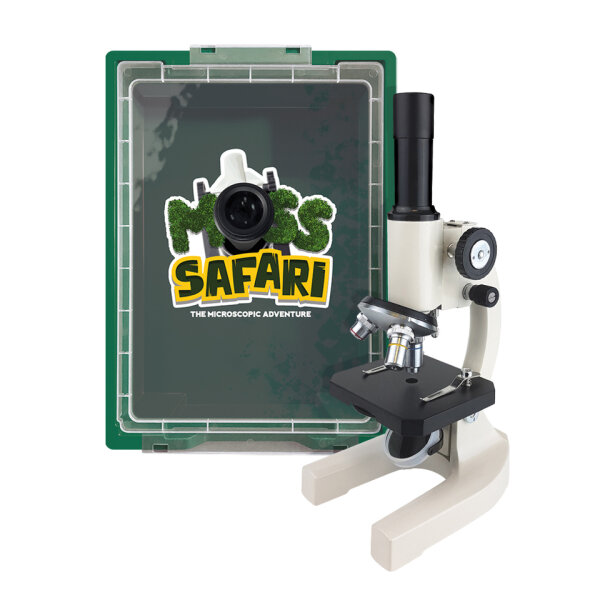
Get your own Moss Safari kit with or without microscopes. Designed for primary school or lower secondary school, each kit has enough equipment for three pupils (or three pairs of pupils) to do their own Moss Safari.

Join the ASE
Join thousands of fellow science educators and secure invaluable support for your own professional development journey as well as enhancing our ability to make genuine change in the sector. Link here.

Host your own Moss Safari event
Moss Safari is a great way to encourage children and adults to connect with nature, learn about organisms that we share our local environment with, and to realise that science is not done yet.
Moss Safari always gets a ‘wow’ and you’ll never see moss in the same way again.
 Moss Safari