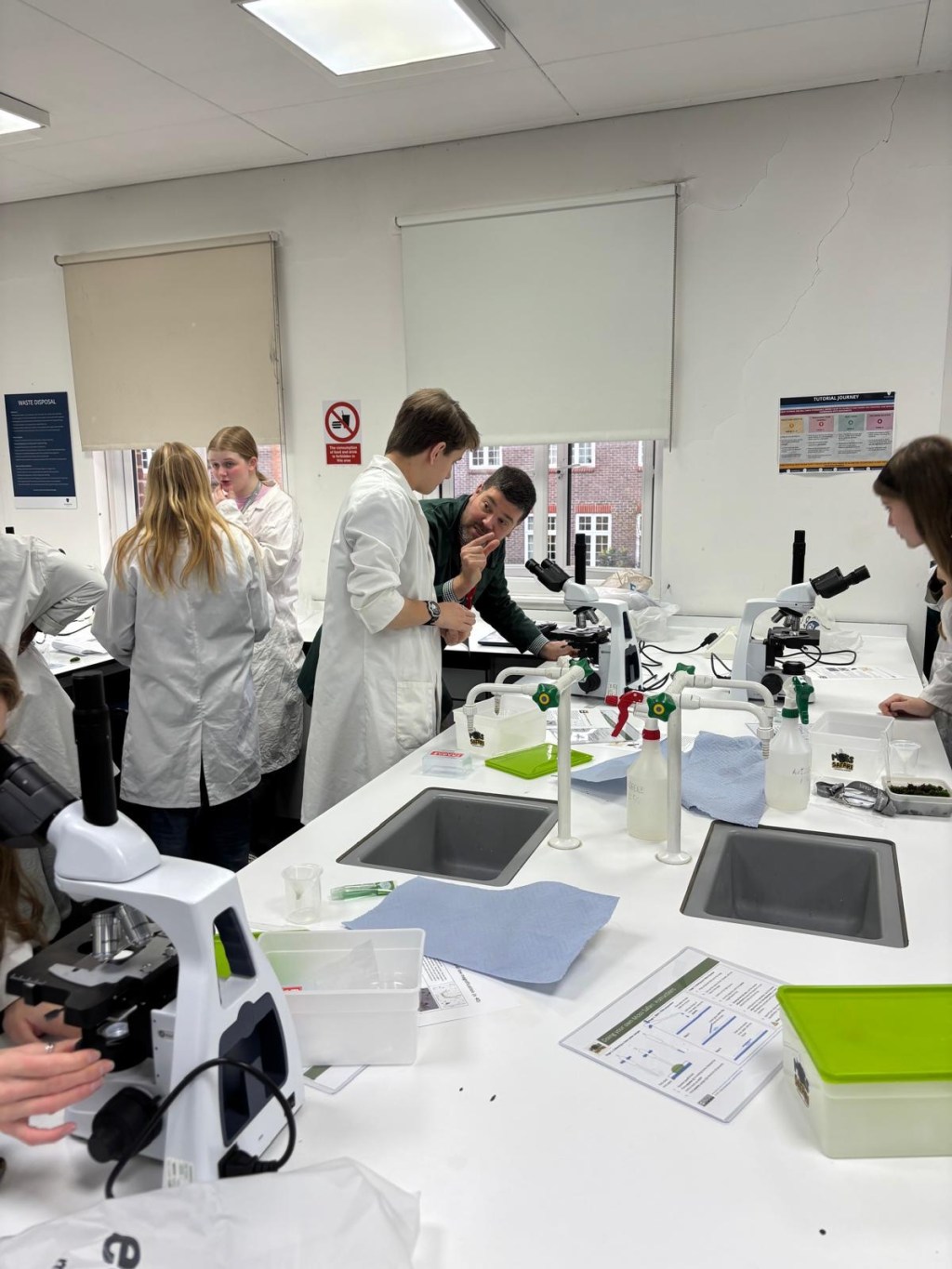
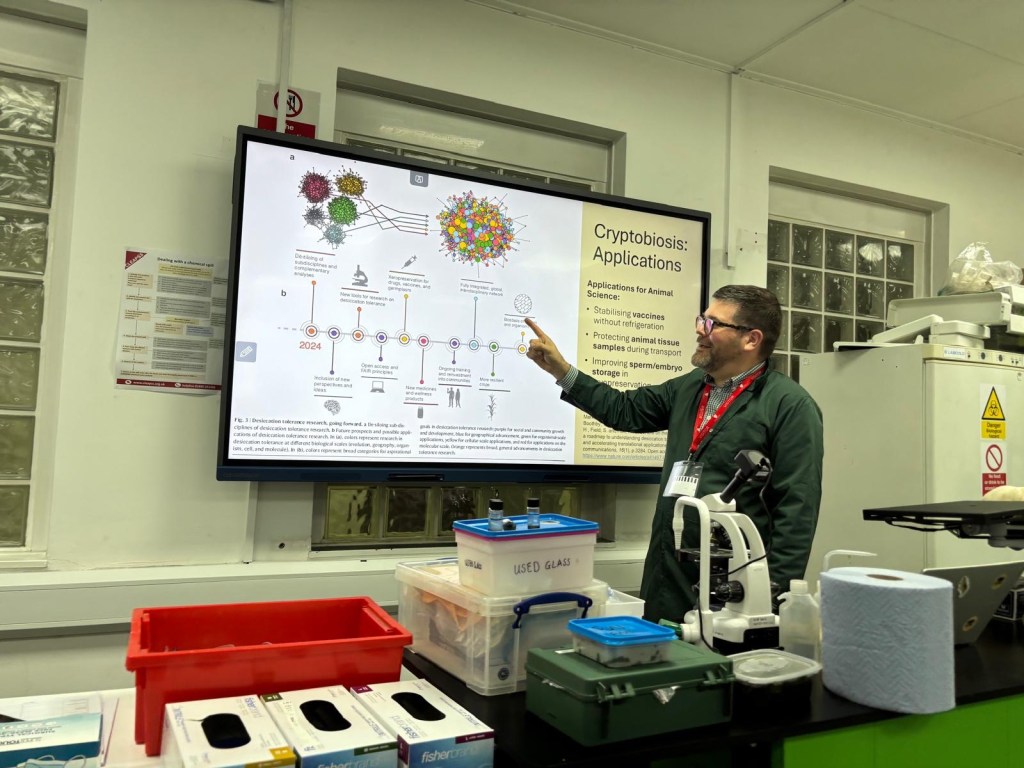
Having several experienced using Moss Safari for primary and secondary levels I was excited to apply it to post-16 T-levels. In this case it was for a group of Animal Management students at Plumpton College in East Sussex and we focused on body systems and the applications of cryptobiosis research to animal management. This blog highlights what we did and how the students responded to the experience.
Why Moss Safari Exists
My three missions are simple.
- Help people connect with nature, even the bits that require a microscope.
- Promote the magic of microscopy so it’s not left gathering dust in cupboards.
- Inspire future STEM hobbies and careers by showing that science is full of surprises .
Plumpton’s students delivered on all three fronts.
“There’s a whole world in there!” Connecting with Nature
One of my favourite parts of the day was overhearing the muttered commentary while the students were searching through their moss samples.
- “You wouldn’t think moss would have microorganisms.”
- “Moss has lots of organisms I didn’t know about.”
- “Interesting to learn new things about things that can’t be seen.”
There’s something wonderfully grounding about realising a seemingly unremarkable tuft of green on a wall is actually an entire ecosystem. It is a microscopic jungle full. It’s nature, but at 40x magnification.
The Microscopes Steal the Show Every Time
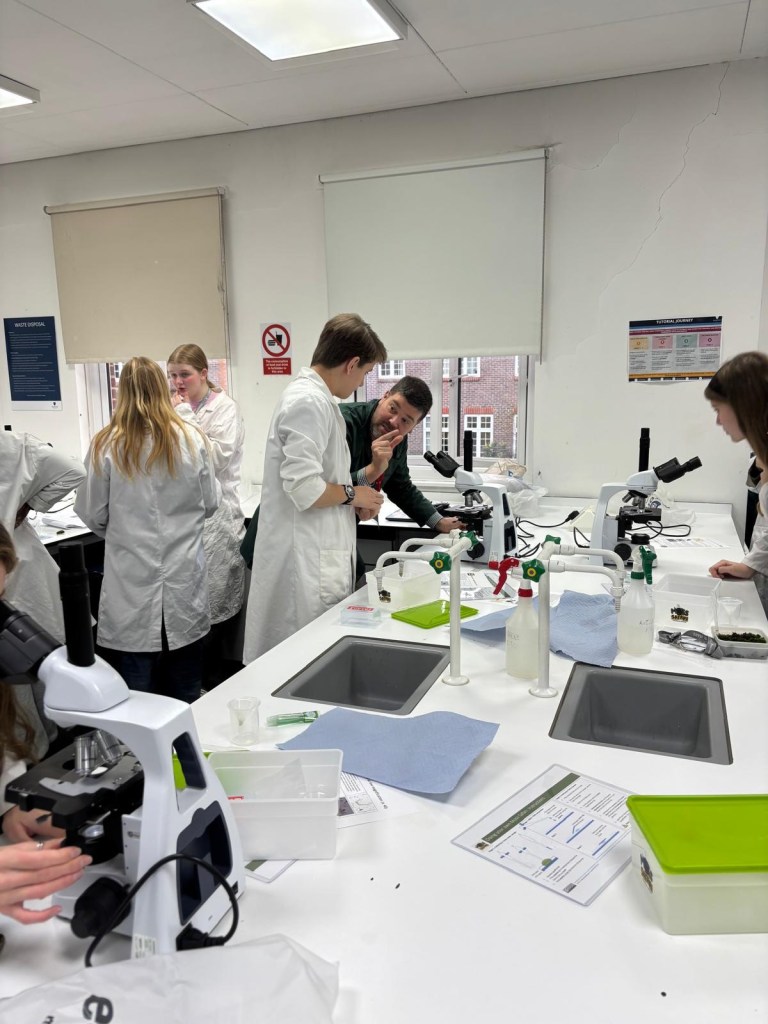
The practical element was, hands down, the students’ favourite part.
- “Looking at the movement under the microscope.”
- “Seeing the microorganisms under the microscope.”
- “I liked how we could find them ourselves.”
- “It was very interactive.”
When you’re the one who spots a tardigrade trundling across your slide, it sticks with you. It becomes your story, your creature, your tiny waddling achievement. And for those wondering, yes, we did find tardigrades today. They were very much the stars of the show. Several students asked for more time, more moss varieties, or more identification info, which is basically the ideal feedback. No one asks for more of something boring.
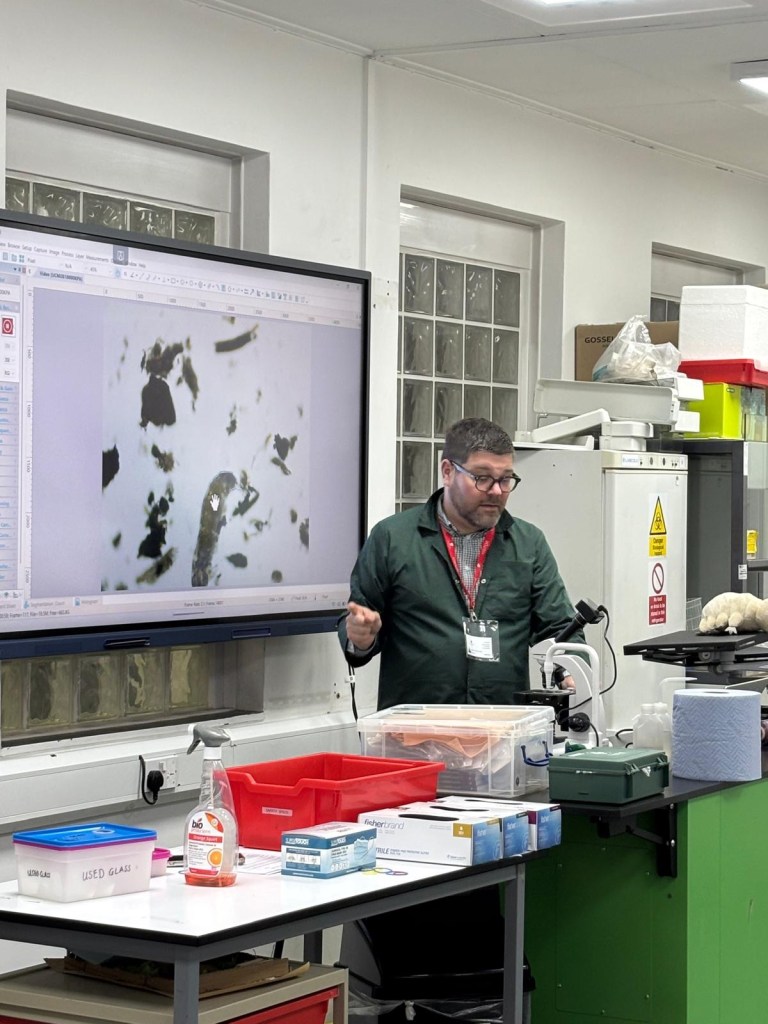
Cryptobiosis Became the Word of the Day
One of my aims is to subtly, or sometimes not-so-subtly, plant seeds of scientific curiosity. Today that definitely happened. The written feedback included the following.
- “Cryptobiosis in microorganisms.”
- “Tardigrades have brains and are arthropods.”
- “Trehalose sugar / cryptobiosis / species in moss.”
- “Cryptobiosis is being used to develop animal tissue storage.”
When college students start discussing trehalose and biological preservation after peering into moss, you know you’ve done something right.
Several even said they’re now excited to learn more. That’s the spark. That’s the point.
A Tiny World, Big Reactions
My personal highlight was the moment a student called her friend over to look at the slide, whispering, in the excited way that really isn’t a whisper, “It’s MOVING. What IS THAT?!”
It was a nematode. Small, wriggly, and living rent-free in moss until its sudden debut. It’s the kind of surprise you never forget.
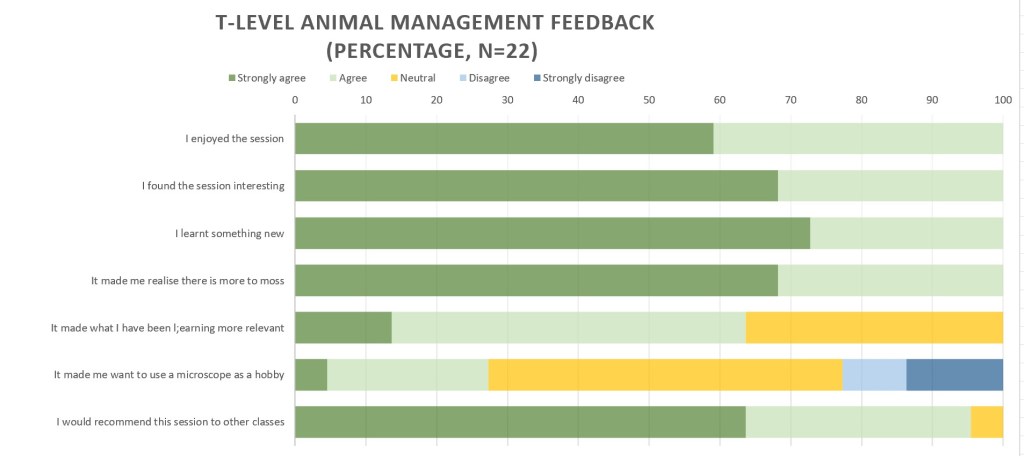
I usually ask for feedback in the form of a quick questionnaire. Here is the summary of the quantitative responses.
Acknowledgments
Thank you Megan Shields for inviting me.
 Moss Safari