Wednesday 8 April 2026
The Linnean Society is the oldest learned society devoted to the science of natural history. So it was a privilege to be able to showcase an online Moss Safari live event as part of their lunchtime lecture series. I was delighted to hear that we had over 400 sign ups, a record for this series and over 200 joined the online live session making it the largest online Moss Safari that I have ever hosted. Thank fully the moss provided a bonanza of organisms to observe and learn about.
This blog outlines the session, reflects on the feedback, offers answers to the questions and at the end there is the link to the recording of the session, hosted by the Linnean Society, to watch it again or see what you missed.
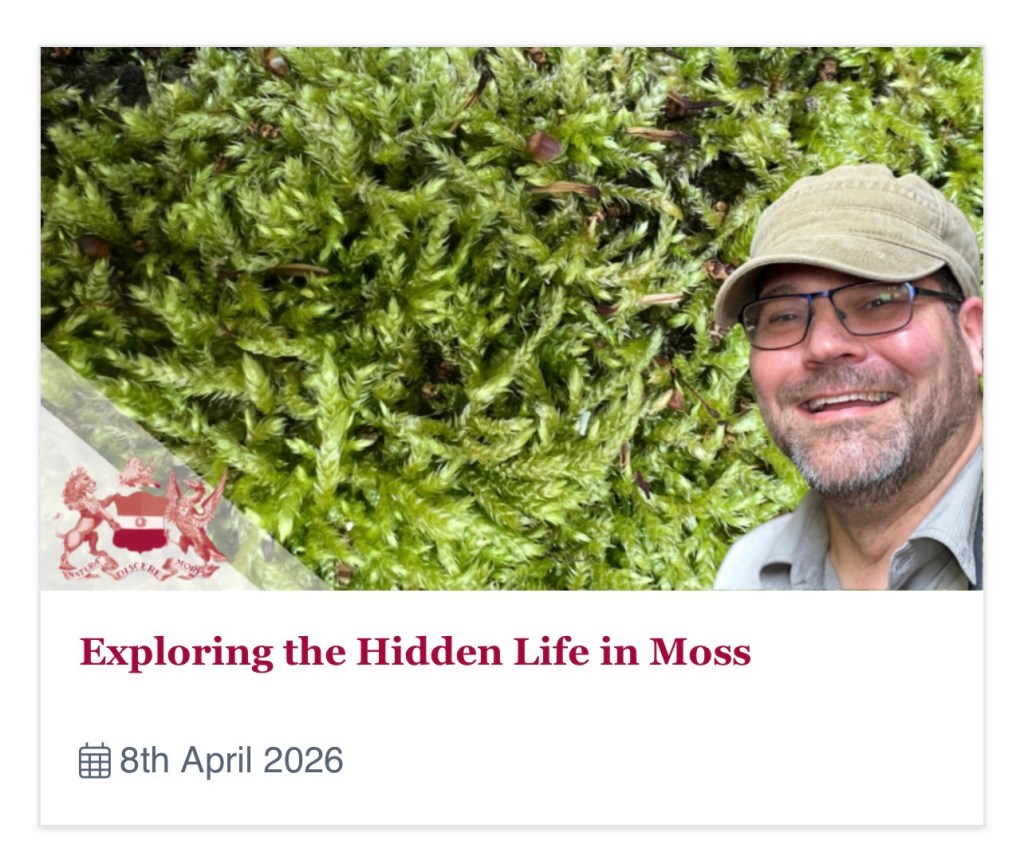
As this was a very mixed audience, I took a general approach to the narration as we observed resting and active rotifers, testate amoebae, lively tardigrades and an assortment of other treasures hidden within the moss. Of course, in keeping with Linnaeus’ classifications, I made efforts to talk about classification, but also the challenges and significance of these organisms living in moss.
Here, I summarise some of the feedback and answer those questions I didn’t have time to do justice to at the end.
Feedback
It was great to get so many messages on social media and via the contact form with compliments and questions. I am always genuinely surprised that other people get as excited about the life in moss as I do. Thank you to the Linnean Society of London for hosting, particularly to Scarlet for organising the event, and thank you to everyone who took part.
Questions
Which microscopes do you recommend?
I wrote this blog with my recommendations: https://mosssafari.com/2025/11/08/which-microscope-for-youngsters-school-kids-and-hobbyists/
Instructions of how to do a Moss Safari are here: https://mosssafari.com/2023/05/22/how-to-do-a-moss-safari/
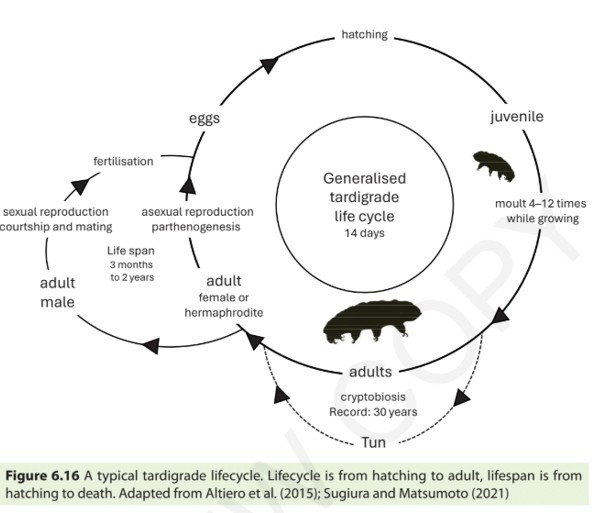
How long do the tardigrades live for?
Here is a diagram from my Moss Safari book. Hatching takes between 5-14 days depending on conditions.
Which resources and books help with moss identification?
I have this very basic What is a Moss? series of infographics: https://mosssafari.com/discovering-mosses/
My recommended books about moss: https://mosssafari.com/2024/12/07/best-books-for-moss-safari-part-1-mosses/
A recent book that is available for beginners is Faith Anstey’s Start to Identify Mosses
Which books help with identification of the organisms that live in moss?
Of course there is the award nominated Moss Safari book itself. We are waiting for new stock, but you can pre-order it from Pelagic publishers at a 25% discount with the code MOSS25. Or direct from me, signed with free vinyl stickers of the Big Five via the Moss Safari Ko-Fi Shop.
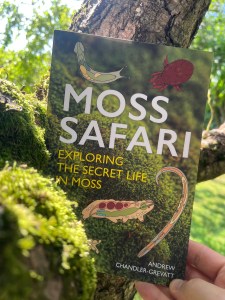
The books I use for learning about moss organisms: https://mosssafari.com/2024/12/09/best-books-for-moss-safari-part-2-the-microscopic-big-five/
Are there any potential health and safety issues when working with moss?
There is a low risk of some potential hazards common to using any biological material and freshwater. I have a risk assessment available for using moss in schools that covers all the potential hazards and how to minimise them (Resources – scroll down). Always wash your hands after handling moss and do not eat or drink while handling it.
Supporting Moss Safari
Donations
If you enjoyed the session and want to donate to the educational work of Moss Safari, you can do this via the Moss Safari Ko-Fi site. Thank you to those who have already done so.
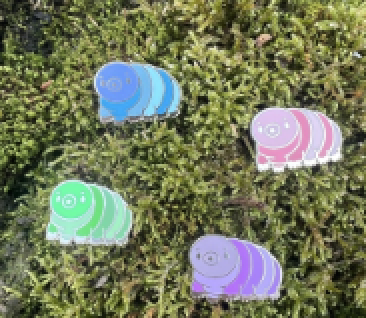
Get the Moss Safari Tardigrade Pins
£5 each or Buy all 4 and get 20% off with code 20LIN (£16 for all four plus P&P)
https://ko-fi.com/mosssafari/link/20LIN (Code expires at end of April 2026)
Follow Moss Safari on Social Media
Want more?
Why not join us for Moss Safari Monthly – evening online sessions that explore the world of moss.
Download the PowerPoint PDF here:
Watch the Moss Safari session here:
[Once the Linnean Society have edited and published the session, I will post it here]
The Linnean Society of London YouTube Channel
 Moss Safari