On Wednesday 4 June, the students of Lewes Old Grammar School stepped into the unknown—right in their own school grounds. With curiosity as their compass and microscopes in hand, 100 Year 9 students embarked on a Moss Safari, discovering the extraordinary life teeming within the green mats of moss we usually overlook. Led by Dr Andy Chandler-Grevatt (Dr Moss), with support from Sarah Poore and Jude Dean, the event was themed “The Science Isn’t Done”—a reminder that science is full of mysteries still to be explored, and that even the smallest patches of nature can hold the biggest surprises.
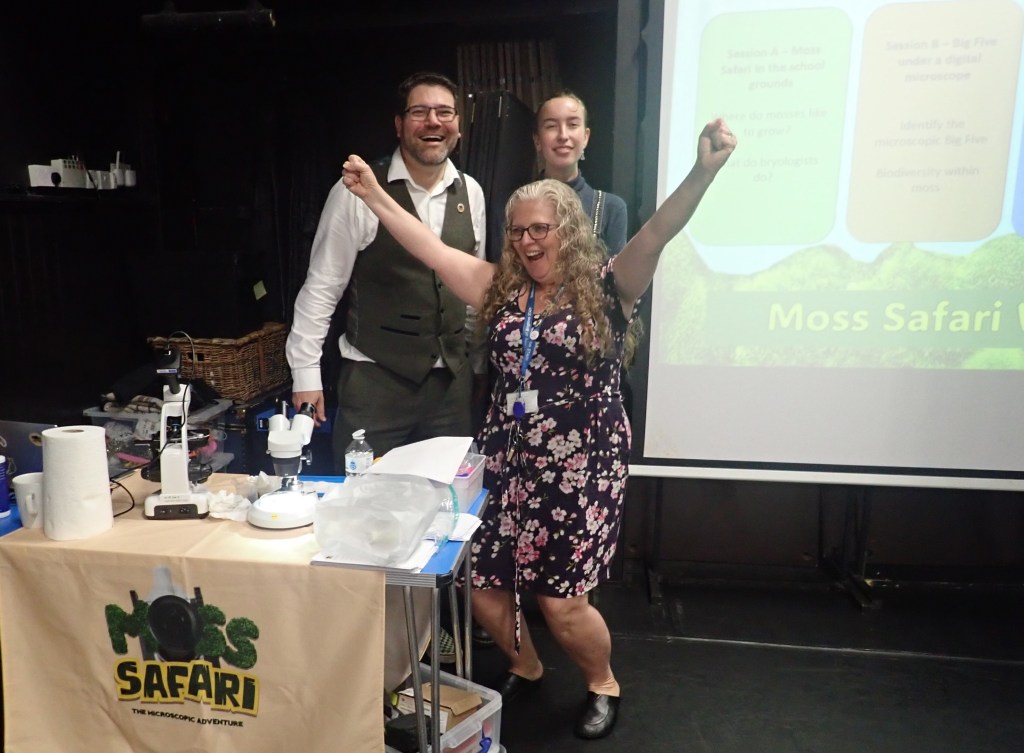
What Did the Students Do?
In a packed morning of rotating activities, students explored four interactive sessions:
- Moss fieldwork – searching for moss on school grounds and learning how it adapts and survives.
- Digital microscopy – spotting living tardigrades, rotifers, mites and more in real time.
- Compound microscopy – preparing and observing their own slides of moss water samples.
- Microplastics and rotifers – learning about environmental threats to microscopic life.
What Did They Learn?
This wasn’t textbook science. It was real science—messy, surprising, and sometimes mind-blowing.
- Over 90% of students reported learning something new
- More than three-quarters said the experience changed how they see moss and microscopes
- 87 students (from 100) gave feedback, with most saying they really enjoyed the day
Top takeaways included:
“That science hasn’t discovered everything.”
“That tardigrades are almost indestructible!”
“That microplastics are affecting life we can’t even see.”
“How diverse moss is… a different world of organisms.”
What they loved most:
- Seeing live organisms under real microscopes
- Doing actual fieldwork and slide preparation
- The interactive variety of the sessions
They wanted more time to explore, smaller group sizes, and less time indoors—clear signs they were genuinely hooked.
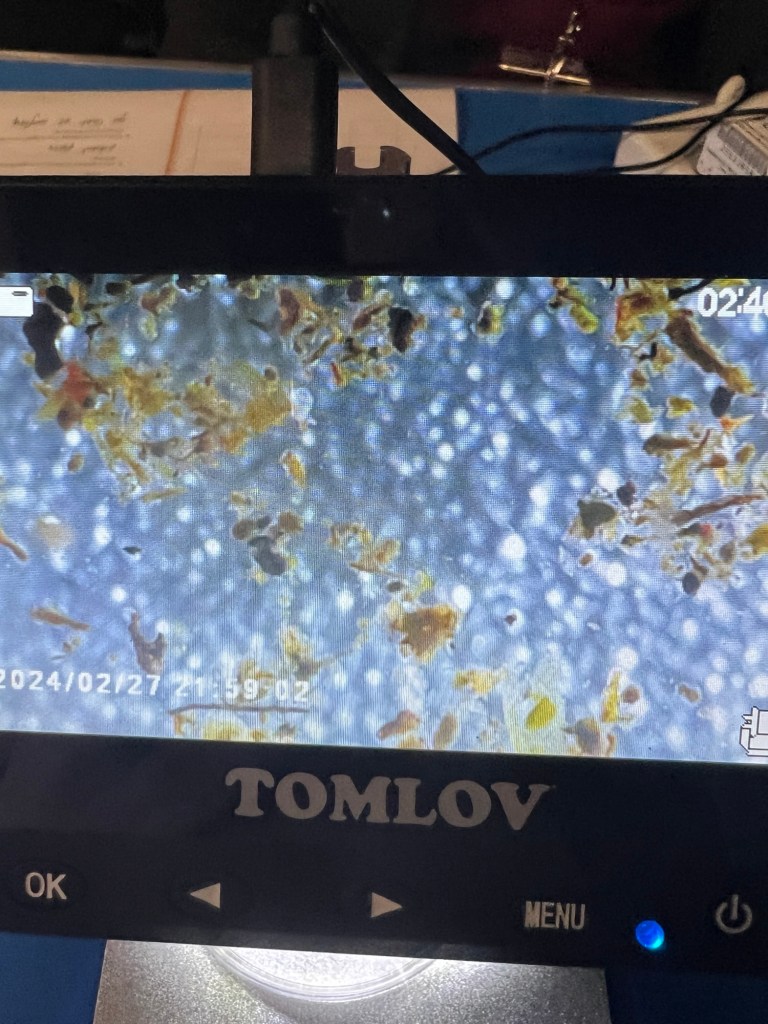
Why Moss Matters
The Moss Safari experience also encourages broader reflection: moss is not just a green blur on bricks and bark. It’s an ancient survivor, an environmental champion, and the gateway to an entire micro-ecosystem of creatures. Students came away with:
- Greater environmental awareness
- Improved scientific observation and communication skills
- A real sense that science is something they can do, not just learn about
Acknowledgments
Thanks to Mark Ferguson, Head of Science, for arranging and organising this event. Thank you to the LOGS staff who were hands-on supporting and leading some sessions. Thanks also to the IT technicians and Mr J Martinez Pardo, the Biology Technician who also took photos for us. Also, Philip at the University of Brighton that loaned the digital microscopes and prepared the compound microscopes.
Want to Bring Moss Safari to Your School?
Moss Safari sessions are fully adaptable to school settings and link naturally to curriculum topics in biology, environmental science, and STEM careers. Each session encourages:
- Hands-on microscopy and discovery
- Mindfulness and nature connection
- Collaboration and communication
- Curiosity about the unknown
If your school wants to inspire the next generation of scientists—and encourage a love for the microscopic world—Moss Safari is a brilliant place to start.


 Moss Safari