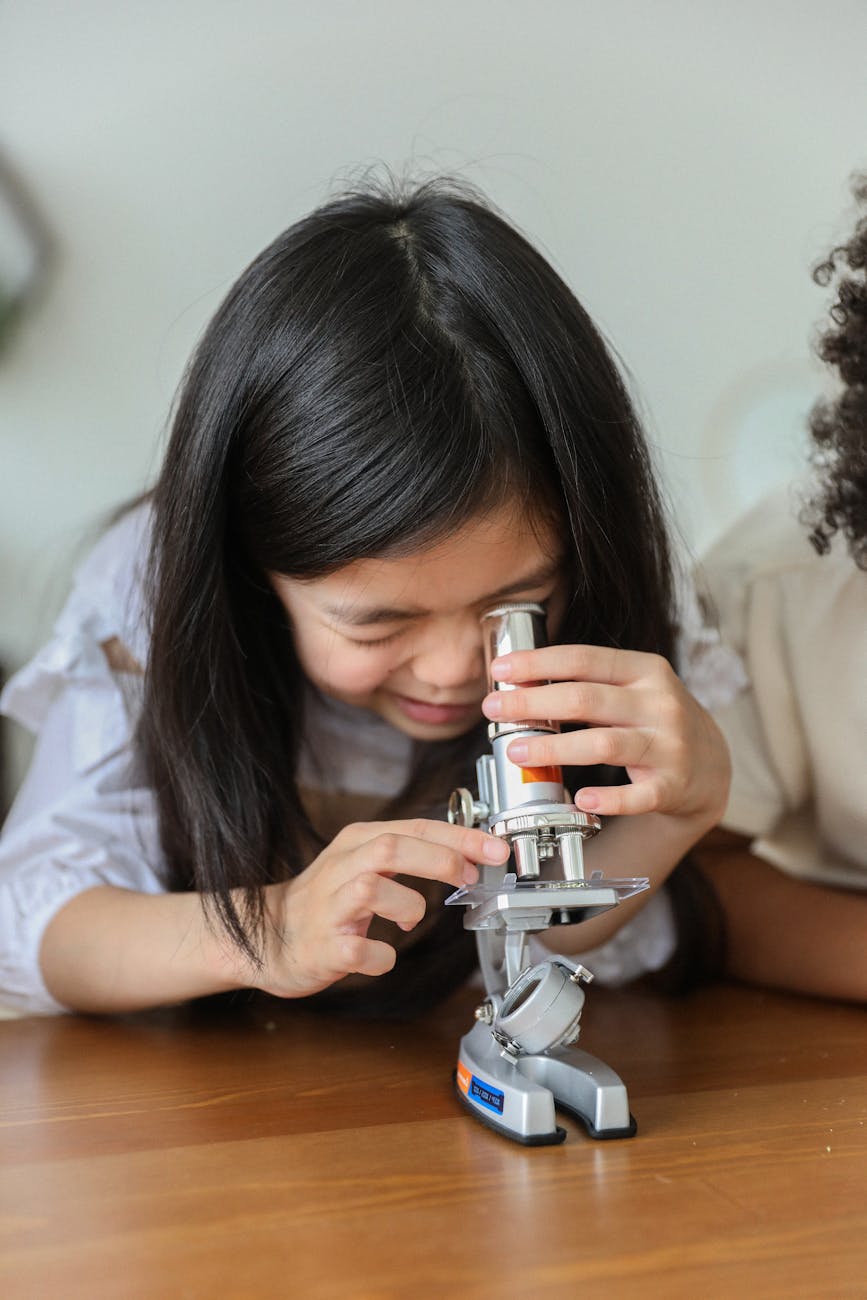
One of the most common questions I get at public and school events is which microscope should people buy for their children, grandchildren, classes or for themselves?
This is not a simple question, as it depends on who it is for and what it is going to be used for. In this blog I describe, in the context of doing Moss Safari, which microscopes I have used and what they are good for. You can then make your own decision based on this.
In order to add some ‘passive income’ to support the educational work of Moss Safari, I use Amazon Affiliates links where I get a very small income per click or purchase. All Amazon links below may generate such income at no cost to you. In addition, I collaborate with Vitta Education and they have supplied me with microscopes to use for outreach work. Again, any sales from links may generate a small income for Moss Safari at no cost to you.
Microscopes for 7-11 year olds (Primary School Ages)
For me, it is important for a child’s first experience of microscopy to be a positive one. So start them simply and build up with more complex.
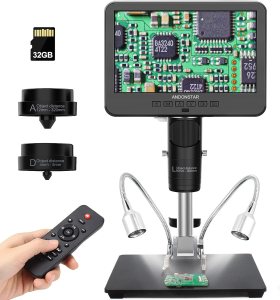
Digital Microscope
Pros
Cheap and good taster. Useful to see if you child likes microscopy. Very easy to use.
Simplest ones start at about £40-£70 e.g. https://amzn.to/4hJ9nAK
The ones with lights attached help seeing the Moss Safari microscopic Big 5. £150-200 e.g. https://amzn.to/4hJ9nAK (Picture left)
Cons
Magnification stated of x 2000 just isn’t true. You will see the microscopic Big Five at x 20 – x 40 magnification.
You will not be able to see the details of the Microscopic Big Five or many unicellular organisms.
Starter Stereo Microscope

Pros
Feels like a ‘proper microscope’. You will see the microscopic Big Five at x 20 – x 40 magnification.
Usually has two magnifications (though you can also change the magnification of the eye pieces). Price range £60-90
Simple to use. I like the Duralab brand because it is robust and suitable for classroom use. There’s little chance of damaging the focus knobs. I recommend Duralab DS-20 Classic Stereo microscope
Cons
You will see the microscopic Big Five at x 20 – x 40 magnification. You will not be able to see the details of the Microscopic Big Five or many unicellular organisms.
Microscopes for 11-16 year olds (Secondary School Ages)
Compound microscopes
Pros
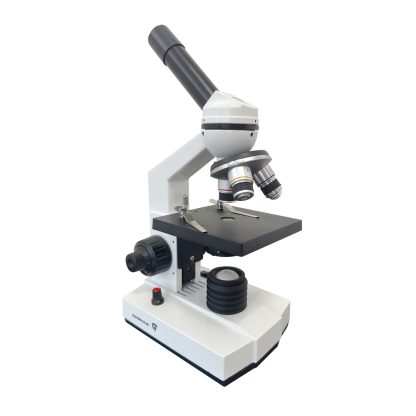
This feel like a ‘real’ microscope (because it is!) but it has been built with classroom use in mind – it is resilient to over turning the focus knobs and can take reasonable knocks.
It has all the bits you need to see up close the Moss Safari Microscopic Big Five at x40 and x100. It has a diaphragm and LED dimmer fora adjusting light to see details of the organisms.
These are model that VITTA Education donated to Moss Safari for use in schools. It’s the DuraLab -100 Monocular Microscope. Price £130 -£180 depending which model.
Cons
Takes a bit more time to learn how to use. However, the it will see a student through secondary school (and beyond).
The eye piece is secured in with a small screw, which is excellent for safety, but can make it difficult to put a camera in the eye-piece. However, we have taken good pictures using a smart phone attachment.
e.g. Smartphone microscope attachment – make sure it is suitable for the make and model of your phone and will attach to the diameter of the eye-piece. Prices range between £20-40 depending on model and features.
Microscopes suitable for hobbyists
For this, I will list the models I have used and use currently to give you a sense of the type of microscopes that are suitable for Moss Safari. Note however, there is lots of alternative advice from amateurs and experts (see links below).
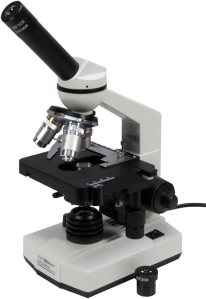
I started out with this lovely microscope The Apex Practitioner Microscope. I used this a lot and still do. The mechanical stage is a winner for doing methodical slide scans when doing a Moss Safari.
These types of microscope range between £150-£200.
It’s easy to remove the eyepiece and replace it with a microscope camera.
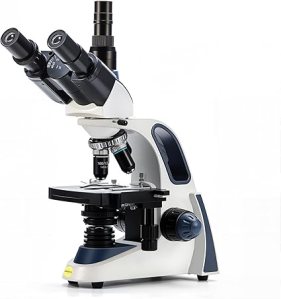
The second microscope I bought was the SWIFT SW380T Trinocular Compound Lab Microscope. This is trinocular which means I can view the slide through the binocular eye pieces and at the same time have a microscope camera in place at the same time.
This is of course the next price bracket £250-£300, the cameras range between £60-£100 depending on megapixels and speed.

The microscope you see me using for Moss Safari events is the Microscope: BMS146 FLArQ LED Monocular with the DuraLab Microscope Camera 3MP – 2.0 USB. Both of these were supplied to me by VITTA Education and are perfect for my traveling Moss Safari. This works well for hobbyists doing outreach or school teachers wanting to demo Moss Safari.
There are microscopists that argue that you should buy a high quality/ professional brand e.g. Leitz, Nikon, Olympus microscope. For me, these are too expensive, with starting prices at £1000 plus and relatively more precise but more delicate. However, I am sure they have advantages for dedicated hobbyists. Since I do not use these, I cannot comment.
Sourcing other equipment for Moss Safari
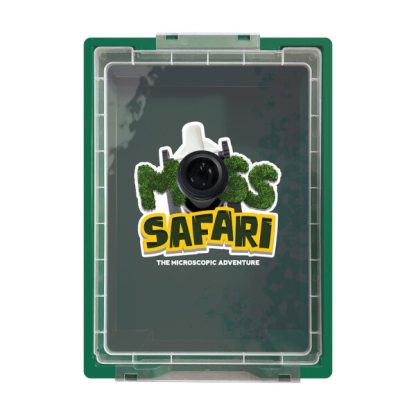
You can get a Moss Safari Starter Kit from VITTA Education which contains some concave slide, cover slips, beakers, funnels, filter paper and plastic pipettes and an activity booklet that contains all the activities you need for Moss Safari.
It’s targeted at high end primary school, but is useful for lower secondary school. However, it has all you need if you are starting as a hobbyist.
Further links
Quekett Microscopical Club (Amateur Microscopy) – Starting with microscopes
Royal Microscopical Society – Guidance for schools
 Moss Safari