Are you feeling ready to try and tell one moss from another? Even get as far as giving the moss a name? We have to get much closer to the mosses. I have selected a few mosses that I have been learning about that grow in my town and city. These urban mosses are quite distinctive in their growth form, leaf shape and sporophytes. Use this infographic to see if any of your local mosses match these.
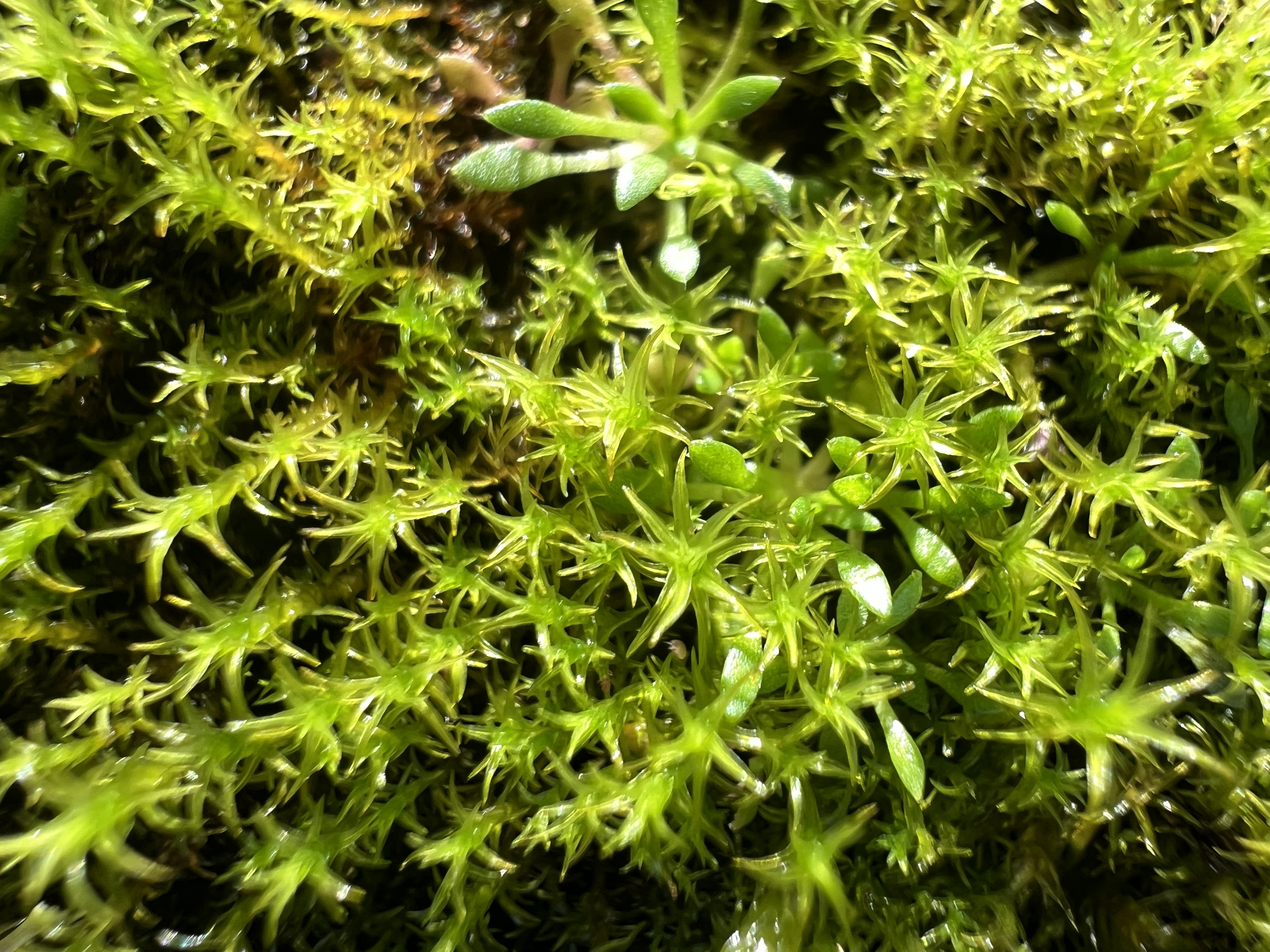
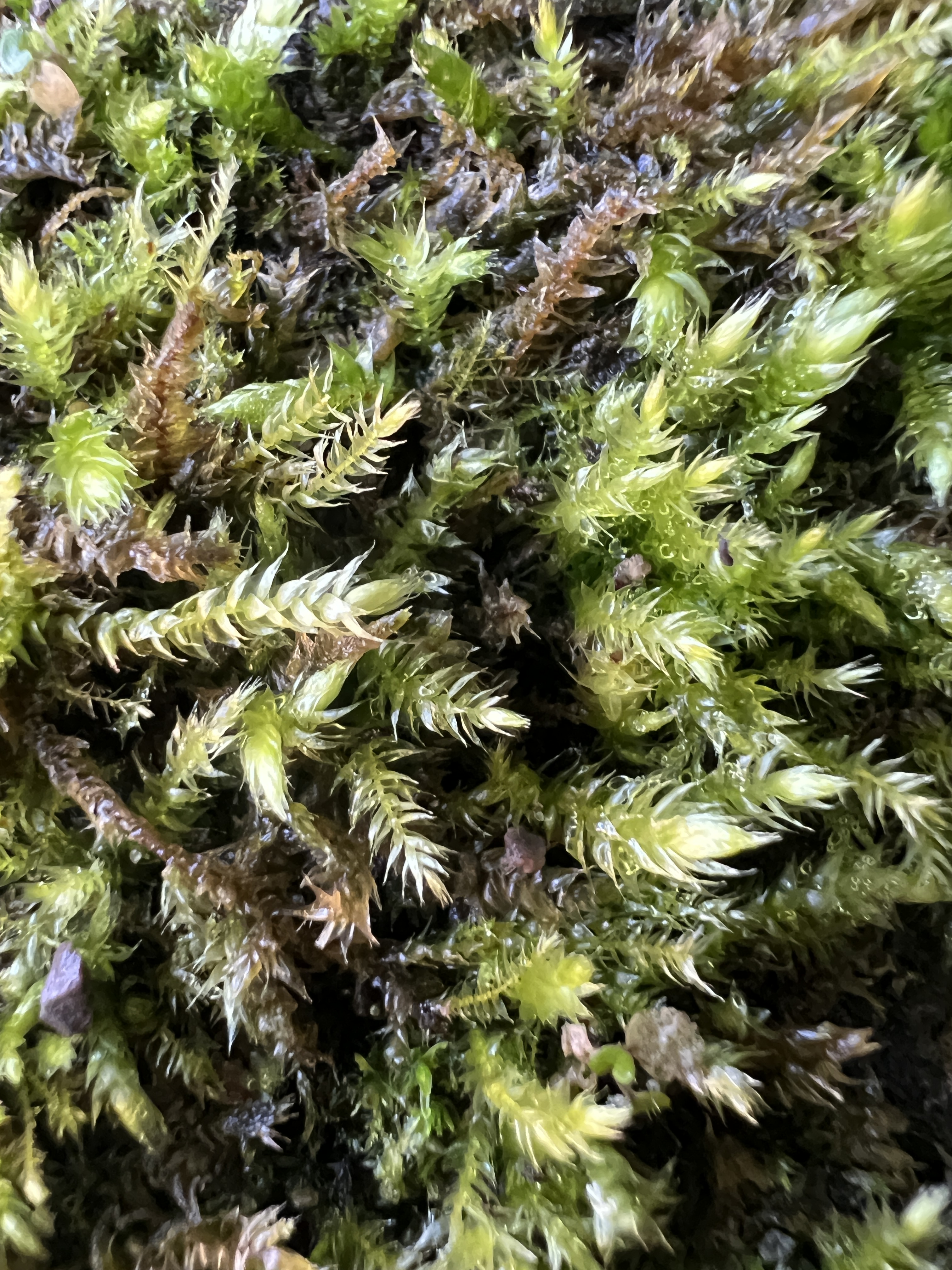
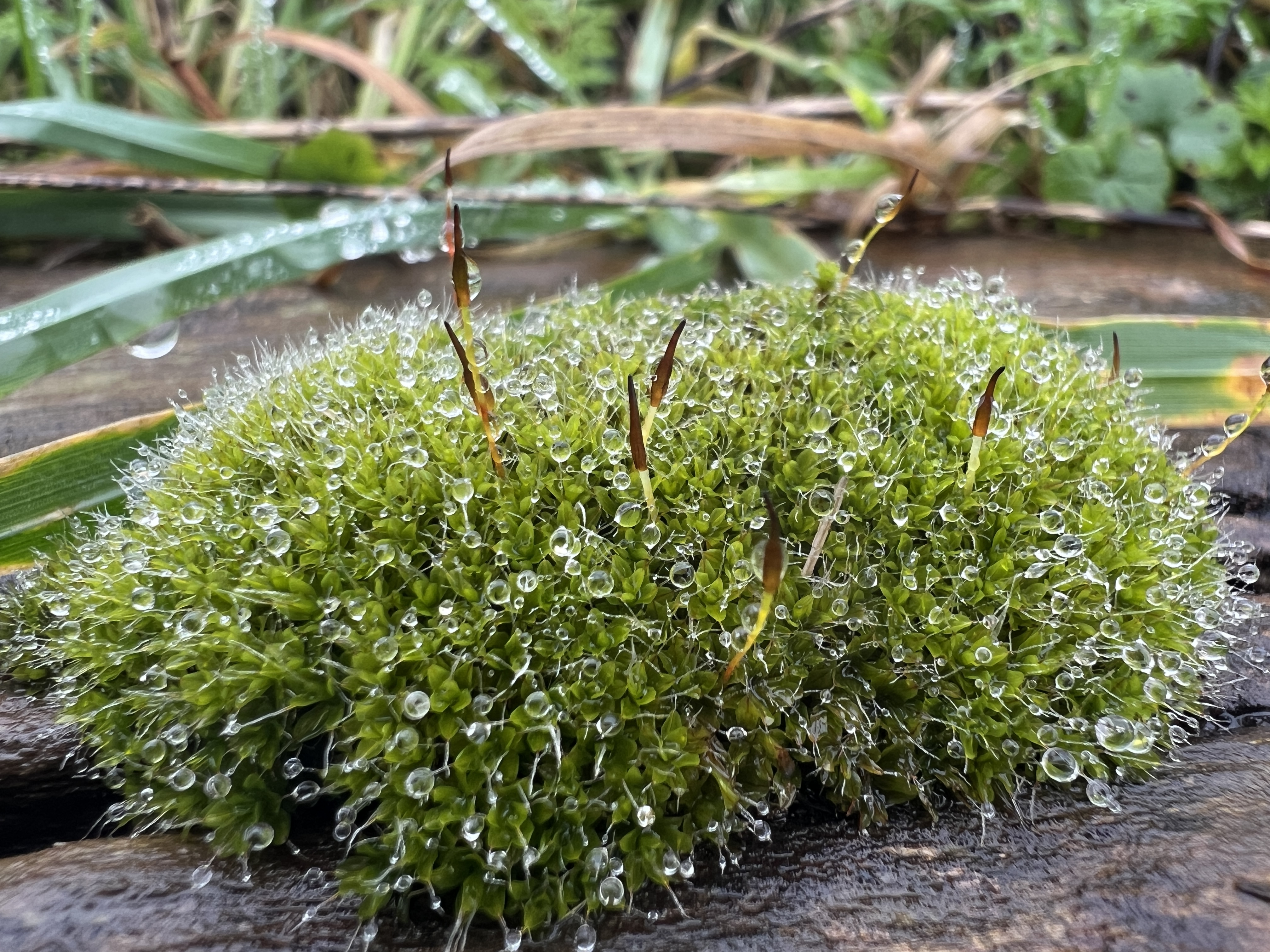
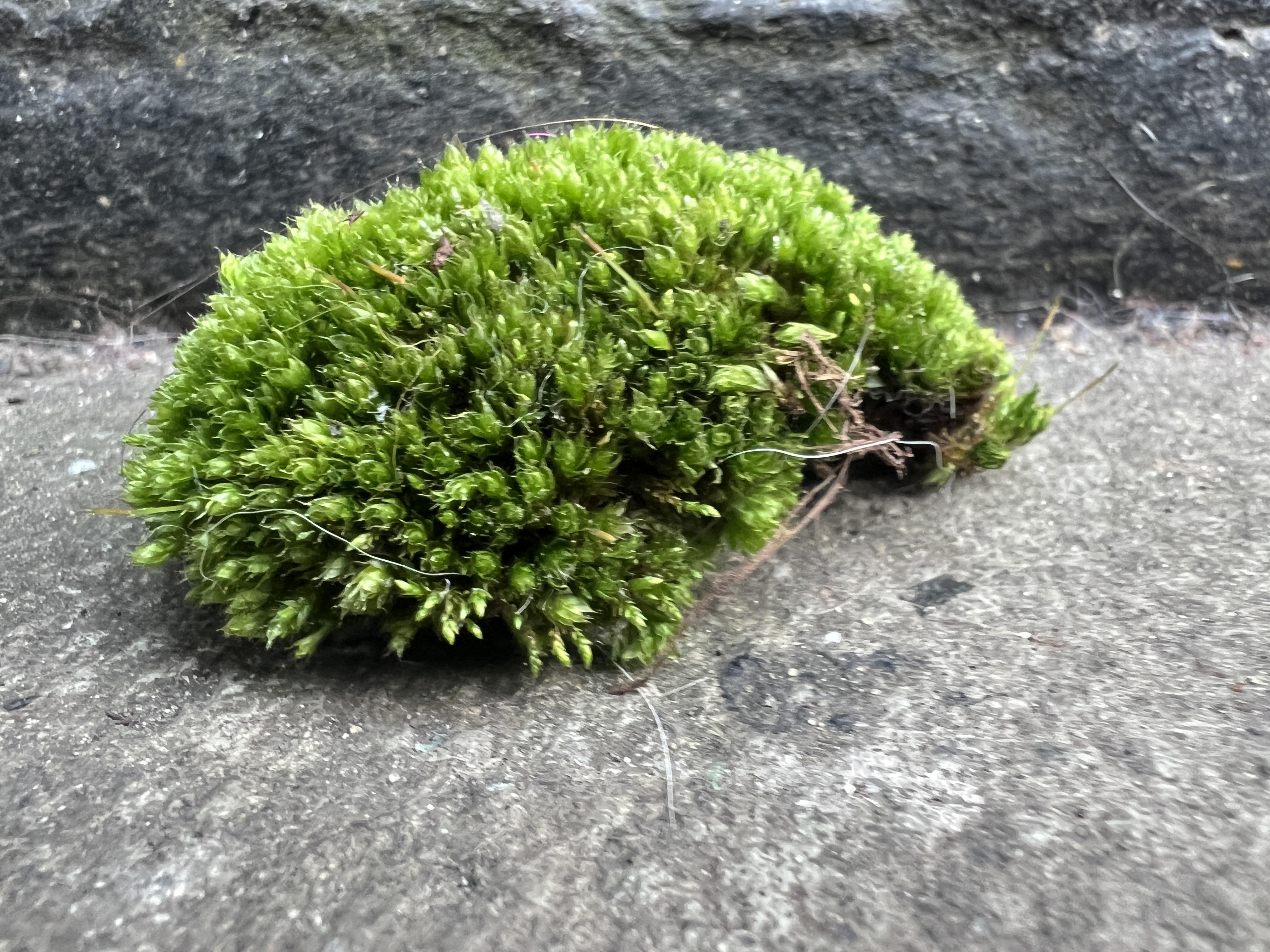
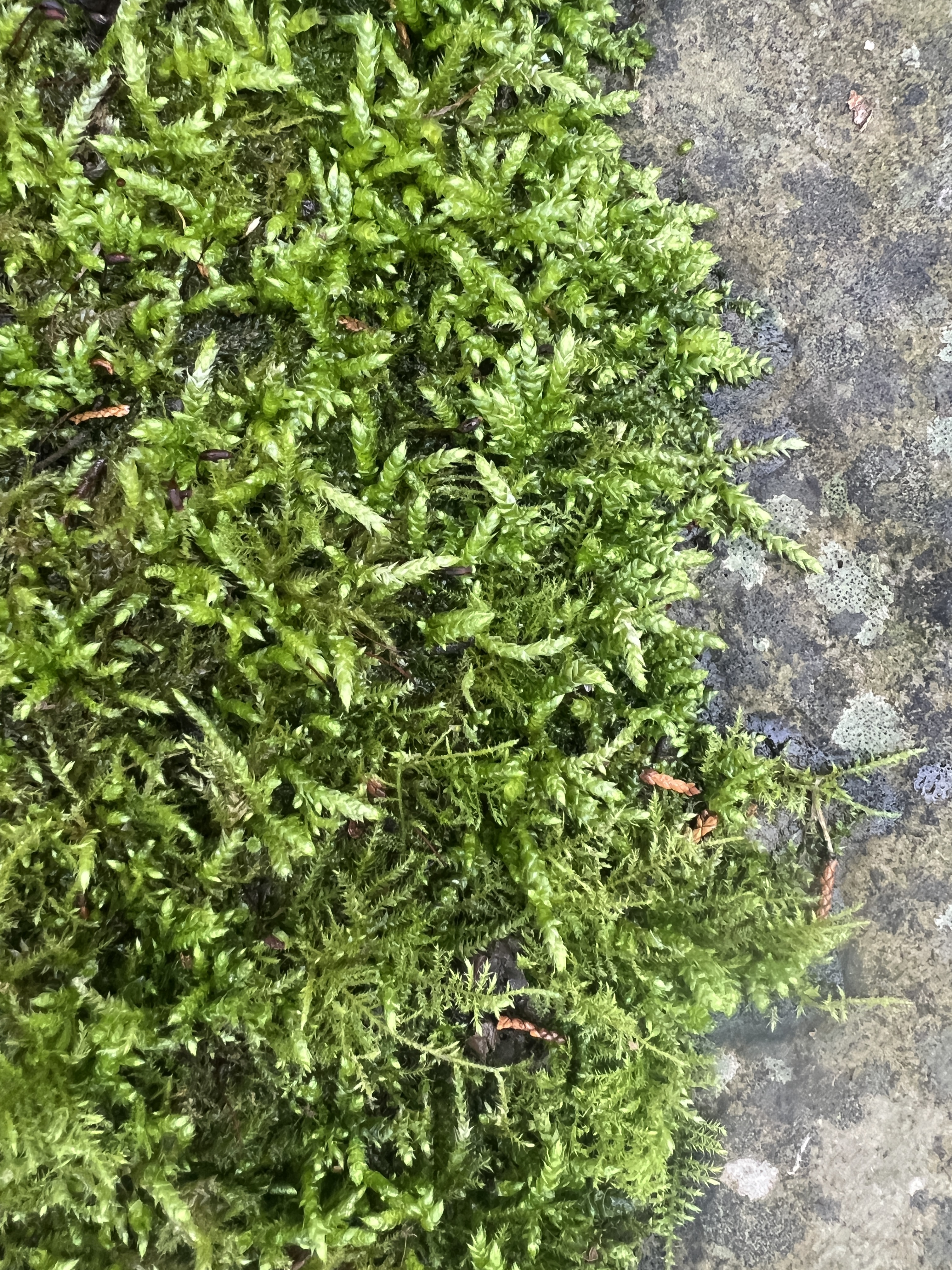
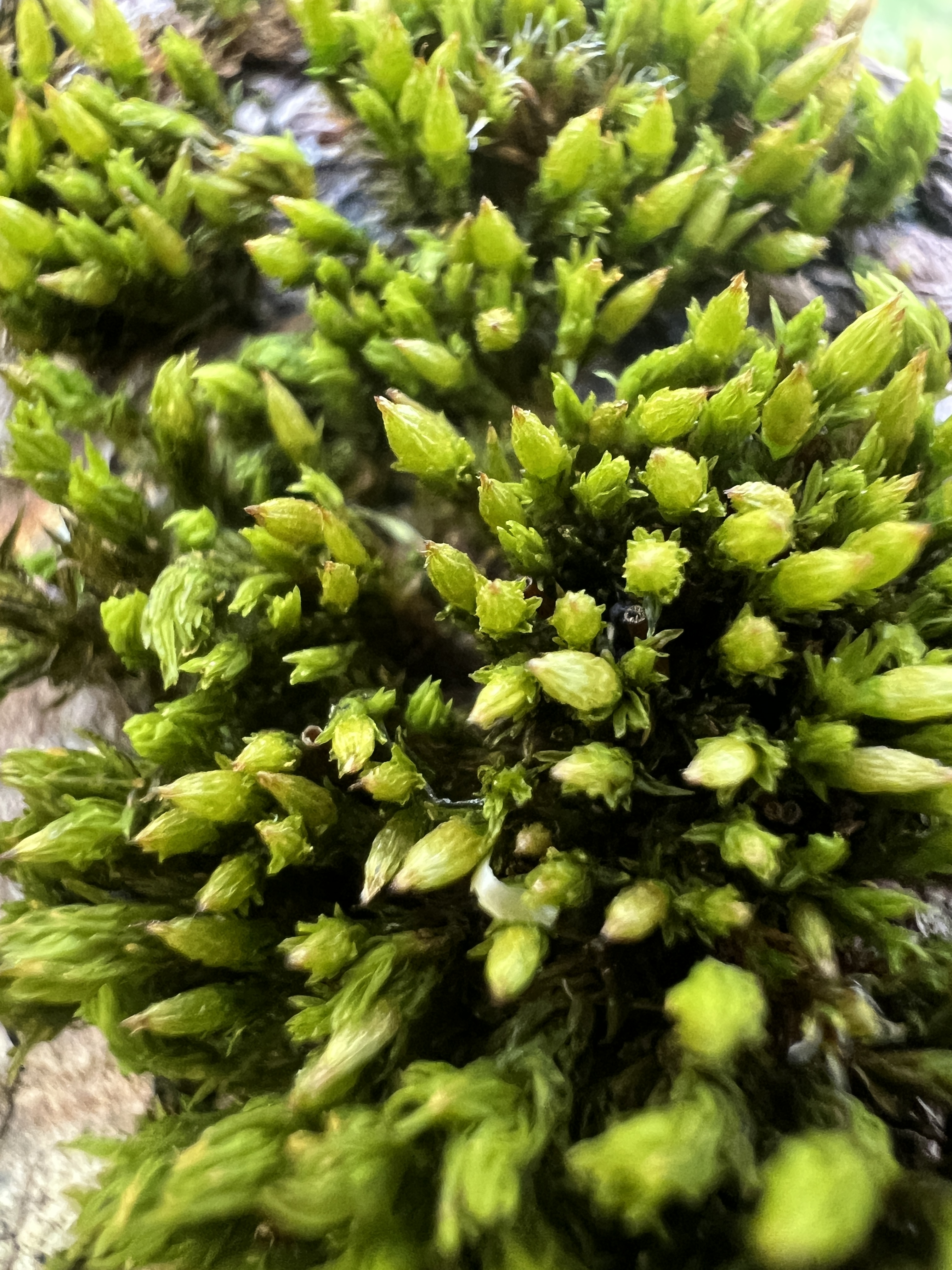
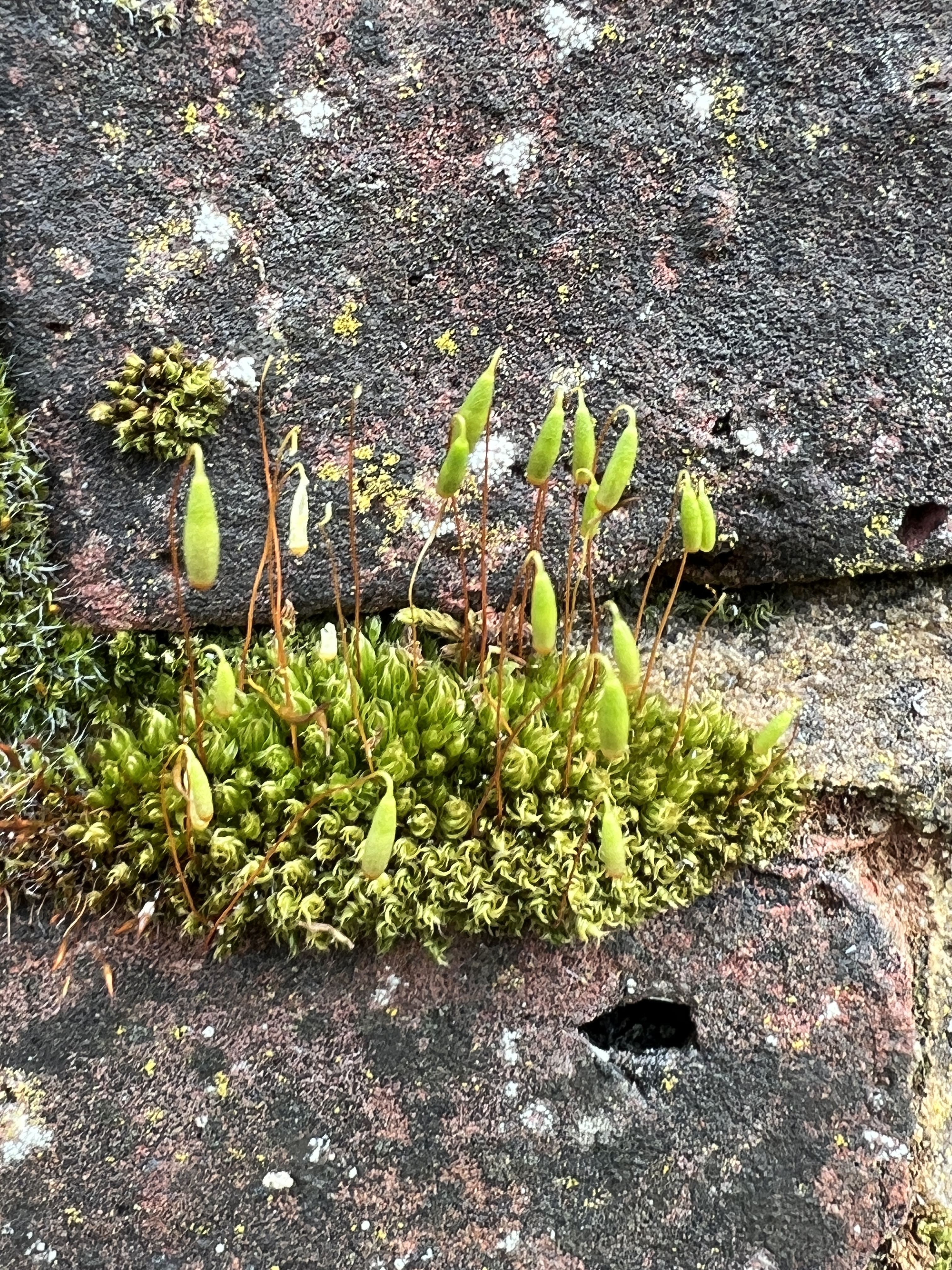
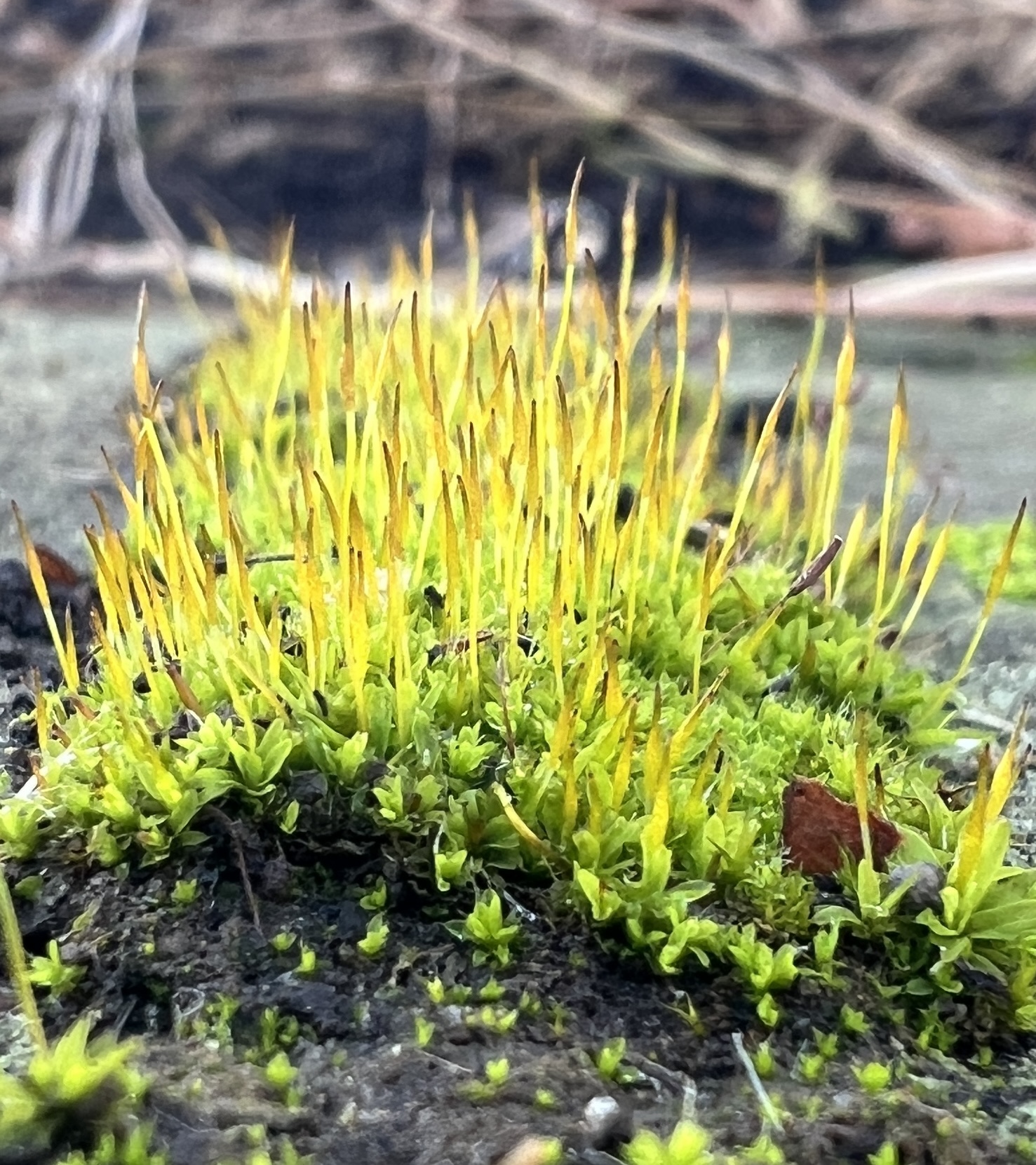
Urban mosses are some of the most visible and resilient of all, thriving in our towns and cities where other plants struggle. Once you start looking closely, you’ll see they’re surprisingly varied. Some form neat cushions, others soft mats, some silvery, others golden-green. Each has its own character and way of coping with the challenges of city life.
This infographic introduces a few of the most common mosses you’re likely to find in urban areas of the UK. It’s not a full identification guide, think of it as a friendly first step. The mosses shown here can all be spotted with the naked eye . Using what we’ve learned about growth forms (acrocarpous cushions and pleurocarpous mats) and moss parts (leaves, stems, rhizoids, and sporophytes), you can start to work out which moss you’ve found.

Understanding Urban Mosses
Urban mosses live on hard surfaces such as stone, brick, concrete, and tarmac. Because they don’t need roots or soil, they make perfect use of the tiny cracks and crevices that collect dust and moisture. Some mosses, like Bryum argenteum (Silver-moss), sparkle pale green in dry pavement cracks and turn bright green when damp. Others, like Tortula muralis (Wall Screw-moss), grow in small grey-green cushions on walls or rooftops, their leaves twisting when dry to protect against dehydration.
You’ll also find feather-like mosses, such as Homalothecium sericeum (Silky Wall Feather-moss), spreading in shiny golden mats across walls and tree bark. These pleurocarpous mosses grow horizontally, forming soft carpets. In contrast, acrocarpous mosses like Grimmia pulvinata (Grey-cushioned Grimmia) form neat silvery domes that catch the light after rain. Notice how the colours, textures, and leaf shapes vary, these are key clues to identification.
How to Use This Infographic
- Take a slow walk through your local area and look for mosses growing on different surfaces: walls, pavements, roofs, and trees. Try to spot at least one cushion-forming (acrocarpous) and one mat-forming (pleurocarpous) moss.
- Compare what you find with the photos and descriptions on the infographic. Focus first on growth form (cushion or mat), then colour (silvery, green, golden, dull), and finally on texture or hairiness (smooth, silky, or with white hair tips).
- If you can see capsules, note their colour and shape. Are they long and nodding like those of Bryum capillare, or short and hidden among the leaves like Orthotrichum anomalum?
- Share your discoveries online using the hashtag #ISeeMoss and tag @moss_safari. It’s a great way to build your moss-spotting confidence and connect with others who are discovering the same hidden world.
Urban mosses might seem ordinary at first glance, but they reveal incredible diversity once you start paying attention. Every wall, pavement, and rooftop can host a miniature world. The next time you’re walking through town, slow down and take a closer look, you’ll soon see your city through new, moss-tinted eyes.
In the next part of the Discovering Mosses series, we can start to look in detail at the mosses we find and attempt to identify based on their scientific name.
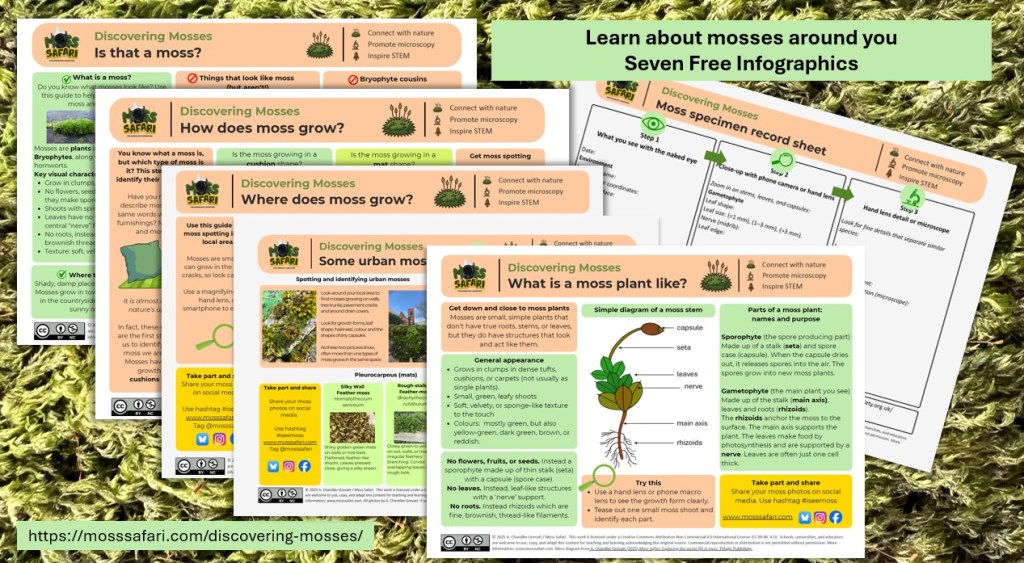
All the Discovering Mosses Infographics can be found here on one page.
Join in and support
I post regular finds and updates on Bluesky, Facebook and Instagram. Come and say hello, and share your photos. I am learning as I go, and I will certainly make the odd mistake. Polite corrections are very welcome.
All of the resources in this project are free to use. If you would like to support my educational work, you can leave a tip or pick up Moss Safari merchandise. Your support helps me keep creating and sharing more moss magic.

References and Resources
These are the sources that I used to research this infographic and blog.
Neil Bell (2025) The Hidden world of mosses. Royal Botanic Garden Edinburgh.*
Ian Atherton, Sam Bosanquet, Mark Lawley (Editors) (2010) Mosses and Liverworts of Britain and Ireland a field guide. British Bryological Society. Available from here.
Dominic Price and Clive Bealey (2022) A field guide to bryophytes. The Species Recovery Trust. Available from here.
Elizabeth Lawson (2024) Moss and Lichen. Reakton Books.*
*I use Amazon Associates to help fund Moss Safari Education Activities. Clicking and purchasing on these links may generate some small income at no cost to you.

Generative AI use Statement
As part of the Discovering Moss series, I use generative AI to review my clarity of communication both in design and in writing. Every post is reviewed and fact-checked by me, combining human curiosity with responsible AI assistance to share the wonder of mosses.
 Moss Safari