We are now at step 4 of our moss discovery. Are you ready to find the places that mosses grow? We now know what mosses are (and are not), How a moss grows and What a moss plant is like. Now that I look for mosses, I see them everywhere. In tiny nooks and crannies, in supermarket carparks, on top of roofs and in pavement cracks. It’s very much a case of #iseemoss!

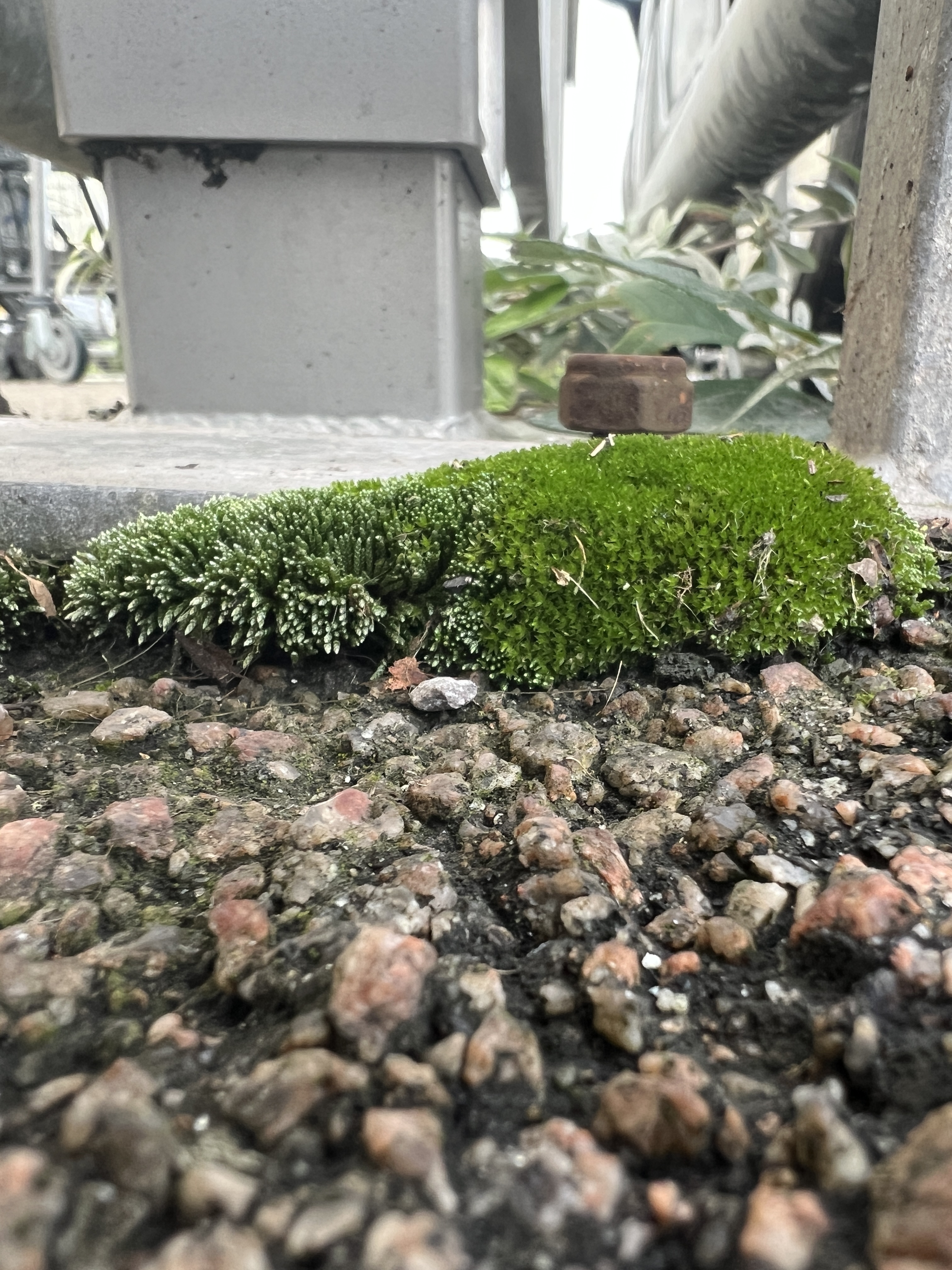
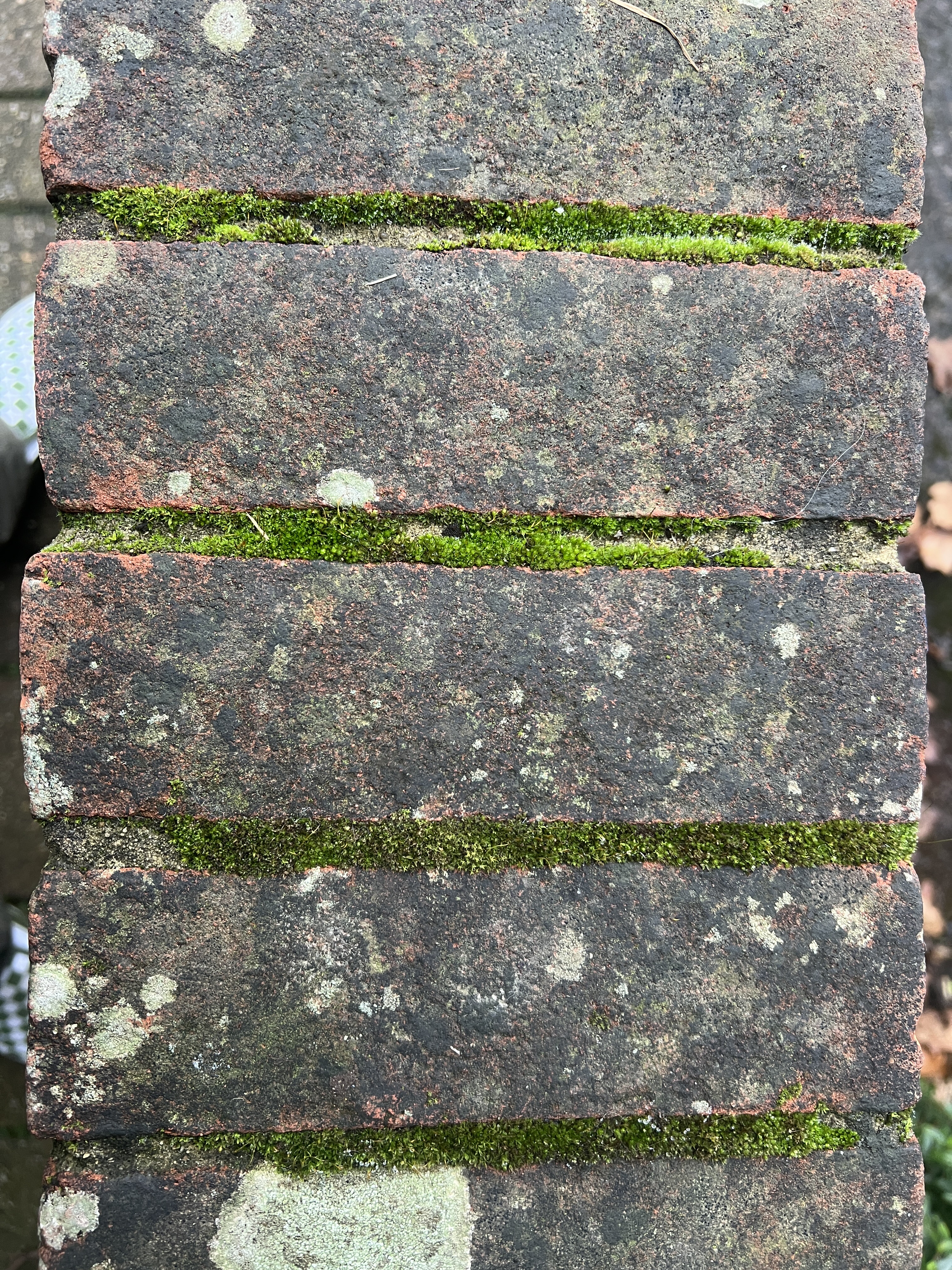


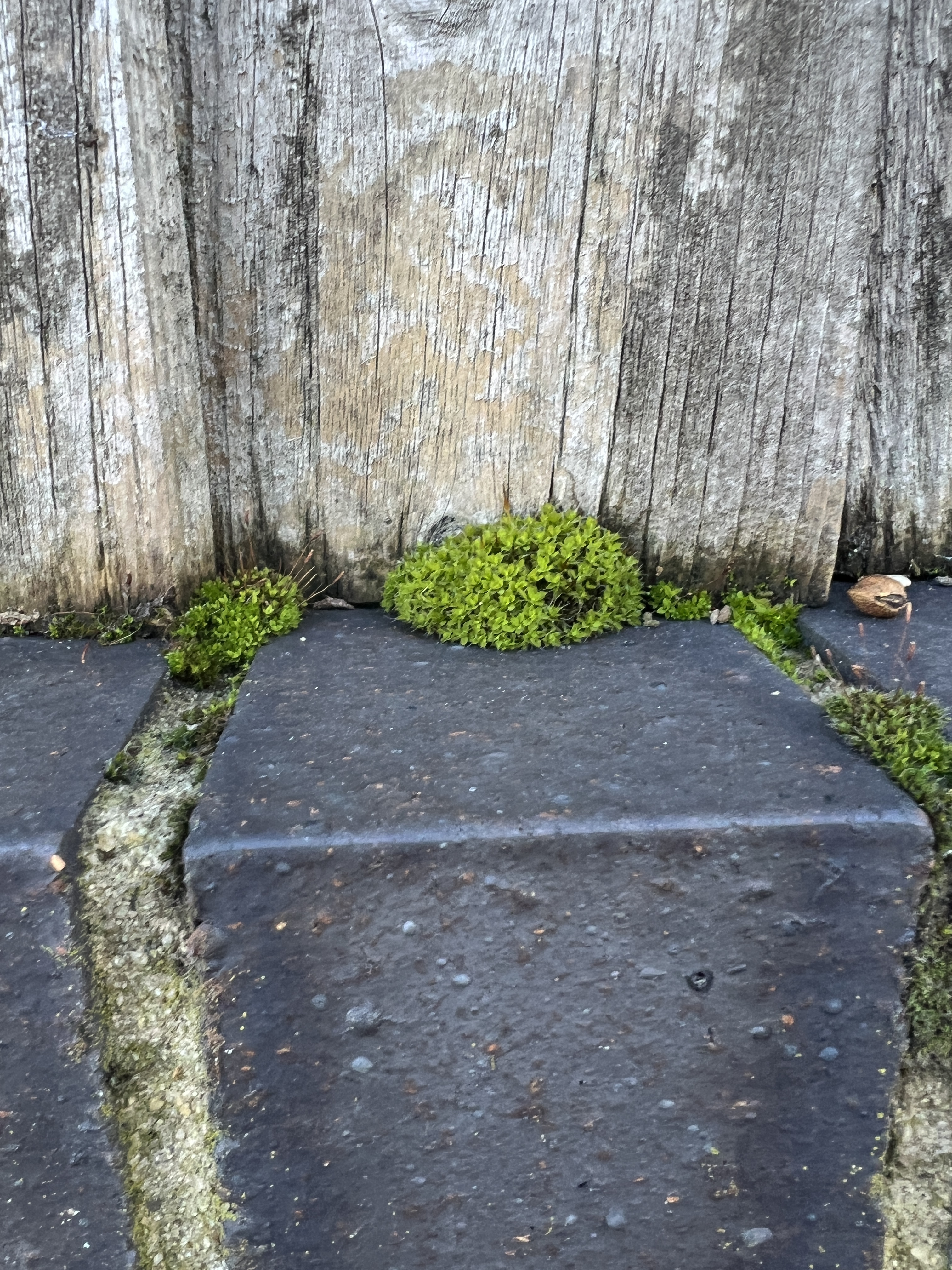
Mosses are among the most adaptable plants on Earth. They can make a home almost anywhere there’s a little moisture and a surface to cling to. Once you begin to notice them, you’ll realise how extraordinary they are, they flourish in places most plants could never survive. From the cracks of a pavement to the tops of old walls, mosses set up their miniature green home.
Look at Pavements
Start your Moss Safari close to home. Pavements are one of the easiest places to find mosses. They often grow between paving stones or along the edges where rain collects and soil or dust gathers. Some even thrive around drain covers or along kerbsides. These mosses are tough; they survive foot traffic and long dry spells by curling up tightly when the sun dries them out and reviving again when rain returns. Look closely and you’ll see tiny cushions of green that seem to come back to life after every shower.
Look at Walls and Rocks
Mosses love rough, shaded surfaces such as brick, stone, or concrete. Walls provide shelter from wind and hold moisture after rain, making them perfect homes. You might see neat little cushions, shaggy mats, or silvery patches spreading across the mortar or along ledges. Pay attention to how different parts of the wall host different kinds of moss: the sunny top, the sheltered base, or the damp sides. Each micro-habitat offers its own mossy residents.
Look up at Roofs
Even the harshest environments can host moss. Rooftops might seem inhospitable: hot in the sun, cold in winter, and exposed to wind, but mosses find a way. They often grow on the shaded side of tiles, especially where debris and moisture collect. You don’t need to climb up to see them; check the ground below for tiny clumps that have fallen after heavy rain or wind. These are clues to the mosses thriving above you. Roof mosses show how tenacious these plants are, turning even the most unlikely places into living landscapes.
Look at Trees
Trees provide a whole world of habitats for mosses. Some species prefer the sunny side of the trunk, while others thrive on the cooler, shaded side. Mosses often start on the bark, spreading along branches and even the exposed roots at the base. Each patch tells a story about moisture, sunlight, and age. Gently touch the moss: some feel soft and springy like a tiny forest carpet, while others are wiry and crisp when dry. When you look up through the branches, you may notice green tufts catching the light, adding texture and life to the tree’s bark.
Why Mosses Grow Where They Do
Mosses have no true roots, so they don’t need soil in the way flowering plants do. Instead, they absorb water directly through their leaves and use their thread-like rhizoids to anchor themselves to almost any surface: rock, bark, brick, or tile. Because they can tolerate drying out, they can survive long periods without rain, reviving when moisture returns. This remarkable resilience means mosses can live in some of the most exposed or overlooked places in our everyday environments.

How to Use the Infographic
Use the infographic – on your phone, tablet or print out.
- Go Moss Spotting: Take a short walk near your home, school, or workplace. Try to find mosses growing in each of the four locations—pavements, walls, roofs, and trees. Take photos and label where each was found.
- Touch and Describe: Gently feel the moss (leave it where it is). Use words to describe its texture—soft, wiry, spongy, slippery? Which feels most alive after rain?
- Compare Conditions: Use a compass or your phone to find out which side of a wall or tree has the most moss. Is it the shaded north side or the sunnier south side?
- Look Closer: Use a magnifying glass or macro lens to explore the structure of the moss. Can you see leaves, stems, or tiny capsules?
- Share Your Finds: Post your photos on social media using the hashtag #ISeeMoss and tag @moss_safari. Let others know how many different moss homes you discovered!
Moss grows almost everywhere once you start looking for it. From pavements to rooftops, every patch tells a story of survival and adaptation. Keep your eyes open, you’ll soon find yourself spotting moss in the most unexpected places!
In the next part of the Discovering Mosses series, we’ll look at How to Identify Common Urban Mosses and learn how to tell some of these tiny plants apart.
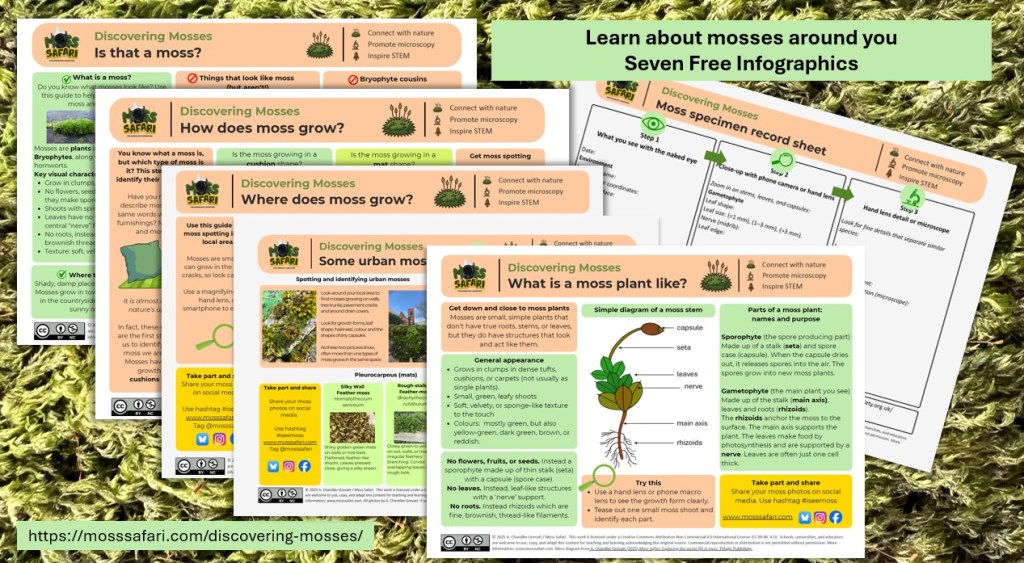
All the Discovering Mosses Infographics can be found here on one page.
Join in and support
I post regular finds and updates on Bluesky, Facebook and Instagram. Come and say hello, and share your photos. I am learning as I go, and I will certainly make the odd mistake. Polite corrections are very welcome.
All of the resources in this project are free to use. If you would like to support my educational work, you can leave a tip or pick up Moss Safari merchandise. Your support helps me keep creating and sharing more moss magic.

References and Resources
These are the sources that I used to research this infographic and blog.
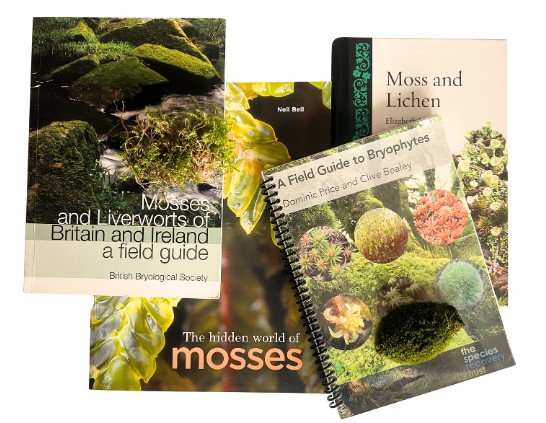
Neil Bell (2025) The Hidden world of mosses. Royal Botanic Garden Edinburgh.*
Ian Atherton, Sam Bosanquet, Mark Lawley (Editors) (2010) Mosses and Liverworts of Britain and Ireland a field guide. British Bryological Society. Available from here.
Dominic Price and Clive Bealey (2022) A field guide to bryophytes. The Species Recovery Trust. Available from here.
Elizabeth Lawson (2024) Moss and Lichen. Reakton Books.*
*I use Amazon Associates to help fund Moss Safari Education Activities. Clicking and purchasing on these links may generate some small income at no cost to you.
Generative AI use Statement
As part of the Discovering Moss series, I use generative AI to review my clarity of communication both in design and in writing. Every post is reviewed and fact-checked by me, combining human curiosity with responsible AI assistance to share the wonder of mosses.
 Moss Safari