- Date: 23 July 2025
- Location: Woodingdean, East Sussex, England, UK
- Weather: At collection: 17 oC, dry (range 15-21 oC). Rain 3 mm in previous 24 h
Welcome to the first in my Moss Safari Field Notes series!
Each time I head out on a Moss Safari, I’ll share a behind-the-scenes look at the methods, equipment, and techniques I use to uncover the astonishing life within moss. You’ll find photos, videos, and drawings alongside my discoveries, along with reflections on the tiny organisms I encounter and the habitats they call home.
These field notes take a natural history approach, observing not just individual species, but the rich, interconnected ecosystems they inhabit. Wherever relevant, I’ll also include links to chapters from my book, Moss Safari: Exploring the Secret Life in Moss, as well as free resources and (occasionally) Amazon Affiliate links to the resources or tools I mention.
If you do choose to purchase through an Amazon Affiliate link (Affiliate Link *), a small commission will go toward supporting the educational outreach work of Moss Safari, so thank you!
Let’s go on a Moss Safari!
Moss Safari Field Notes #1 Soak, suck and see

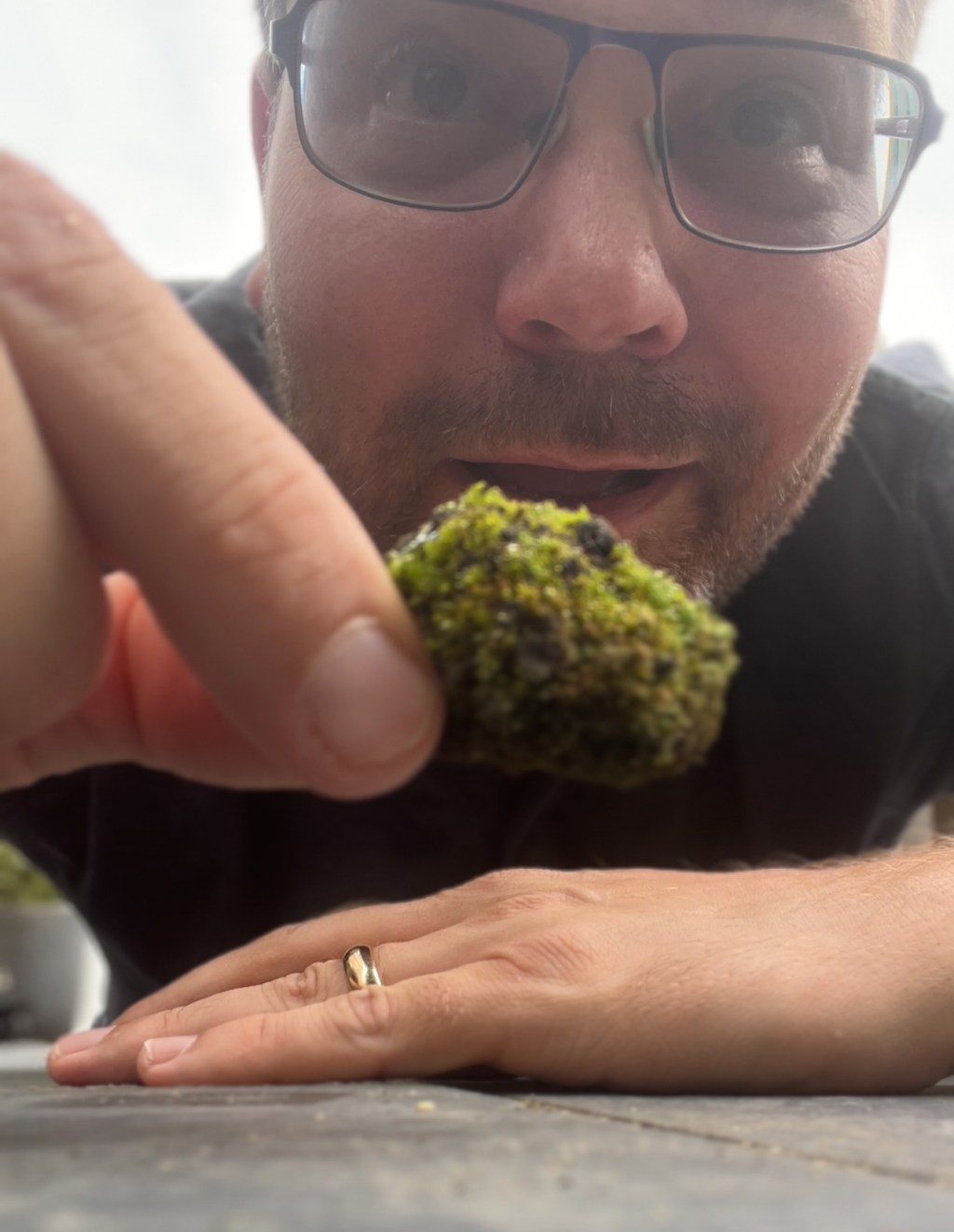
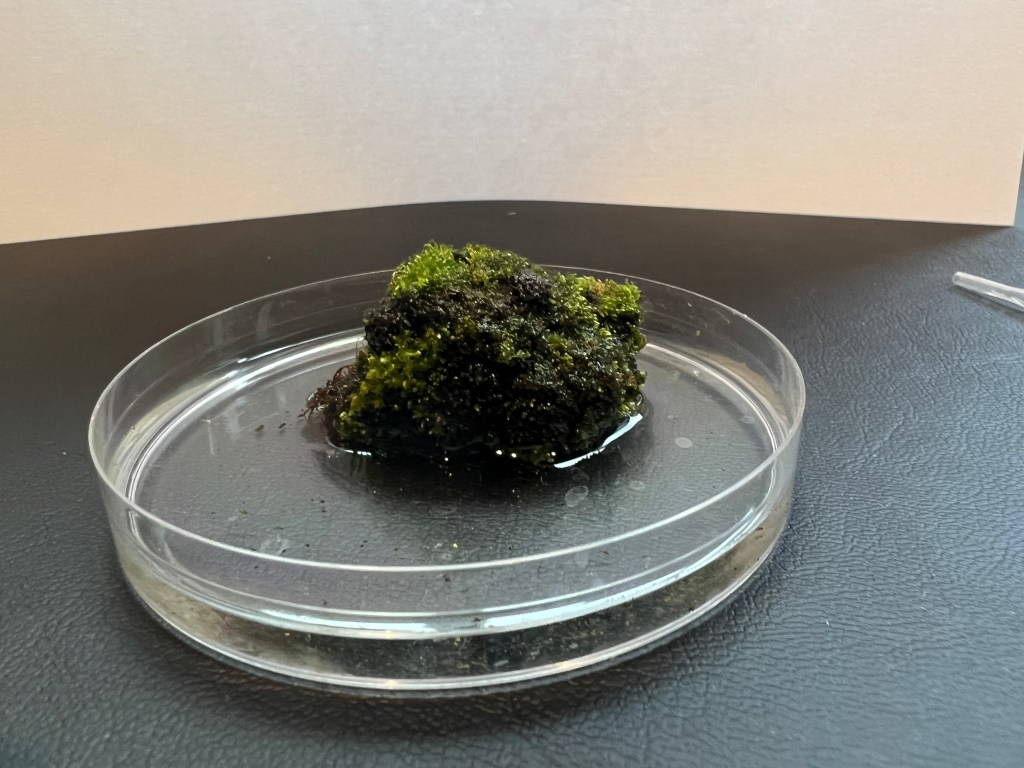
This moss cushion was found on my patio (Figure 1). It is likely to have been knocked from my roof, which has an abundance of moss on it, by a bird. Birds, especially in dry weather, peel moss up in search of slugs, insect larvae and other tasty morsels. The discarded cushion often ends up in my gutter or, as today, on my patio.
The moss cushion
This moss cushion was 45 mm x 34 mm x 23 mm tall . It was densely packed with short ‘stems.’ It is made up of a mixture of mosses. There are no fruiting bodies present, which makes it difficult to identify. Using Price and Bealey (2022) A Field Guide to Bryophytes, p. 33, I can suggest four possibilities: Tortula muralis, Ceratodon purpureus, Bryum capillare and Orthotrichum anomalum.
Equipment and methods
Sample Collection: I collected the moss cushion from my patio. I used the standard soak (1 h), suck and see method. I repeated this five times, onto five ‘dimple’ slides. I took between 30-45 minutes per slide, taking video and photos of the observations.

I scanned each slide in a zig-zag. From left to right, adjust the slide down 2-3 mm and then back again. This usually gives 4-5 runs across the slide (a distance of about 100 mm).
Microscope Setup: Microscope BMS146 FLArQ LED Monocular (supplied by VITTA Education). Microscope Camera (supplied by VITTA Education) AmScope MU Series 10.0MP USB 2.0 Color CMOS C-Mount Microscope Camera (MU1000 model). Similar models here (approx £250) and starter cheaper (£99) models here (Affiliate Links*). Software: The software comes with the camera. In this case I am using BMS (pix 3). Laptop: ASUS Vivobook S 15 (Affiliate Link*)

Findings
Here I focus on the main findings. As you might know, Moss Safari generally focuses on the ‘microscopic Big Five’ multicellular microorganisms: mite, nematode, rotifer, tardigrade and gastrotrich. In this sample, only Bdelloid rotifers were found displaying a variety of behaviours. In Moss Safari: Exploring the secret life in moss, I devote chapter 4 to the rotifers. I describe their ‘modes’ of behaviour. In this sample they were active: walking like an inch-worm, anchoring their two toes to the slide surface and opening their wheel organs to feed and other times swimming. All the time, their jaws (trophi) open and close rapidly as they chomp through the food collected in the water they filter. There were several occasions where I saw the water being stirred up by the microscopic feeding machines.
The most abundant multi-celled organism on all five slides was the Bdelloid rotifer, then there were a plethora of testate amoeba (some active), the rest of the observations included strands of filamentous algae, a few diatoms and the odd ciliate whizzing past.

One of the microscopic Big Five
On some larger pieces of debris, there were several rotifers clinging to the surface. From there, they stretched out and fed. When disturbed they contract, folding away their delicate wheel organs. These types of rotifer are fascinating because there are only females, no males. They can survive desiccation by forming a ‘tun,’ which is a tight ball. This process allows them to endure being dried out completely for usually several months. In a record case, they survived for over 42,000 years! #
Testate amoeba
At x 40, a lot of the slide- scape looked like the picture below. If you look carefully, there a number of disc-shaped and cup-shaped shells. These shells are testate amoeba. These are common in mosses. I had to switch to the x10 objective (to achieve x 100) to get better photos. Note these are just snaps and I have used any stacking techniques.
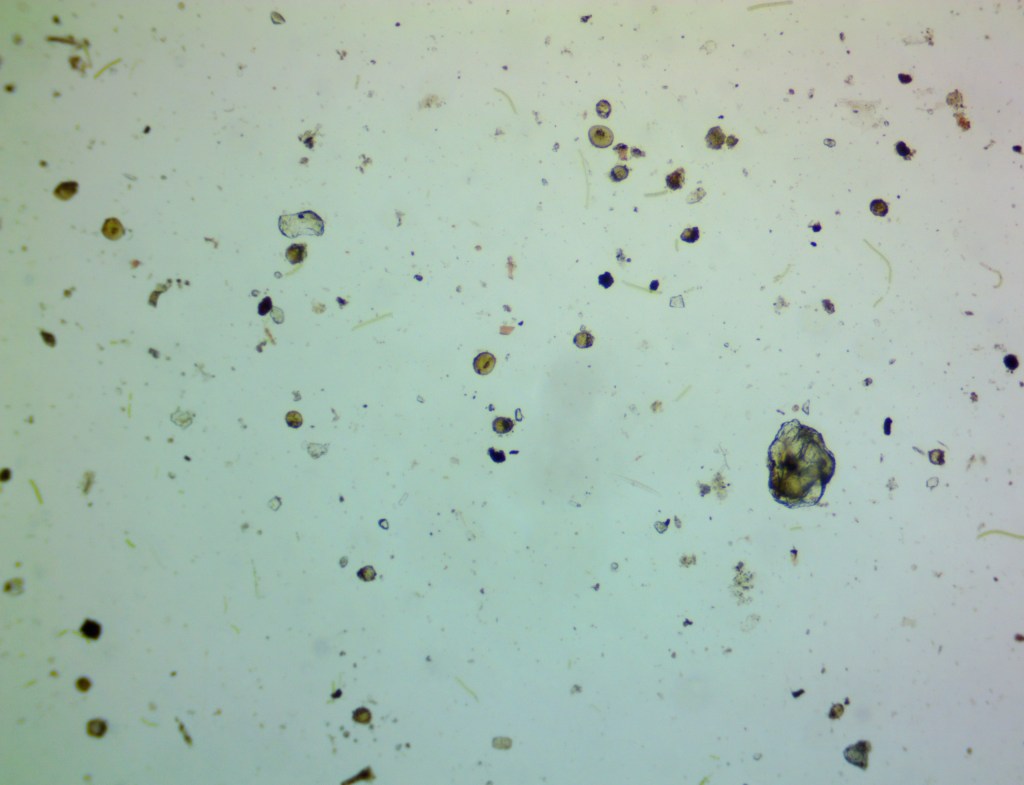
I’ve divided my findings into two groups in Figure X. The ‘cup-shaped’ ones and the flat disc like ones. I tried to look up the identification of the cup shaped testate amoebae, but had trouble finding them amongst the many varieties.
Reflections
Time goes fast when going across slides. Especially when you have to stop and want to observe interesting behaviour such as rotifers feeding, testate amoebae moving or a strange blob that could be a microscopic organism or an egg. I have some videos which I will add to the Moss Safari You Tube channel shortly.
Try Your Own Moss Safari
Feeling inspired? You can go on your own Moss Safari in your garden, local park, or even on a wall! Check out the resources below to get started:
- Moss Safari: Exploring the Secret Life in Moss (Book)
- Free Identification Sheets and Resources
- Share your finds on social media with #MossSafari
*Affiliate links. Moss Safari may earn a small commission if you buy through this link—at no extra cost to you)
References and further reading
More on testate amoebas
Microworld. World of amoeboid organisms.
Stefan Luketa: Amoeba Discovery
Share your finds
If you do a Moss Safari, what do you find? Please share your finds with me. Happy exploring!
 Moss Safari