It all started in the spare bedroom. Not with a grand expedition into the Amazon, or a trek through the Scottish Highlands—just me, a new microscope, and a soggy cushion of moss from the garden. Curiosity had got the better of me (as it often does), so I squeezed this innocent-looking patch of moss onto a slide, added a coverslip, and peered in. What I saw… well, it changed everything. I expected green fuzz. Maybe some soil. At a push, a fungus or two. Instead: life. Teeming, thriving, thrashing life.

Hairy Racers and Gliding Jewels
At first, it was mainly single-celled organisms—blinking dots and shimmering blobs zipping across the field of view. Then came the rotifers, frantically feeding, swirling the water with their incredible wheel organs. And then the nematode arrived.
It burst into view like a tiny, frantic eel—twisting and thrashing with wild abandon, disturbing everything in its path. The hairs on the back of my neck prickled. Something about the way these creatures moved, how alive they were, was almost unnerving.
I chased what I later dubbed “hairy racers” across the slide. At the time, even with a biology degree under my belt, I was completely unprepared for the sheer variety of life I couldn’t name.
The Observer, Not the Identifier
That’s when I made a decision: instead of trying to immediately identify everything, I would just observe.
I gave things names based on what I saw. There were emerald batons, gliding jewels, Sputniks, blue monsters—my own private menagerie of moss-dwellers. I took photos. I made notes. And gradually, over time, curiosity led me back to the books and the internet. I began to match some of my colourful nicknames with real biological identities.
But by then, something else had taken root: the idea that this could be shared.
The Birth of Moss Safari
It wasn’t long before I started sharing my “moss squeezes” with colleagues and trainee teachers. They were fascinated—but many said, “I couldn’t do this with students. I wouldn’t know what anything is.”
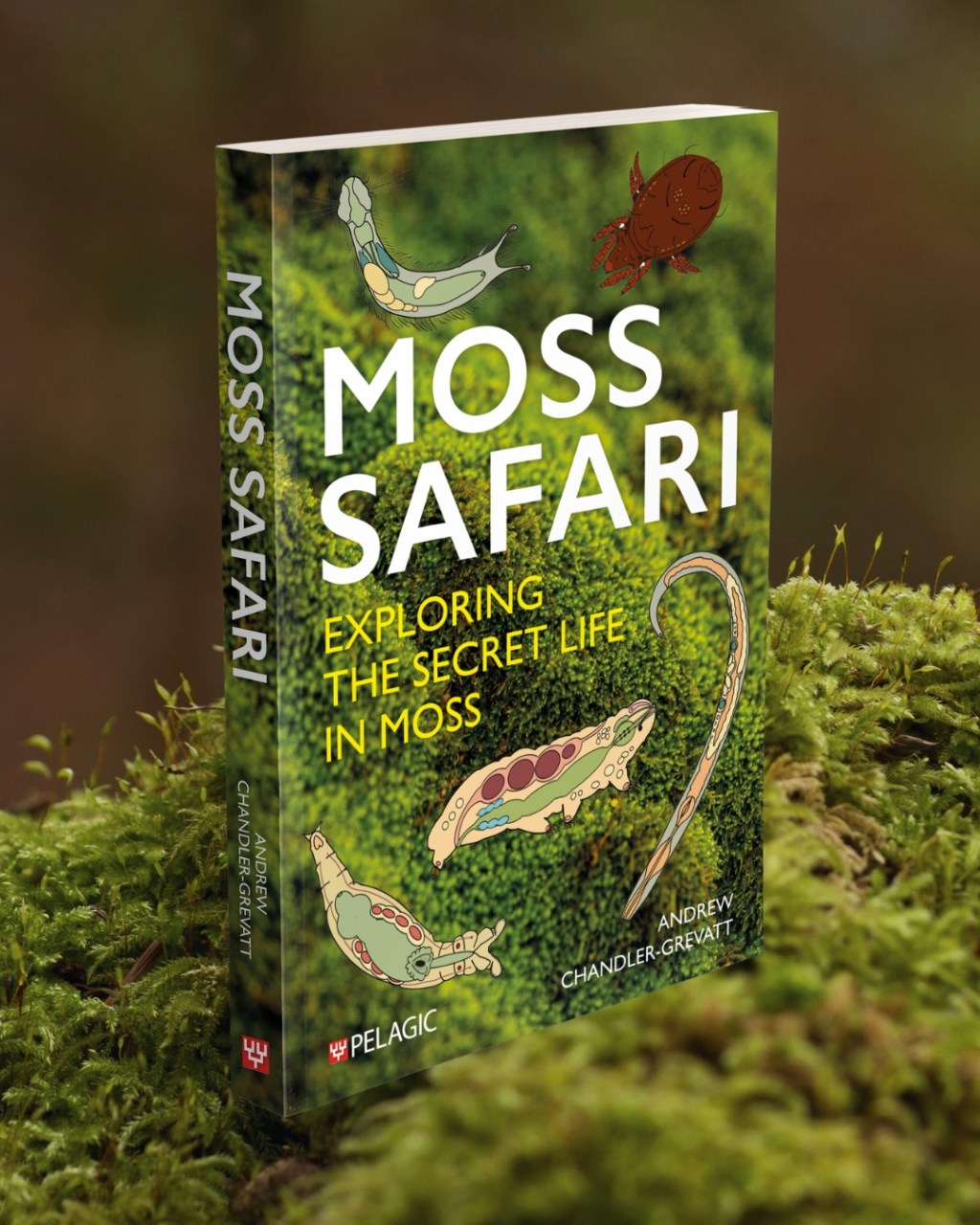
And that’s when the Microscopic Big Five was born. Just like a traditional safari has lions and elephants, my mossy world had its own stars: the tardigrade, the rotifer, the nematode, the oribatid mite, and the gastrotrich.
Suddenly, there was a focus—something to search for, to celebrate, to marvel at.
Moss is Everywhere. So is Wonder.
What this whole experience has taught me is that you can explore nature—astonishing, alien, diverse nature—on a scale most people never think about.
And you can do it from a pavement, a wall, or a roof tile.
Moss is everywhere. And inside it is a whole world, waiting to be discovered.
That first patch of moss in my spare bedroom? It sparked Moss Safari, and eventually, a book. And now, I’m inviting you to join me on that journey.
Join us for an online Moss Safari book launch
Thursday 19 June 2025 17:00 until 18:00 (BST /GMT+1)
The event will include:
 A live “Moss Safari” with the microscope
 An interview exploring the making of the book by Professor Marcus Grace
 A sneak peek at the Moss Safari merch range
 Plus: thank-yous and shoutouts to key contributors
It’s all happening on Google Meet.
I’ll be sharing more in the lead-up—behind-the-scenes, microscopic marvels, and how you can take your own moss safari. Watch this space!
Buy your copy now
Order from Pelagic Publishers (25% discount with code: MOSS25)
Amazon order or add to your wish list (via Amazon associates – I get some commission from this link)
Personalised signed copies available directly from the author
 Moss Safari