Conferences are always good for networking, sharing ideas and meeting like-minded people. The Association for Science Education is a great annual event to meet science educators nationally and internationally. This year was no different. This blog records the following from my experience.
- The value and use of microscopes in schools – a big idea!
- Moss Safari for technicians – did we find a tardigrade?
- Moss Safari Activities for British Science Week, Change and Adapt – a tardigrade from Peru!
- The people I met – the best session of the three days?!
- The mosses of Nottingham – pictures of frost edged beauties
The Value and Use of Microscopes in schools
Did you ever have your own microscope at home? Do you remember the first time that you used a microscope at school? What was that experience like? Has using a microscope influenced your chosen career or hobby? These are all questions I have about the role of microscopes in school.

My first presentation was about the value of microscopes in getting young people into science. It focused on encouraging them to consider science (STEM) careers, particularly in the biosciences. I presented to a mixed audience and asked them their views on my proposal.
This is what I proposed:
•Secondary school students have limited opportunities to use a microscope (possibly one lesson per year over five years). This is unlikely to change.
•These experiences are often procedural, rushed and use inadequate microscopes, leading to disengagement with microscopy and related STEM careers.
•Classroom experiences could be improved with quality teacher training opportunities and technician support/training.
•Extra curricular opportunities for using microscopes could be effective with access to quality microscopes, accessible resources and teacher training. A five week project could double the time that students have in lessons with microscopes).
Improving teacher and technician training, providing access to good quality microscopes and providing quality extra curricular opportunities will improve science capital related to microscopy and STEM interest and careers in the secondary school setting

The audience discussed the proposal, plan and ambition.
The general consensus was that this proposal was making the right assumptions about school experiences. Participants from the Royal Society of Biology, London Natural History Museum and the Science Museum, London expressed support for the survey. We also considered approaching Kew, Royal Horticultural Society , Quekett, Glass Sellers society (thanks Gaynor! for contact), Guild of Scientific Instruments (thanks Victor for contact) as well.
Watch this space for developments!
Moss Safari for school science technicians

This special session for technicians looked at the different ways in which to catch a good sample from moss. Andy demonstrated the different ways to collect a moss sample. We then searched the samples with the microscope projected onto the big screen listening to the variety of stories related to the moss organisms we saw. Although we saw a couple of sleepy rotifers and a nematode, the tardigrades remained elusive. Maybe it was the cold weather in Nottingham!
Thank you to all the technicians who attended and who were so enthusiastic about Moss Safari. It is great to hear how schools use Moss Safari and that technicians new to Moss Safari intend to share it with their departments.
Moss Safari Activities for British Science Week

This was billed as the main Moss Safari event. Although we didn’t fill the lecture theatre, we had a good number of enthusiastic teachers and educators from around the world.
The focus of this session was to look how Moss Safari can support British Science Week 2025 activities – with the theme of change and adapt.
I had picked up some moss in Nottingham the night before, soaked it and left it near my hotel room radiator. It was frozen when I collected it, but we were still able to find active organisms within the moss squeeze. Again, the nematodes and rotifers were present, but no tradigrades showed their faces.
It was great to be able to answer the questions people had about doing Moss Safari – clearly people are doing it at their schools. I was delighted to meet a wonderful teacher who teaches in Peru, who showed me a picture of a Pervian tardigrade her students had found! If that is you, please get in touch!
Note the three British Science Week Moss Safari Activities will be published at the end of January and will be freely downloadable.

The People I met
It is always a pleasure to meet new people at the ASE Conference and Moss Safari events. I love to hear how they use Moss Safari, what they think of it and to answer questions they have. Feedback comes in many forms and it’s not always easy to capture the impact of Moss Safari sessions:
My favourite piece of written feedback was, Thank you, Bev:
Great presence & very inviting. Excellent session. The best so far in these three days. Bev DeVore-Wedding (from Colorado, USA)
After Moss Safari sessions I love to hear the experiences that people are having. Those who are still trying to find the elusive tardigrade, those who now see moss after doing a Moss Safari, and those who ares till trying to capture a sample with active organisms in it.
Special Thank yous
Ali Redmore for the frantic lift to the venue on Saturday. Chris Graham and Pete Robinson both helped me out with fast set up and clear down of the microscopes. The ASE Technician committee for the invitation to present and to attend their lunch.
Phillip Harris for supplying the microscope that I used the Moss Safari sessions.
Mosses of Nottingham
It was cold in Nottingham, -6 degrees Centigrade in the mornings and rarely tipping zero in the daytime. The effect of this was beautiful frosts that formed across the moss around the University of Nottingham Campus. Along one of the main roads was a long brick wall overhung by trees. Along this wall were many moss cushions, large and small. On a wall of an underpass, there were moss blankets , many fruiting with bright sporophytes. I love urban mosses, their ability to survive in more polluted areas and still house a host of microorganisms. I have brought a bit of dislodged moss home with me to explore. A selection of photos are below. Previously, I wrote a blog about #iseemoss. Moss Safari changes people’s behaviour. They notice moss more than they did before.


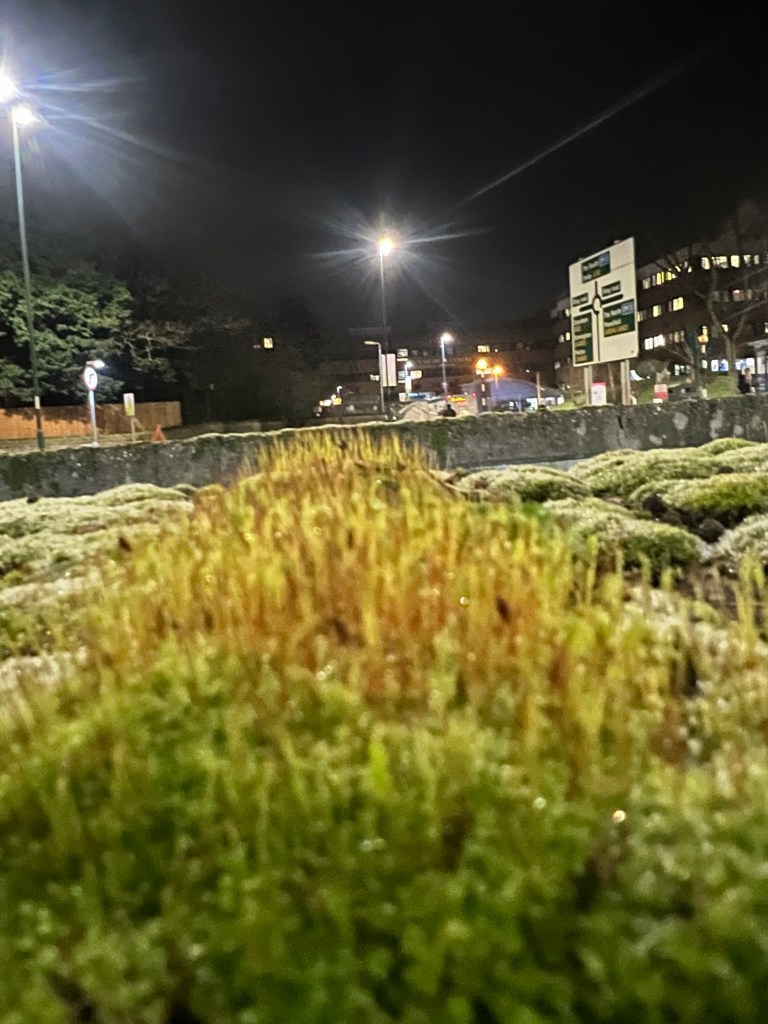
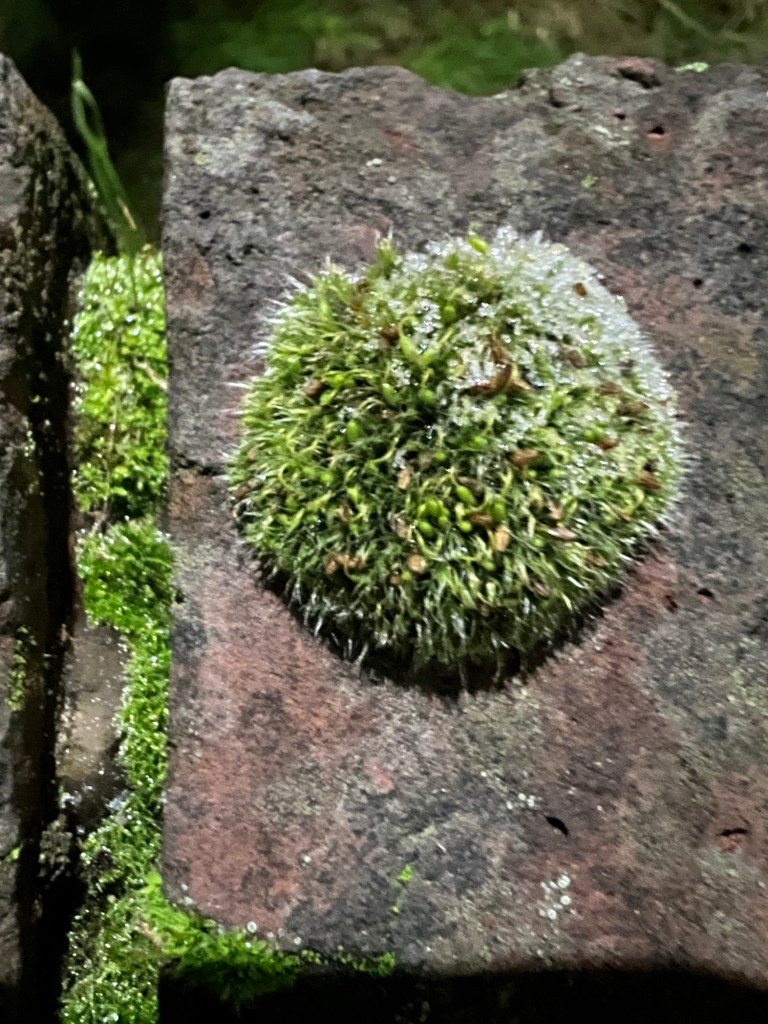

If you like images such as these, why not follow Moss Safari on Blue Sky?
What now?
A lot of opportunities have come out of this conference. I will share those with you as they come to fruition.
In the meantime.
Why not sign up to the website for free to be the first to know Moss Safari News and resources?
Doing your own Moss Safari?
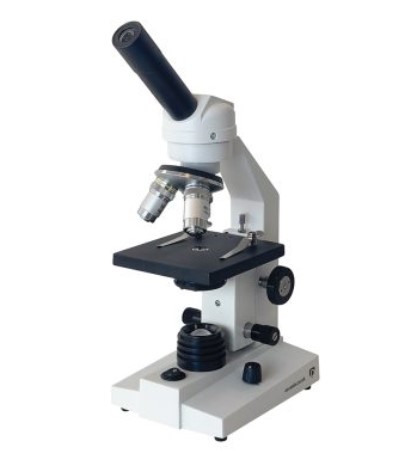
For the full range of Moss Safari microscopes resources and accessories see:
https://vittaeducation.com/product-category/lab-equipment/benchtop-appliances/microscopy/
For Moss Safari kits and Guide Book

Want a visit from Moss Safari?
Find out about Events and outreach
 Moss Safari