Following the British Science Week BBC Live Lesson which features water bears (tardigrades), I suspect that many children will ask their parents or teachers if they can find tardigrades in their school grounds. The answer is very likely yes. Despite being seemingly alien creatures, they are living their lives all around us in moss, lichen and leaf litter.
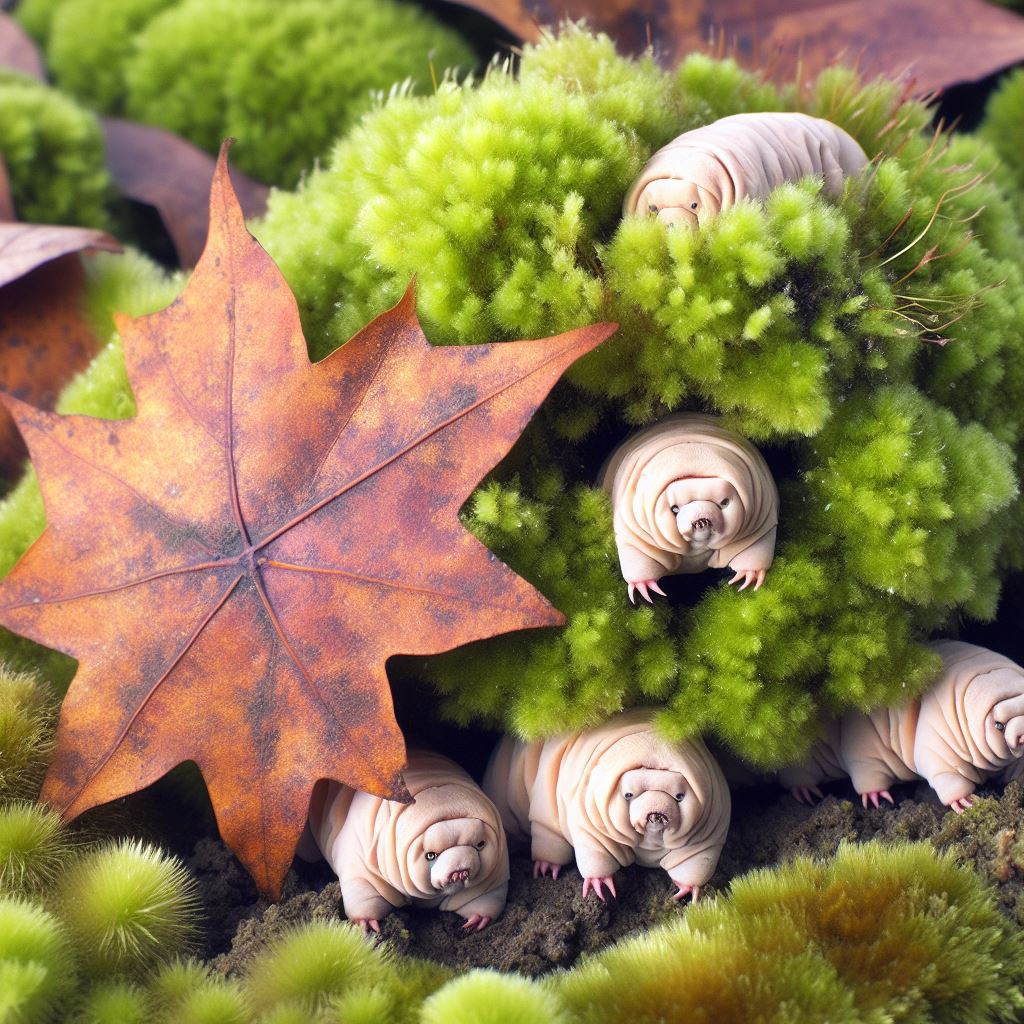
This blog will help teachers to support their pupils in finding tardigrades in their school grounds. As a bit of fun, I have experimented with generating AI images for each tip, with varying success. I’ve added some notes to the accuracy of each image.
Do let us know if you find any tardigrades, we love to see pictures on social media or send us a message via Contact.
Tardigrades are (almost) everywhere
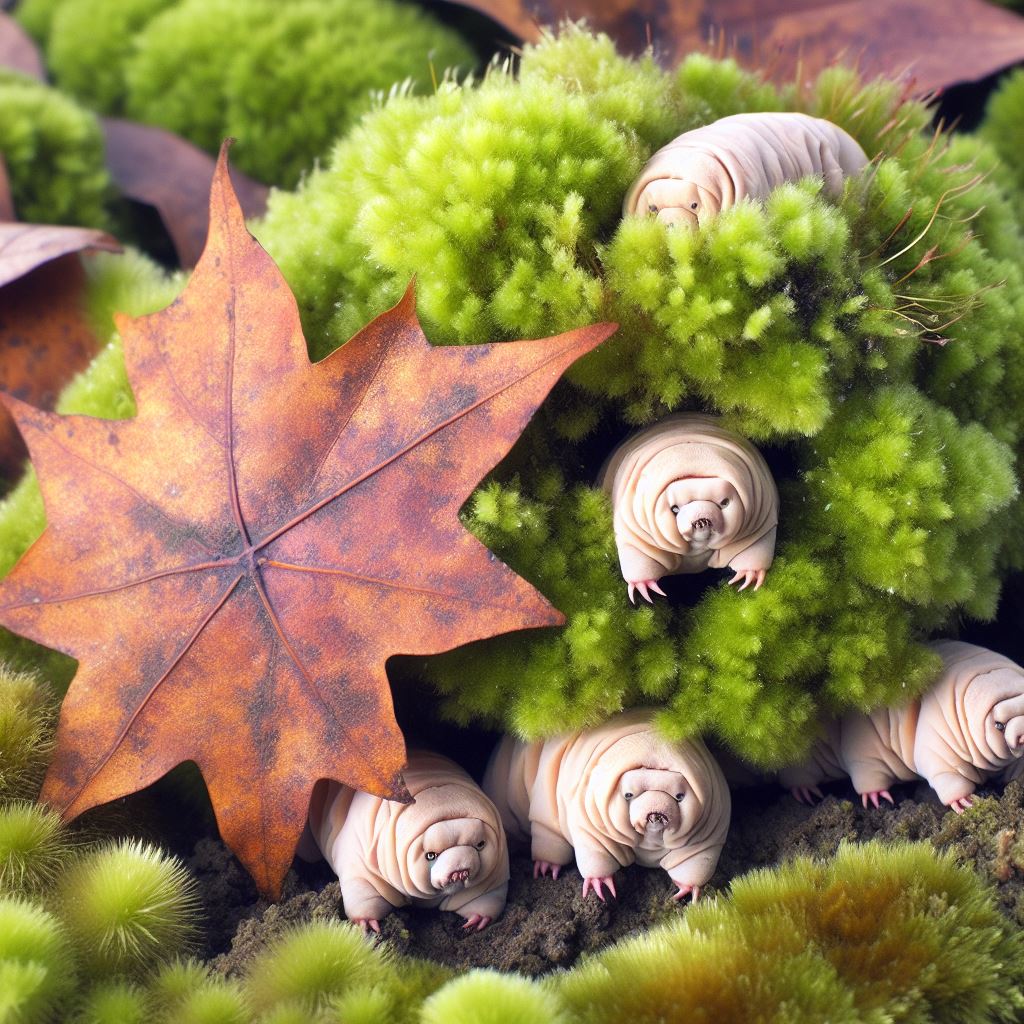
Tardigrades are too small to see with the naked eye, being less than a millimetre long. You have to squeeze the water out of the moss or soak the moss or lichen and hope there are some tardigrades living in there.
The two main sources that I use are fallen moss cushions and lichen from fallen twigs.
Avoid scraping moss and lichen from its environment. Use already disturbed, dislodged or fallen samples.
Soak the moss

Water brings moss organisms to life.
- Soak 2-3 clumps of moss from different locations. For some reason, some mosses have lots of tardigrades, others don’t seem to have any.
- Soak moss at least 24 hours ahead of doing a moss squeeze.
- Tardigrades can’t swim, so once they are out of the moss, they can’t climb back in.
Maximise your chance of catching a tardigrade

Rough up the surface of the moss cushion using a pencil or forceps to dislodge the tardigrades deeper in the moss cushion before squeezing it.
If this doesn’t work, you can concentrate your moss sample by reducing the amount of water that the organism are in. This can be done using the filtering method.
Instructions here.
Note the Edulab Official Moss Safari Kits have everything you need to do this.
Know what you are looking for

Tardigrades rarely look up and wave at you from the microscope slide. Depending on the type of microscope and the magnification, what you see can vary.
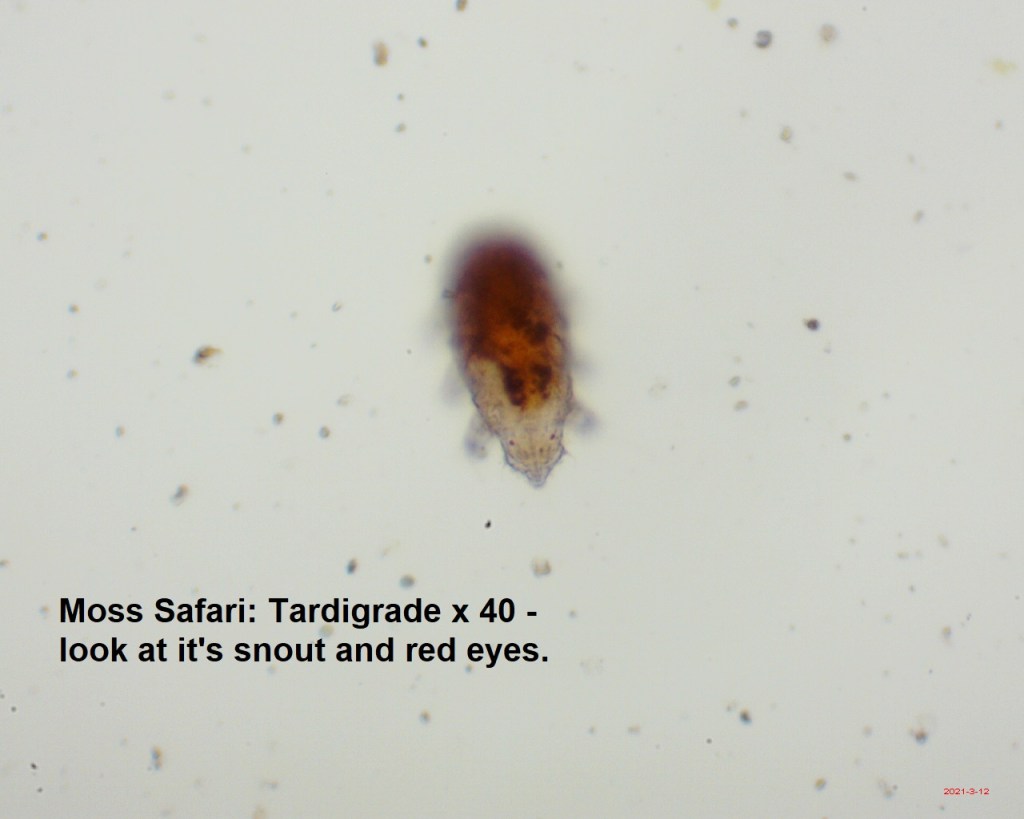
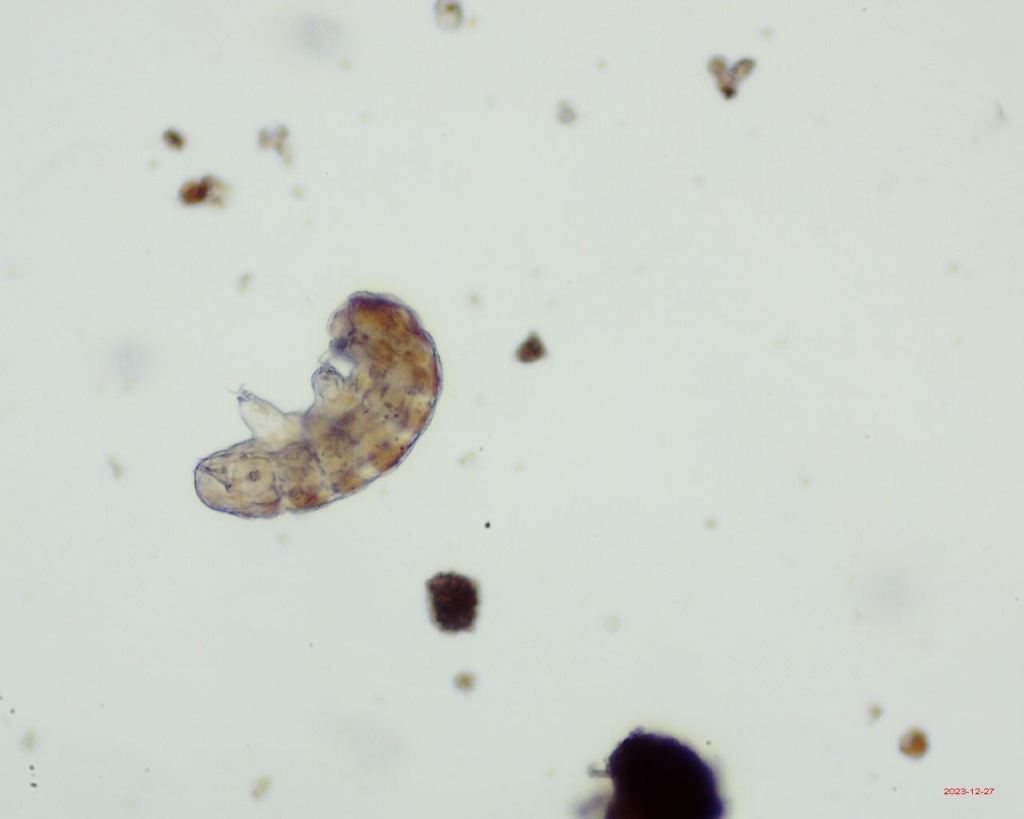
The key features that you are looking for are sausage shaped animals with eight legs with claws at the end, a pointed snout and sometimes two red eyes.
- x 20 will show little white, translucent tardigrades.
- x 40 will show more detail, often internal organs including mouth parts, stomach and sometimes eggs.
- x 100 will show detail of mouth, the eyes, details of claws
Here are some images of what to look for when hunting for a tardigrade.




The more slides the more chance
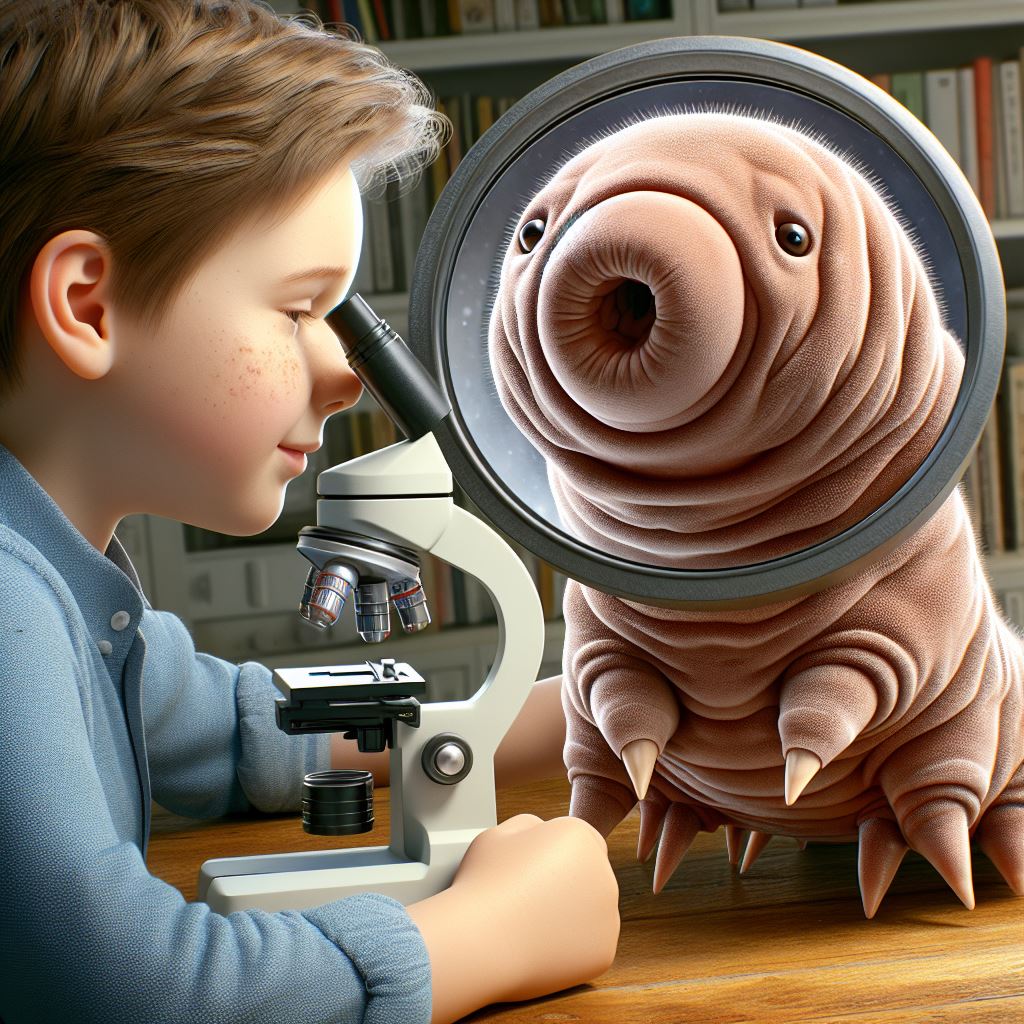
Even with samples rich in tardigrades, the first drop of water you look at under the microscope will not necessarily have a tardigrade in it.
Prepare several slides to observe. I usually prepare five at a time if I am doing this myself.
If you have enough microscopes, get a class working on a slide or two each.
The more slides you prepare, the more chance you have of finding a tardigrade.
The tardigrade and beyond

While looking for tardigrades, it is very likely that you find a whole host of other amazing organisms, many of which will the the Moss Safari Big Five. Even if you don’t find a tardigrade, there are lots of benefits of doing a Moss Safari.
- Discuss why you may not have found a tardigrade. Talk about sampling. Out of 10 ml of water, you have only looked at 10 drops of water.
- Discuss the nature of science. You can’t say there are no tardigrades in that moss, just that so far you haven’t found any.
- Look out for other signs of tardigrades including shed skins and eggs.
- Just using a microscope and preparing slides is a useful activity and finding a tardigrade is an added bonus!
Tell us how you get on!
We love to know what you find on you Moss Safari.
Get in touch via social media.
Any photos, drawings, reports can be shared on our Gallery.
Happy Exploring!
 Moss Safari