Once seen, never forgotten. Tardigrades are microscopic animals that capture the imagination. If during this coming British Science Week, especially after watching the BBC live lesson, your classes ask you about tardigrades, here are my favourite curriculum linked facts.
1. Micro-habitats
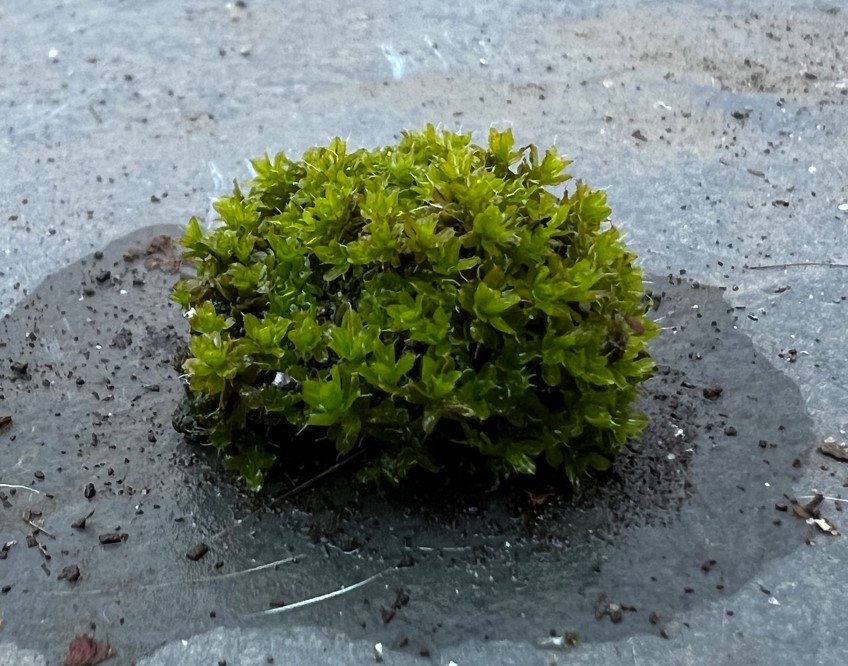
Tardigrades live in micro-habitats such as moss and leaf litter. As well as woodlice, snails and centipedes, there are microscopic organisms that live in moss and soil. These include the Moss Safari Big Five: mites, nematode worms, tardigrades, rotifers and gastrotrichs.
Some species also live in the sea.
2. Body features

Tardigrades have eight legs, a mouth that is a snout and five segments of their body. Each of their eight legs have big claws that they use to grip to surfaces to walk. They have a mouth that is is a snout that stretches in and out. They sometimes have two red eyes.
Their name means ‘slow-walker’.
Tardigrades usually measure around half a millimetre long. They are microscopic.
3. Body organs
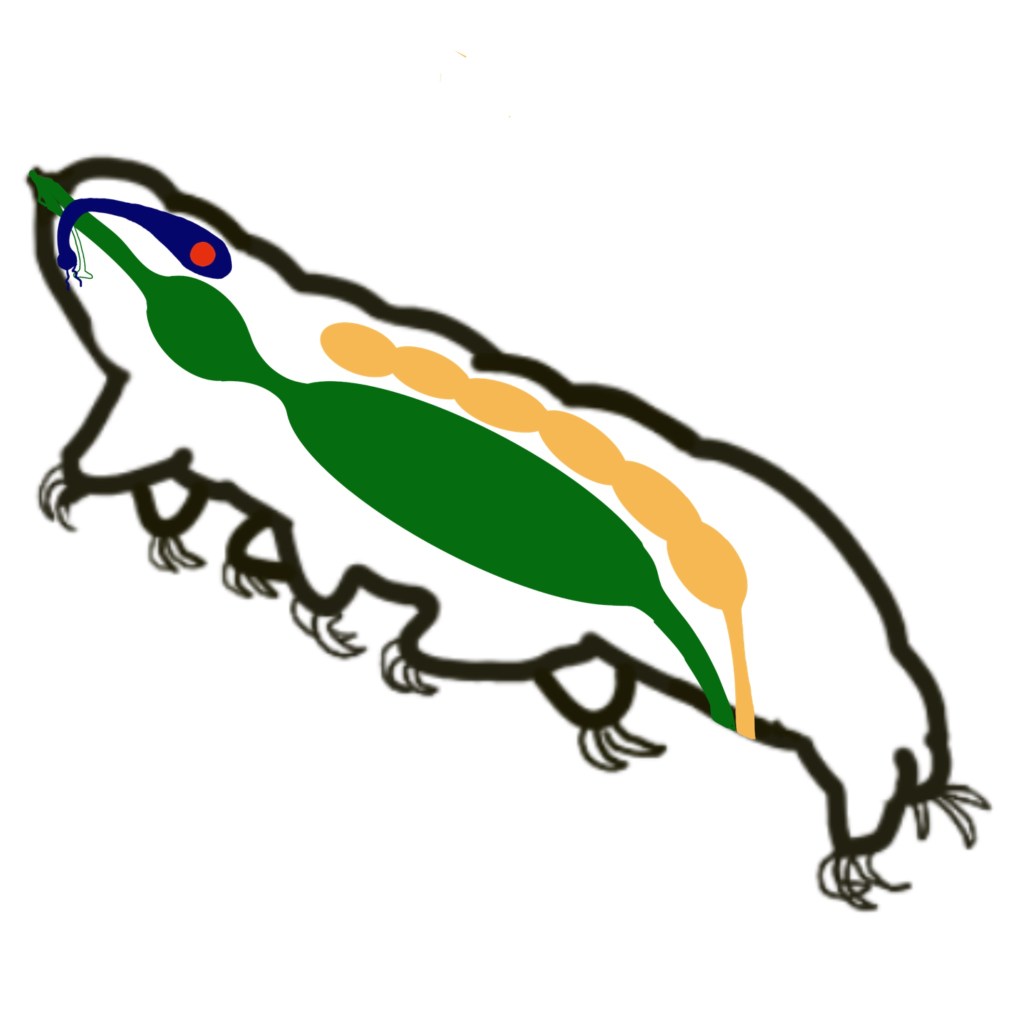
Tardigrades have a simple brain and nervous system (blue), they have a digestive system that includes a stomach (green). They have a reproductive system (yellow).
They do not have a circulatory (blood) system nor a breathing system. Oxygen is absorbed (diffuses) through their skin into their body.
4. Tardigrades are invertebrates

Tardigrades do not have a backbone (or any bones). They do have nerves and muscles.
They are related to arthropods.
They shed their skins as they grow.
5. Tardigrade life cycle

Tardigrades have three stages to their life cycle: egg, juvenile and adult. Most tardigrades live for a few months.
Some tardigrades lay eggs in the moss where they live. Some others, lay their eggs in their shed skin for protection (see picture). How many eggs can you count?
As a tun they can survive for over a decade, probably longer.
6. Tardigrade adaptations
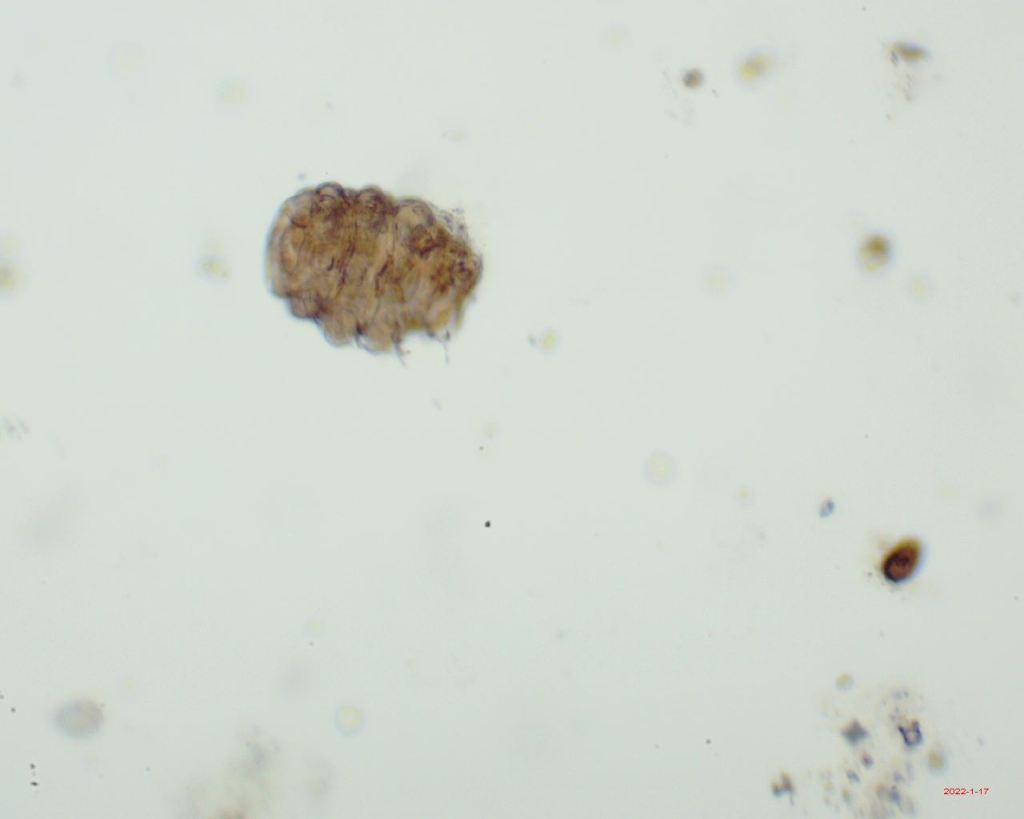
Tardigrades can survive extreme conditions by going into a tun. A tun is made of several layers of skin (cuticle) and the tardigrades body dries out. It is almost dead in this state. As a tun, tardigrades can survive very cold temperatures, very high temperatures, the vacuum of space, high pressures and radioactivity. Tardigrades are thought to be the most resilient animals on Earth.
7. Tardigrades in food chains
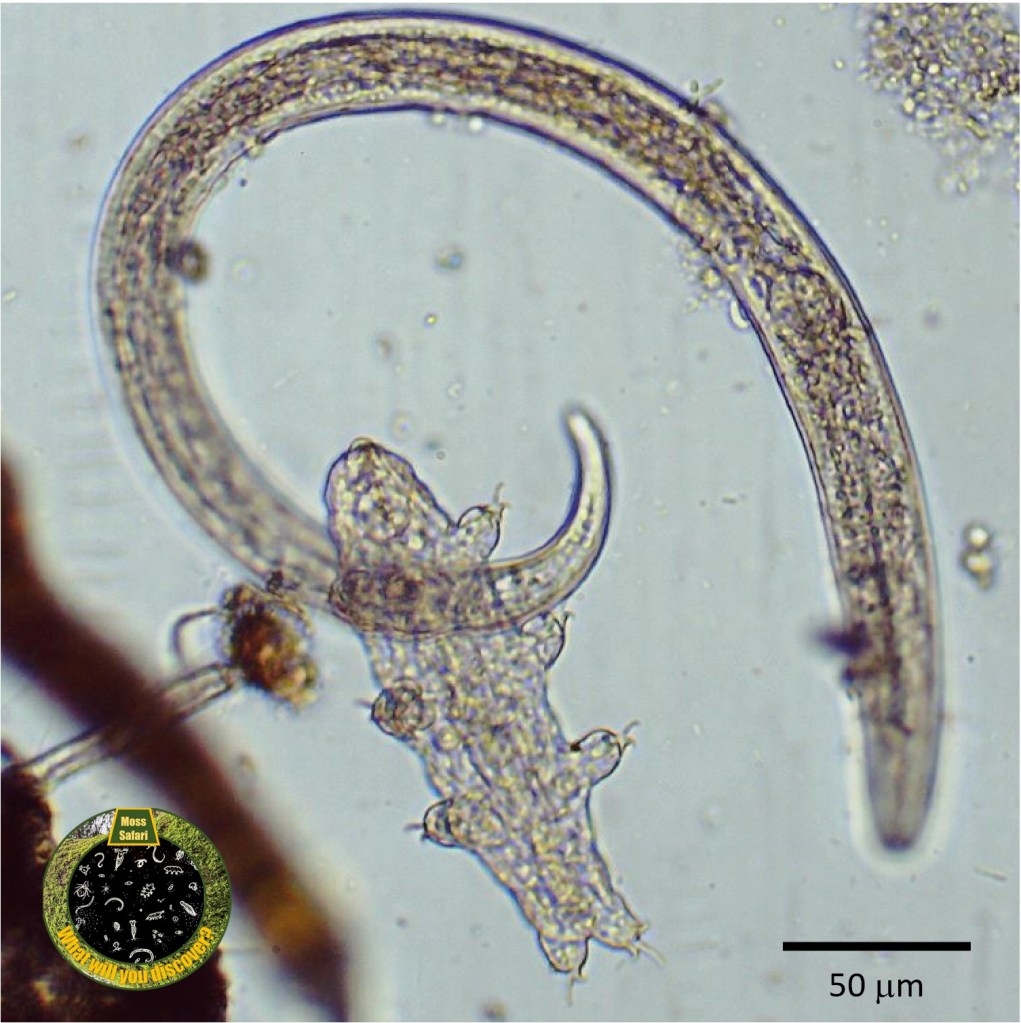
Some tardigrades are herbivores, some a are carnivores and some are even cannibals. Tardigrades can eat algae, amoeba, bacteria, fungi, rotifers, nematodes worm (in picture), and other tardigrades.
Tardigrades are prey to nematode worms, large amoeba and other tardigrades.
8. Types of tardigrade

There are hundreds of species of tardigrades. However there are two main types.
The heterotardigrade is often red or orange and is covered in armour, often with long spiky hairs (left in picture).
The eutardigrades are soft bodied, without armour or hairs. Sometimes called naked tardigrades (right in picture).
9. History of science

Tardigrades first evolved in the Cambrian period of history, over 500 million years ago.
Tardigrades were first discovered over 250 years ago, in 1773, by a German zoologist called Johann Goeze. We could not see tardigrades until microscopes had been invented.
The picture shows the first drawing of a tardigrade.
10. Science and tardigrades

Classification. Scientists are still trying to work out exactly where tardigrades fit into the tree of life. They are difficult to classify.
Diversity. New tardigrade species are found each year. A new species was found in a car park in Japan a few years ago, more recently a green tardigrade has been discovered.
Research. Tardigrades ability to survive extreme conditions is very interesting to scientists. Some of the chemicals made by tardigrades may help us to improve medicine and understand live itself.
Tardigrades and their lives are absolutely fascinating. It is amazing to watch them under a microscope. The more I read about them, the more amazing they seem to be. Although we have known about tardigrades for just over 250 years, we still don’t know all the different species, how they live, exactly how they reproduce and exactly how they survive in extreme conditions.
Do let us know if you found this useful and how you used it with your classes.
Happy water bear hunting!
 Moss Safari