Saturday 6th May 2023
This was the second stop on our Alaskan cruise and Juneau did not disappoint on the landscapes, macroscopic organisms and the more diminutive organisms. We saw bald eagles, orcas and humpbacks and the boat trip experience is etched into my memory forever. However, Juneau also delivered on the bryophytes and exemplifies the importance of our non-vascular plants in ecological processes.

Ecological processes in real time
Juneau is home to temperate rain forests that exist due to the action of retreating and advancing glaciers. We were taken by our guide, Nate, through the ‘new forest’ area, which were under a couple of centuries old. After introducing us to the various trees in the canopy and the moss carpeted ground, he explained the ecological process of succession when glaciers retreat, leaving bare rock to colonise.
He pulled up and handed out a handful of sphagnum moss, with its tufted green branches and matted brown rhizoids. It smelt of damp soil, felt soft to touch and feather-light. This covered a lot of the ground and many of the fallen trees and rocks.
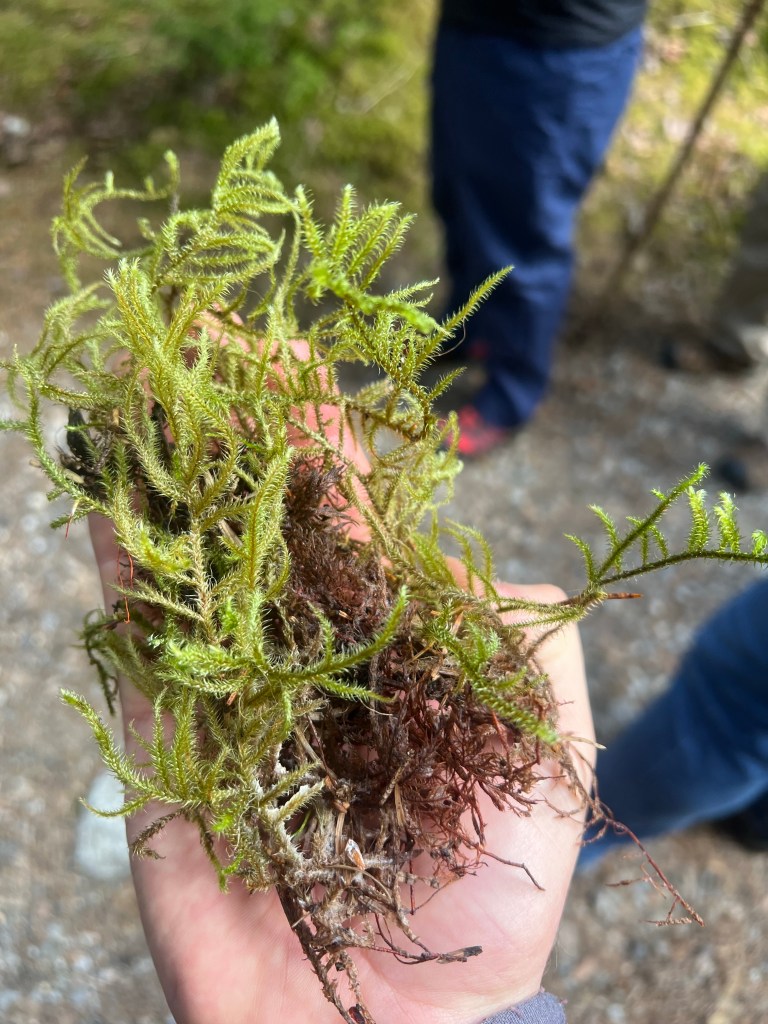
The dominant species of tree are elders, hemlocks and spruce. When a new surface is exposed, the succession of species starts with mosses and lichens, which start to produce soil, building layers of organic material and trapping dust. This provides somewhere for alder seeds to germinate, their roots further improving the soil. Then spruce trees start to establish, followed by finally hemlocks that can grow in the protection of the established canopy.
This is easy to remember using the acronym MESH – moss, elder, spruce, hemlock.
Of course as the plants start to colonise and grow the prove habitats for the microorganism including bacteria and fungi in the new soil, micro-invertebrates such as the Big Five including nematodes, rotifers and tardigrades. The larger invertebrates, worms, slugs, snails, flies and their larvae find space to live which attracts birds, squirrels, porcupine and other mammals. Along slide the lakes, straits and rivers, forest provide the perfect habitat for beavers and of course bears. Note that in these forests reptiles and amphibians are less common due to the cold temperatures.


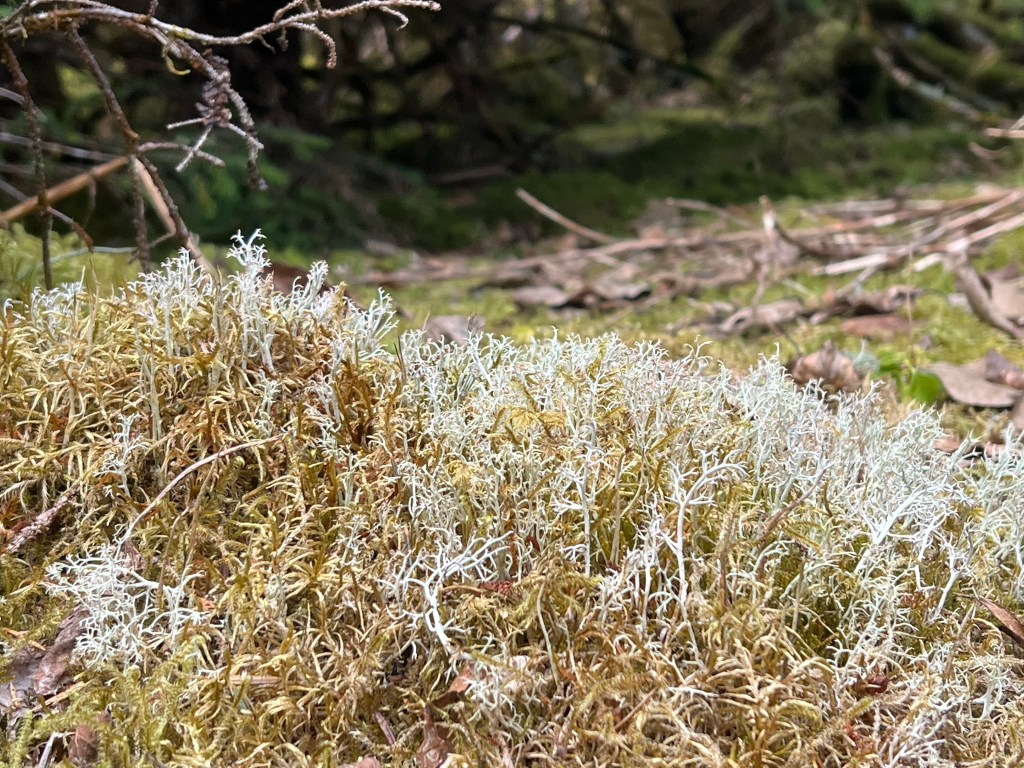
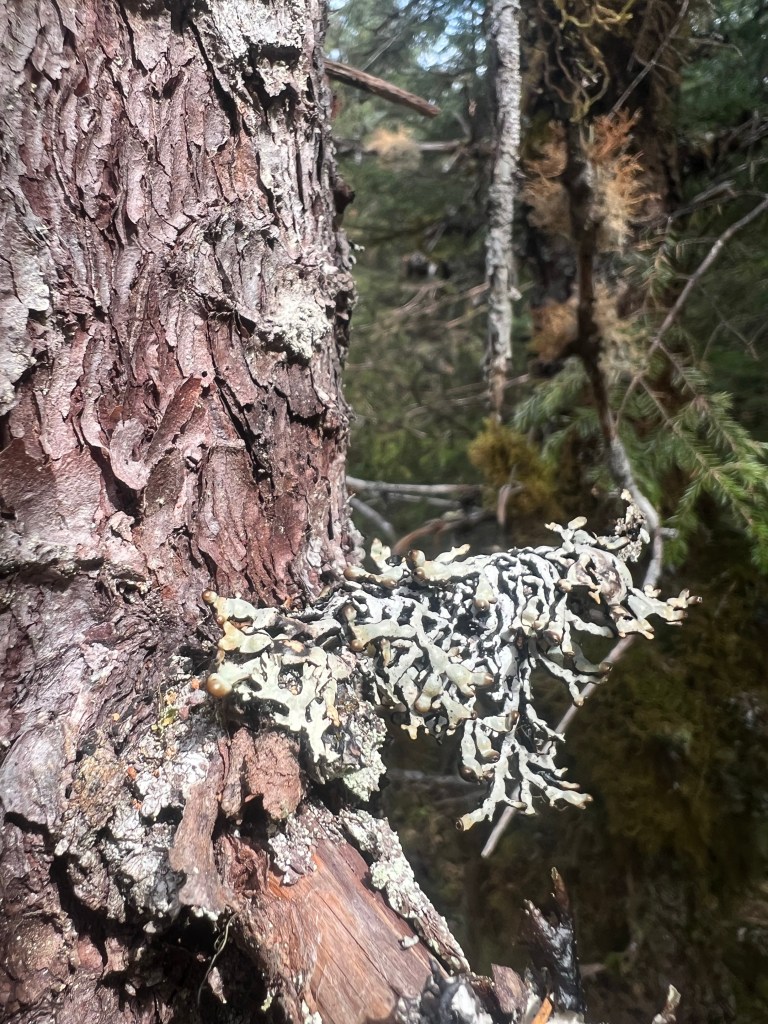


From the gallery above you can see the huge variety of mosses and lichens growing on the ground, rocks and in trees.
First nation people have used this abundance of moss for many things including as toilet paper, sanitary towels and for baby’s nappies. It’s incredible absorbance and softness together make it a perfect renewable resource for such human needs. In addition, mosses have been used for packing wounds due to their antiseptic qualities and stuffing mattresses. Although not that nutritional, it can be eaten in stews and drunk in teas.
Succession from glaciers
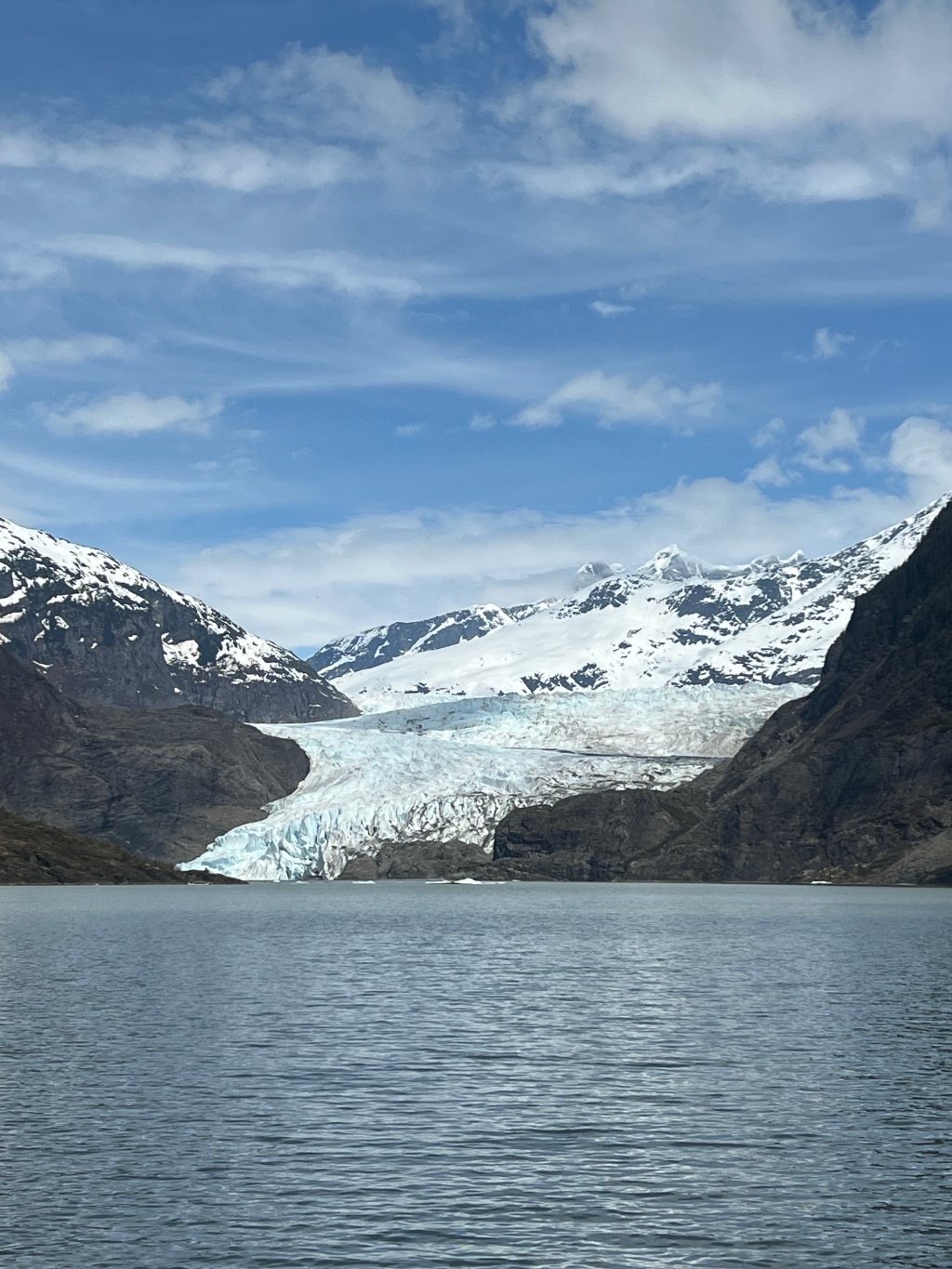
After the stroll through the forest, it opened out to a great expanse of water, surrounded by ice-capped mountains, and the edge of a glacier. The skyline of mountains showed the jagged edges of some mountains and the rounded edges of other, the latter having been worn down by glacial movements.
The rocks strewn among the forest were deposited by the glacier, after been scraped, rolled and uplifted in the thick icy sheets. Being there, seeing the glacier, the mountains, the forest and the moss, I could see the ecological succession. The evidence of this ongoing process. The wilderness of Alaska shows nature in its raw forms: tectonic, geological and ecological processes. The power of ice, the fragility of rock and the capacity of organisms to colonise new space, waiting their turn to flourish. In that, moss, plays it’s essential role.

Want more? Follow Moss Safari
Please like and follow this blog and website
Afterward
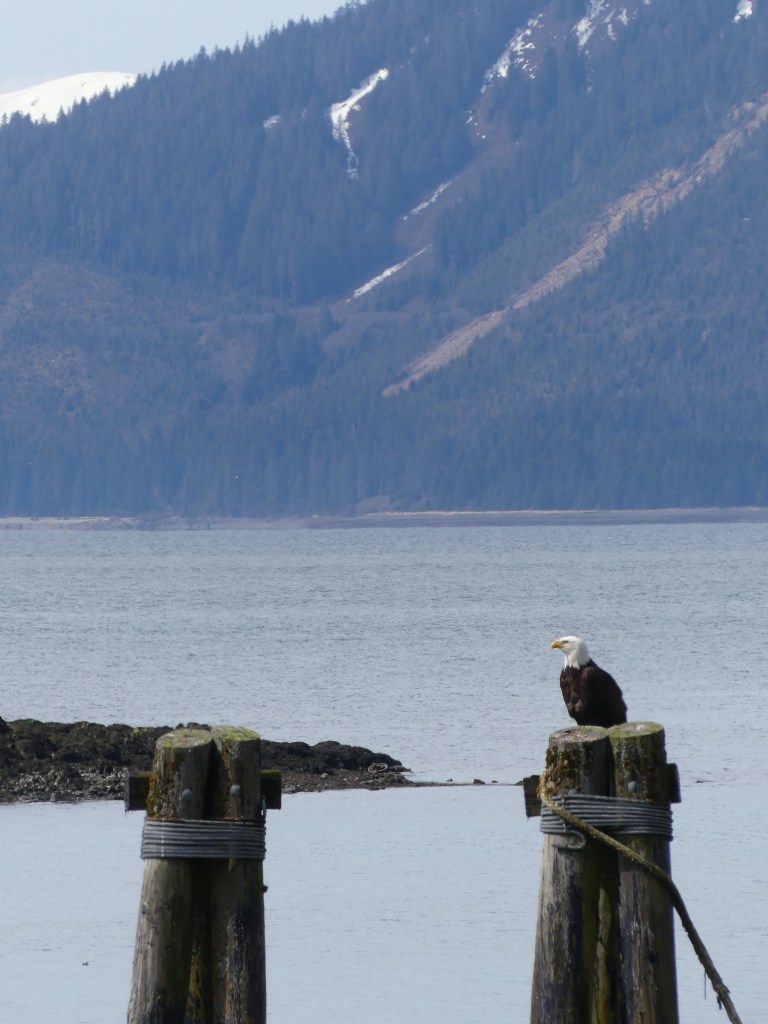
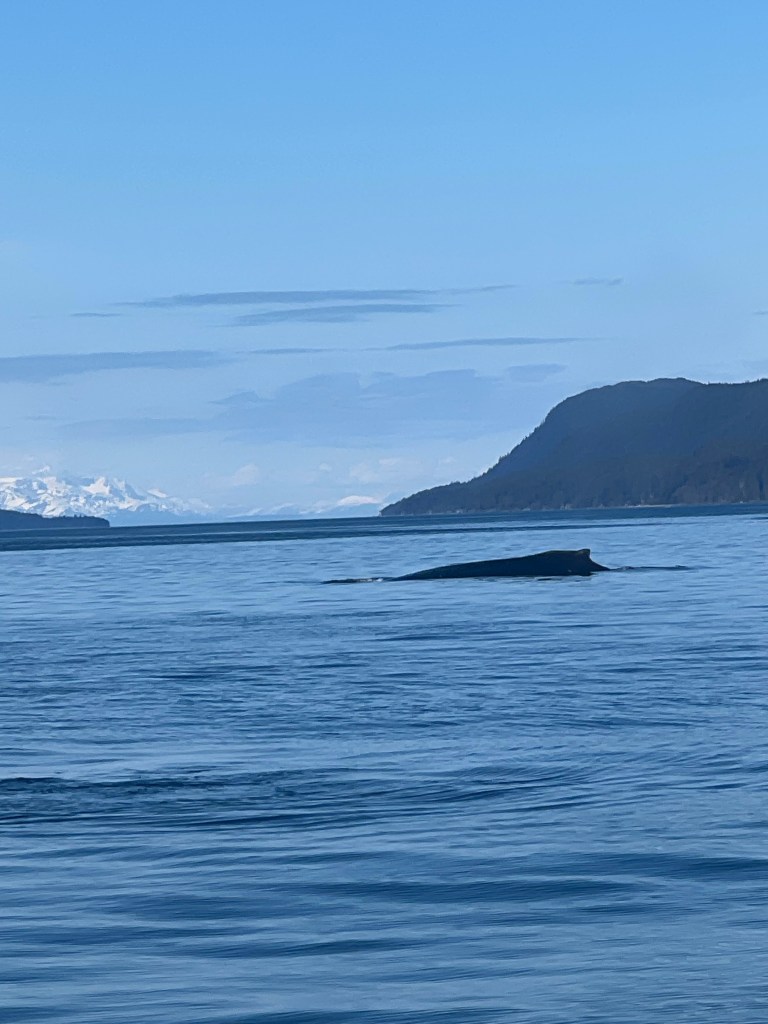
You might have been interested by the macroscopic organisms I mentioned. The highlights included a pod of orca, humpback whales and bald eagles. Here are some pictures. Alaska is amazing.



 Moss Safari