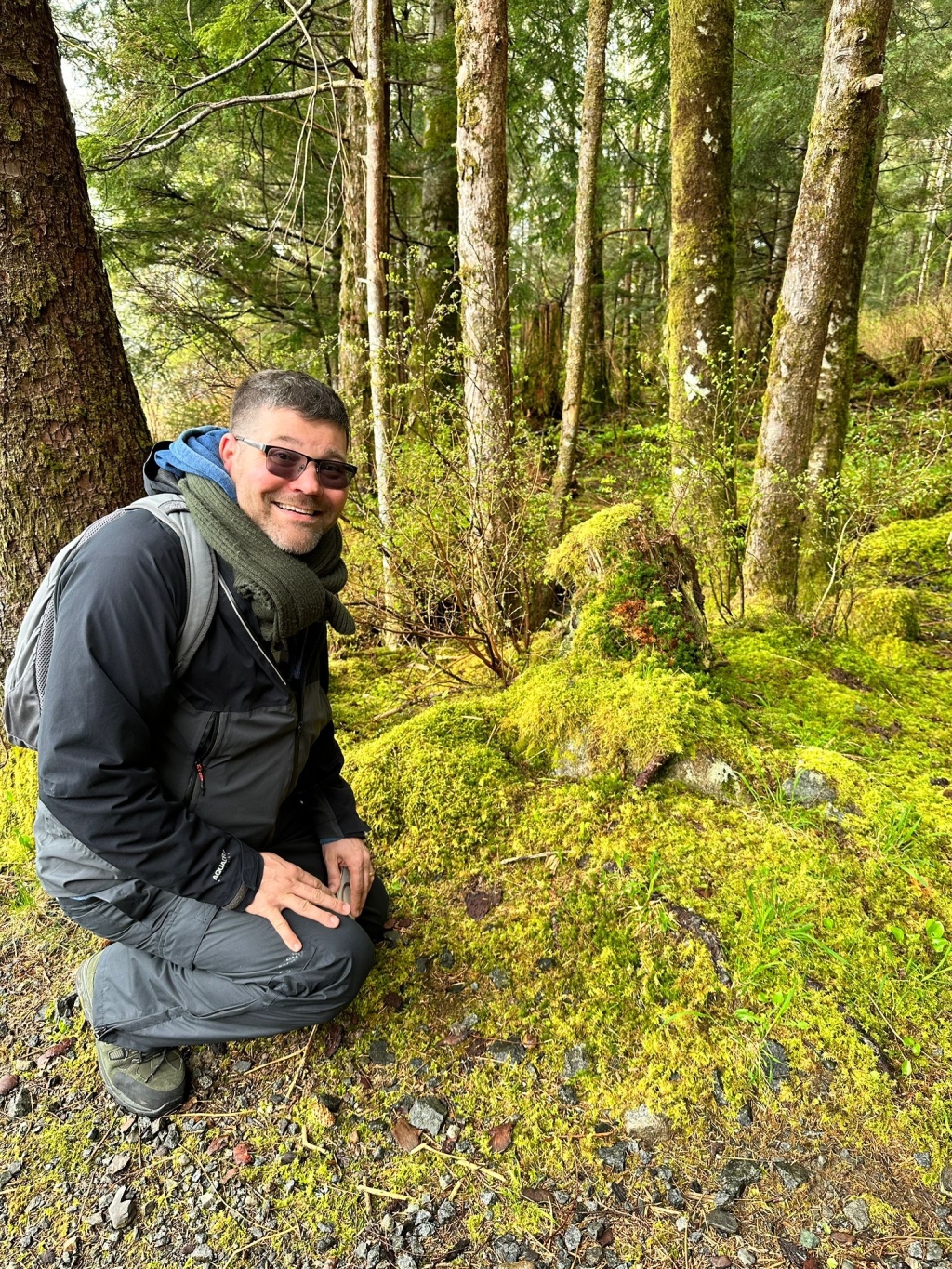
Friday 5 May 2023
As part of a cruise along Alaska’s Inside Passage we arrived at our first port of Ketchikan. Although we hadn’t planned any specific excursions, it provided a perfect opportunity for a walk through some temperate rainforest. A quick internet search for ‘free things to do in Ketchikan’ suggested an hours hike along the Rainbird Trail . This trek was described as a moderate hike through temperate rainforest along the top of Ketchikan with vista points. I, of course, hoped for some moss, but was unprepared for what I found.
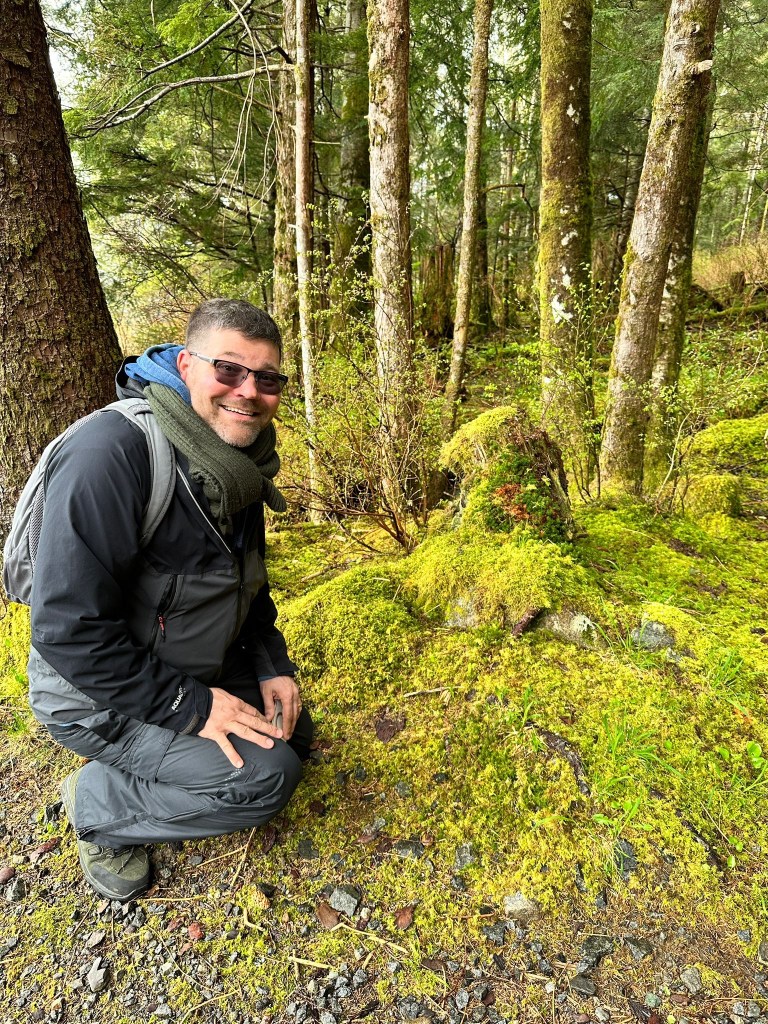
Mossy heaven – carpets, cushions and curtains.
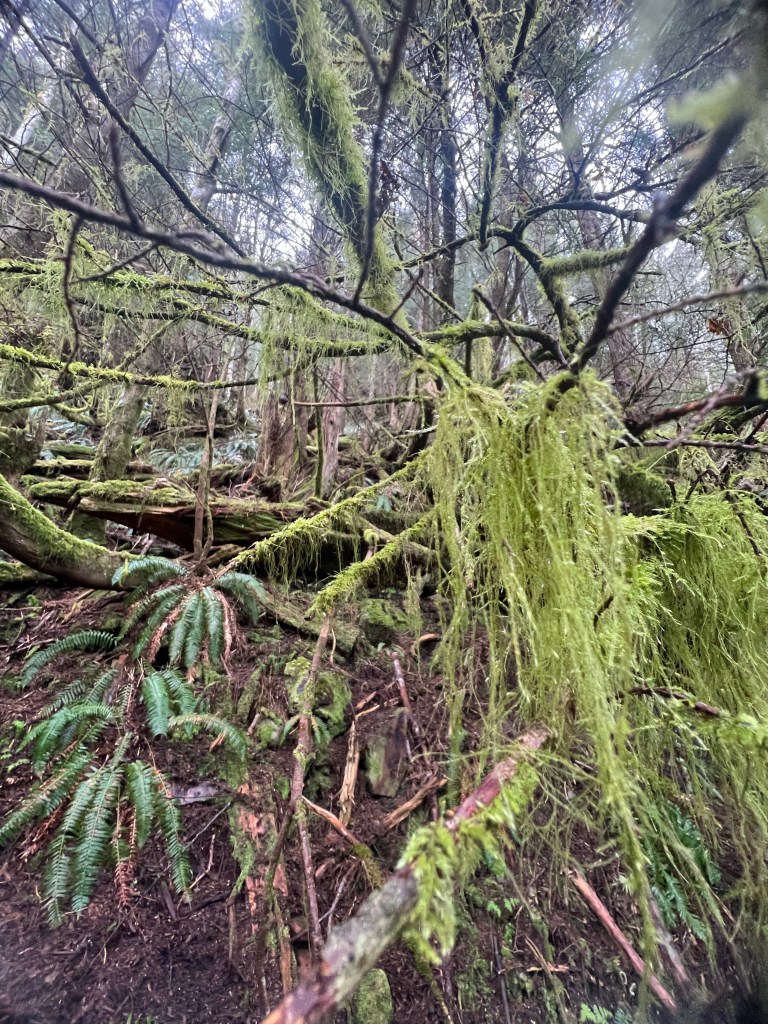
The entrance to the trek was behind the library of the local university. As soon as we entered it was clear this was an amazing place for moss. The floor of the forest was carpeted in moss, there were boulders covered with moss cushions and the tree branches had mosses and lichens in curtains hanging from them.
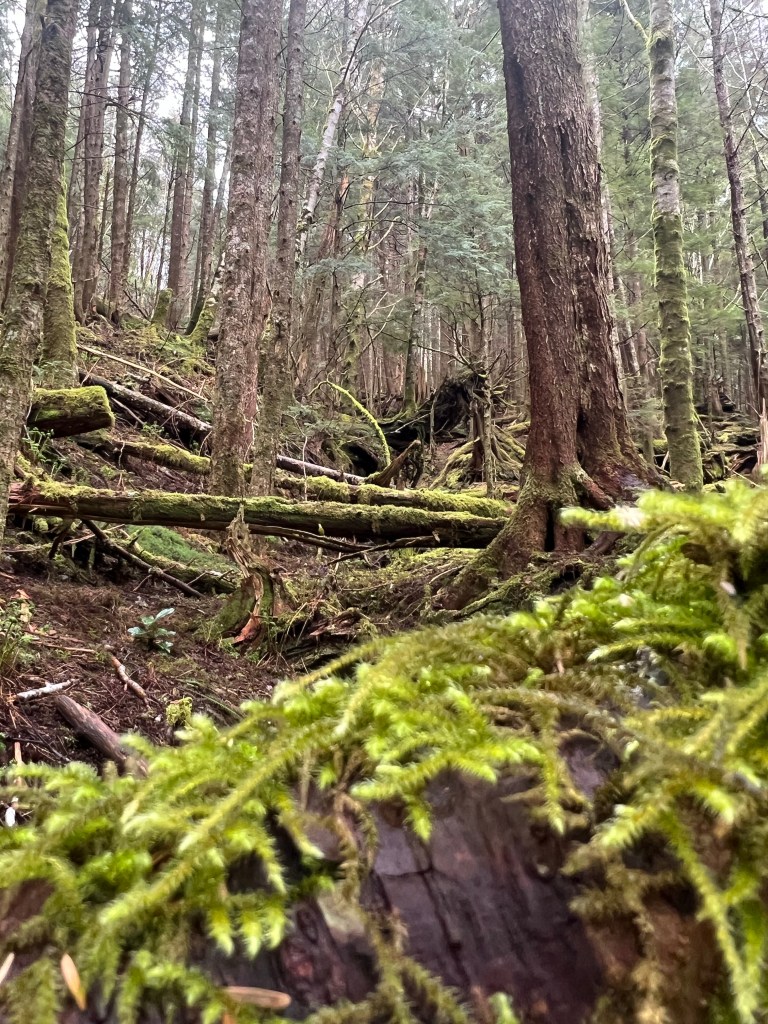
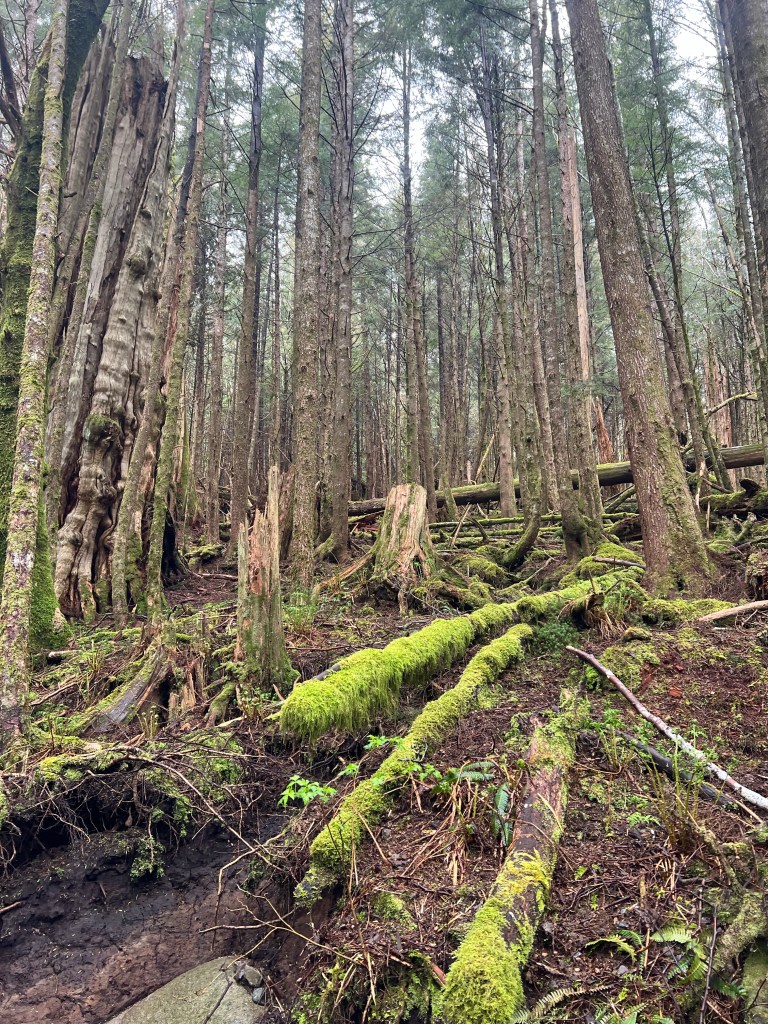


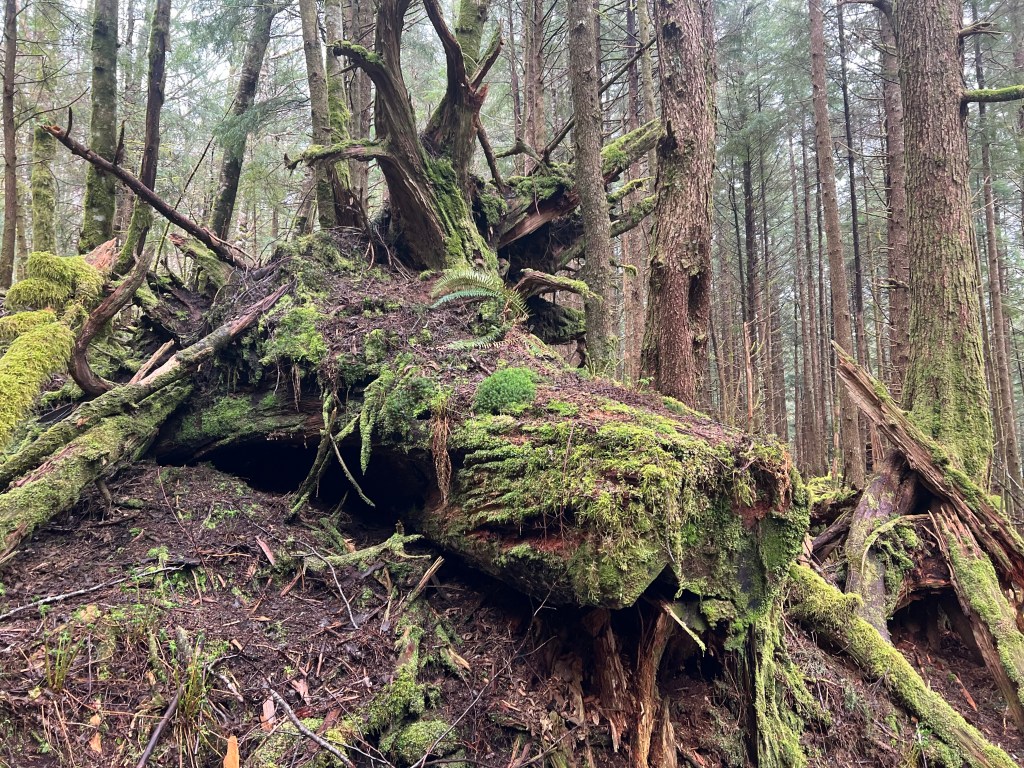
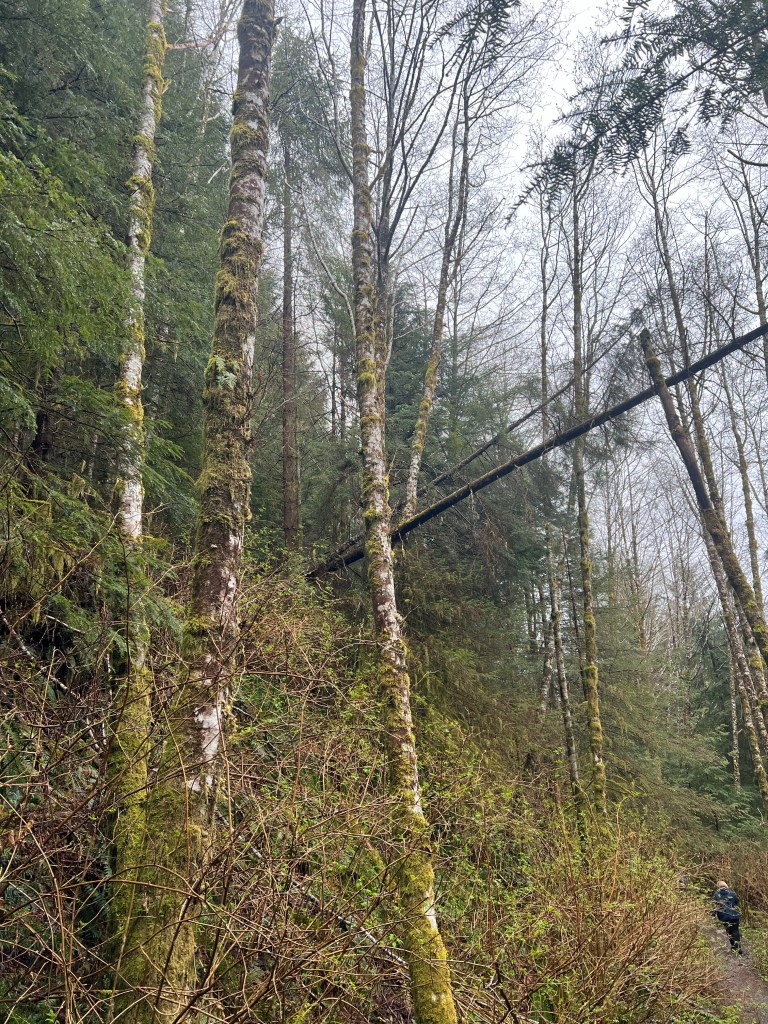

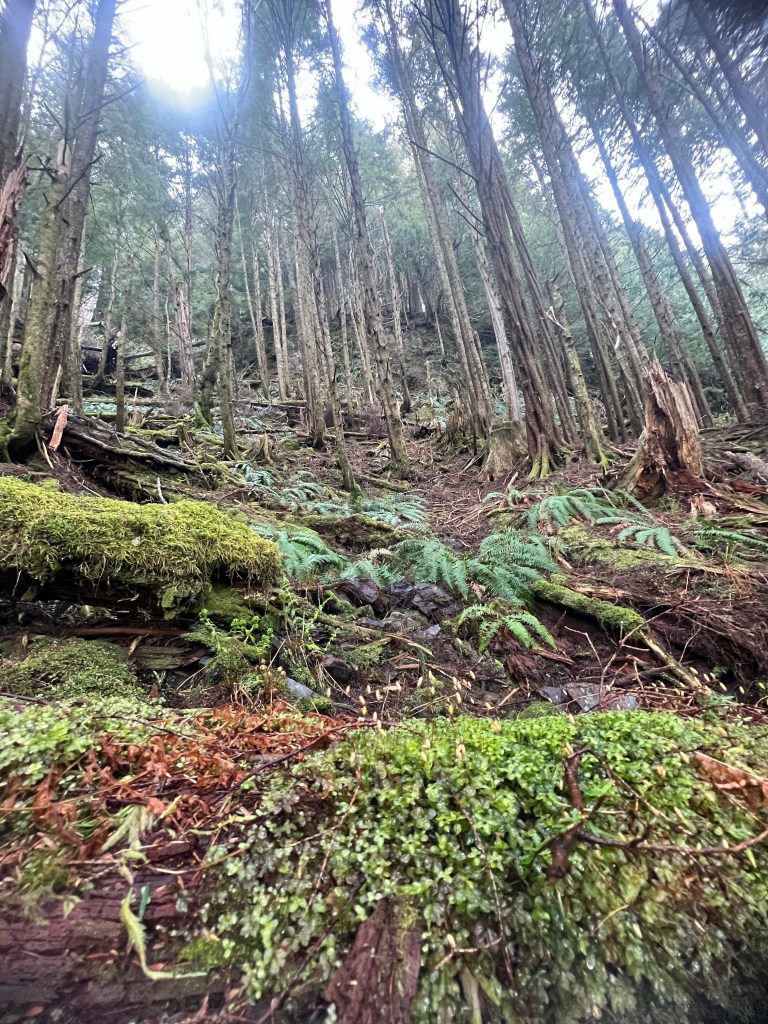
Many trees were of a great age, with thick, tall trunks and dense canopies. There were many fallen red coloured trees covered in mosses and slowly rotting. Bleached fallen trunks lay scattered amongst the moss that seemed to be slowly engulfing them. Streams from the mountains trickled through the thick peaty soil, exposing rocks, again covered in a variety of bryophytes.
A challenging trek
I was in a party of six and we are not experienced hikers by any stretch. As the path ascended, it became less and less maintained, at the mid point it appeared to vanish and we had to negotiate our way up and under fallen trees, uneven footing and soft ground along steep crevices. We did spend a lot of time wondering if and when the trek would end and if we would have to turn back. However, I took as much opportunity as I could to photograph moss scapes and moss plants in detail in the hope of identifying them when I returned to the comfort of the ship. We did make it safely to the end of the trail, rewarded with a fantastic forest experience, vista points and a sense of survival.
Moss species (and others) I found
I’m a keen amateur at identifying mosses. I know also that mosses can be difficult to identify from just pictures. It is likely that without using a microscope, many mosses are only identifiable to genus level. So I am using a rating system of confidence of identification:
🔴 unconfirmed- it is my first attempt using a mixture of internet searches and reference books.
🟠 mildly confident- based on previous finds, a more detailed look at the plant, use of a key. another more expert person has confirmed the identification.
🟢 confident – detailed information used to identify the species based on close observation of leaves and structures, a key and the confirmation of more expert people.
I hope this will avoid readers having false confidence in my identification, but also see my thought process of trying to identify the mosses. This will be dynamic and I will update this blog as I learn more. Please let me know what you think of my identification attempts – either to confirm, to correct or to query.

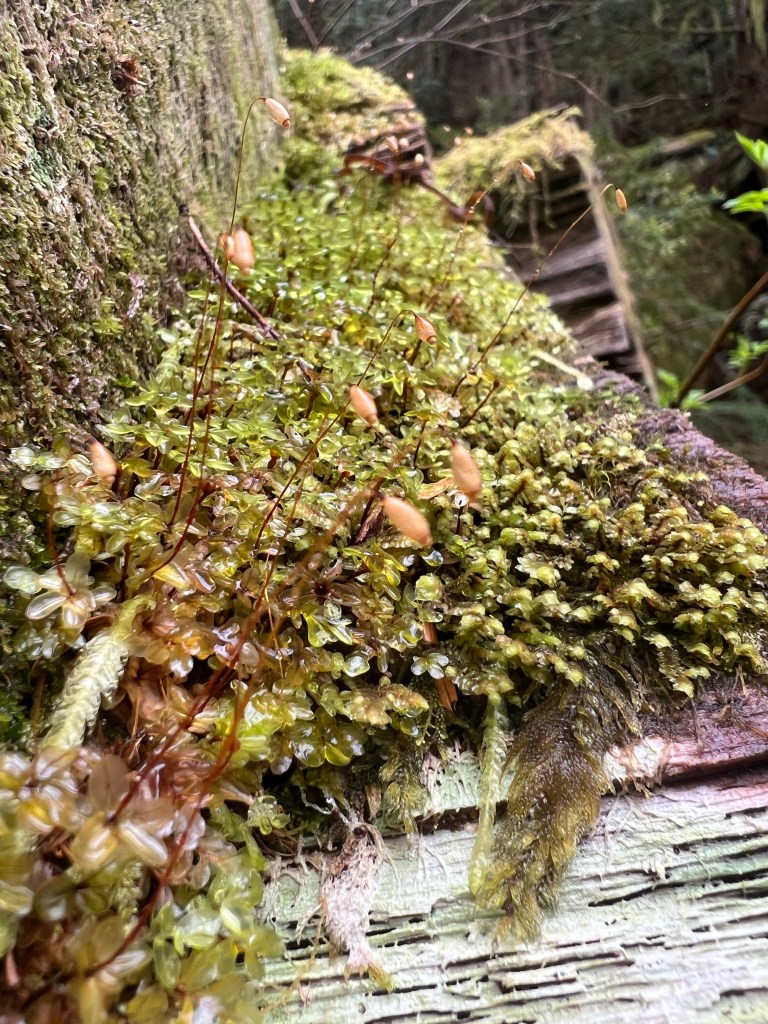


A moss in focus
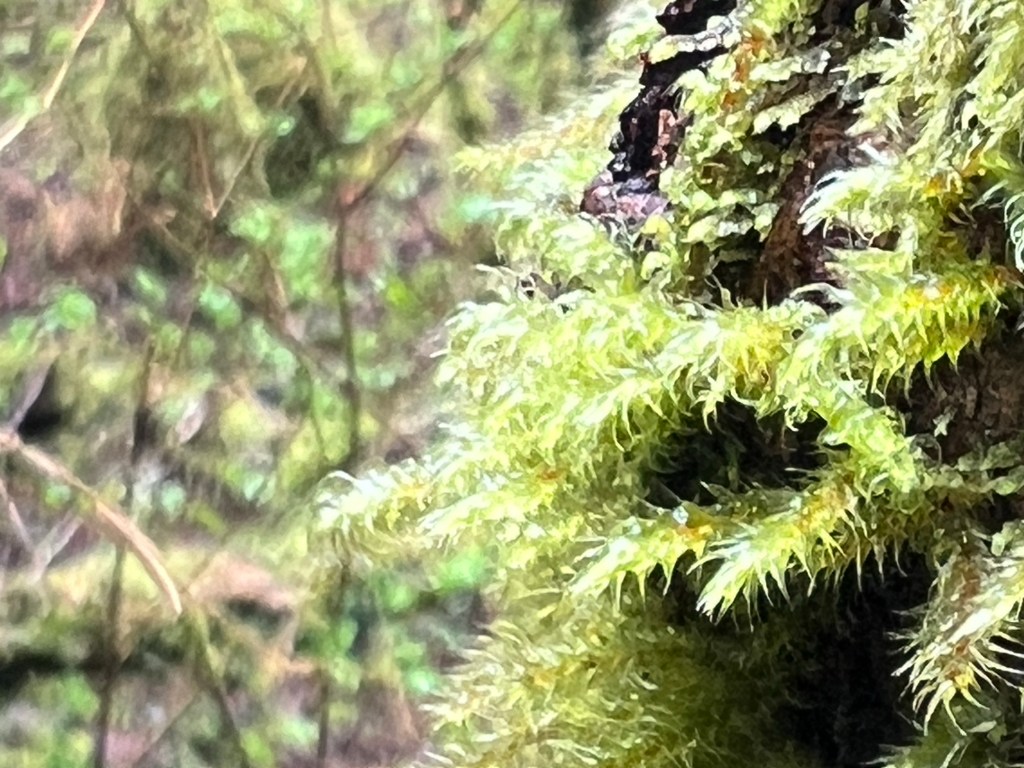
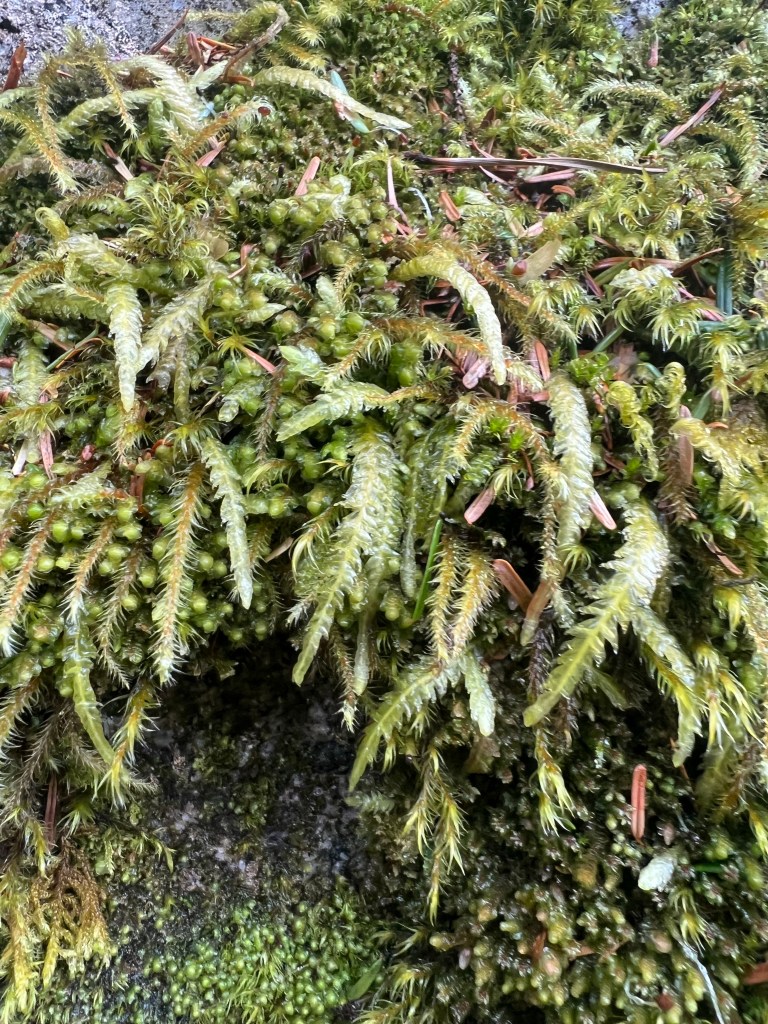
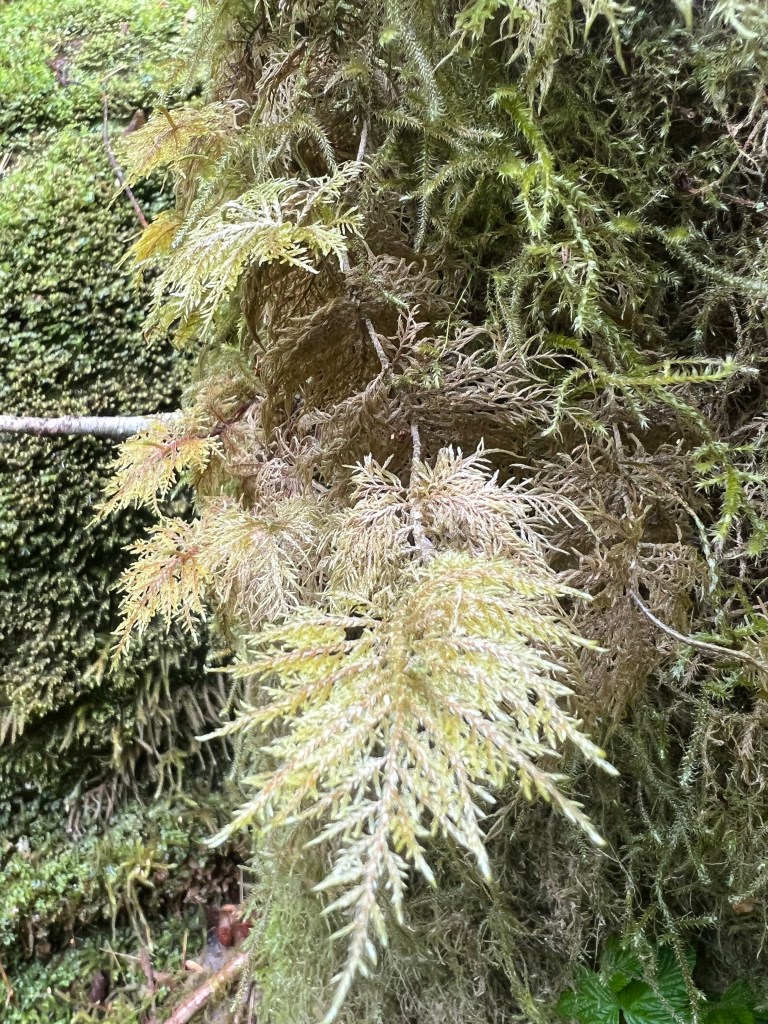
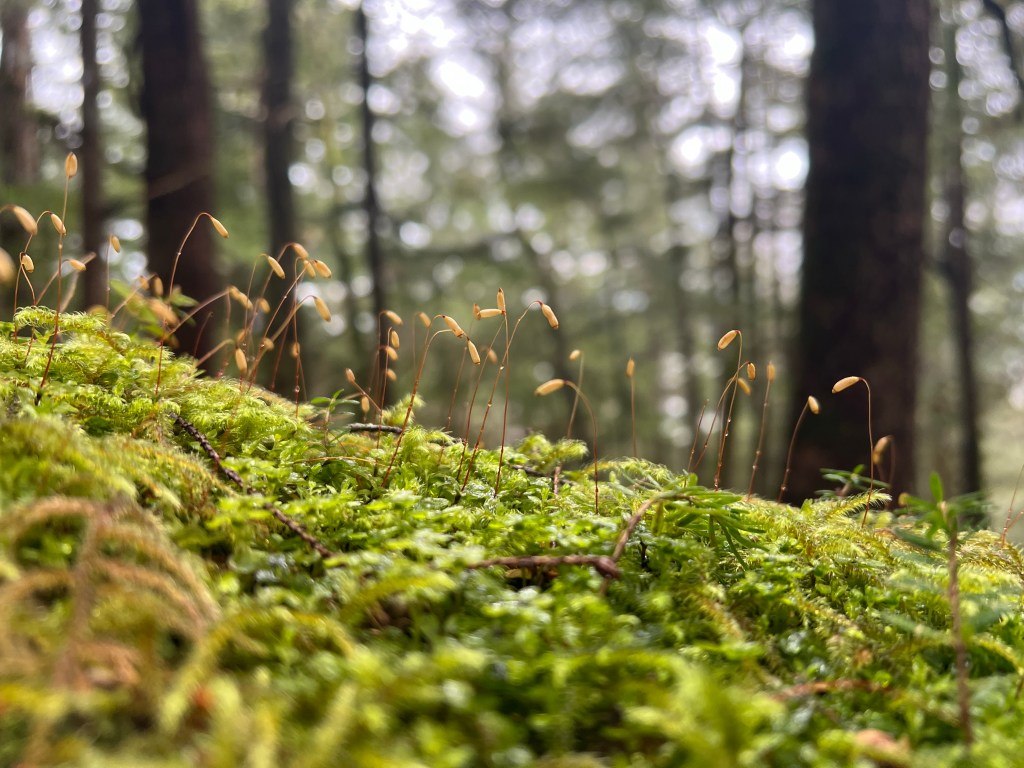
I saw a lot of this Hypnum 🟠 moss on the forest floor and on logs – a lot of it had its sporophytes drying out. I was able to get some pictures of these.


Moss Safari notes
Sadly I did not travel with my microscope and it is not legal, nor ethical, to bring home moss samples from other countries to study the microorganisms that live in them. So instead I have some a Google scholar search for any research done on the mosses and their micro-ecology.
A search on GoogleScholar revealed no scientific papers on the Big Five. No tardigrades mentioned at all. This would be a great site for investigation, I should imagine there’s scope for new species to be described. Bryophytes we’re described in the 1950s, but very little else.
I’ll update this as I learn more. Look out for the next blog in this Mossing around the world Series.
Want more? Follow Moss Safari
Please like and follow this blog and website
References
https://www.alaska.org/detail/rainbird-trail
https://www.fs.usda.gov/Internet/FSE_DOCUMENTS/fsbdev3_069239.pdf
 Moss Safari