Tuesday 2 May 2023
This is the first in an occasional series of blogs on appreciating mosses (and lichens) that I see on my travels. Since I have started to ‘see moss’ I am keen to see it everywhere I go. This blog series will follow my travels and my learning about mosses, their identification and their significance in the ecosystem. Where possible, I will make connection with the Moss Safari’s Big Five organisms.
I have just taken a holiday to Alaska via a cruise with my husband and our friends. The cruise left from Vancouver and we spent the day before in Stanley Park, hiring power assisted bikes to explore the area. I was tuned in to the moss and lichen that inhabits the park.

Springtime mosses
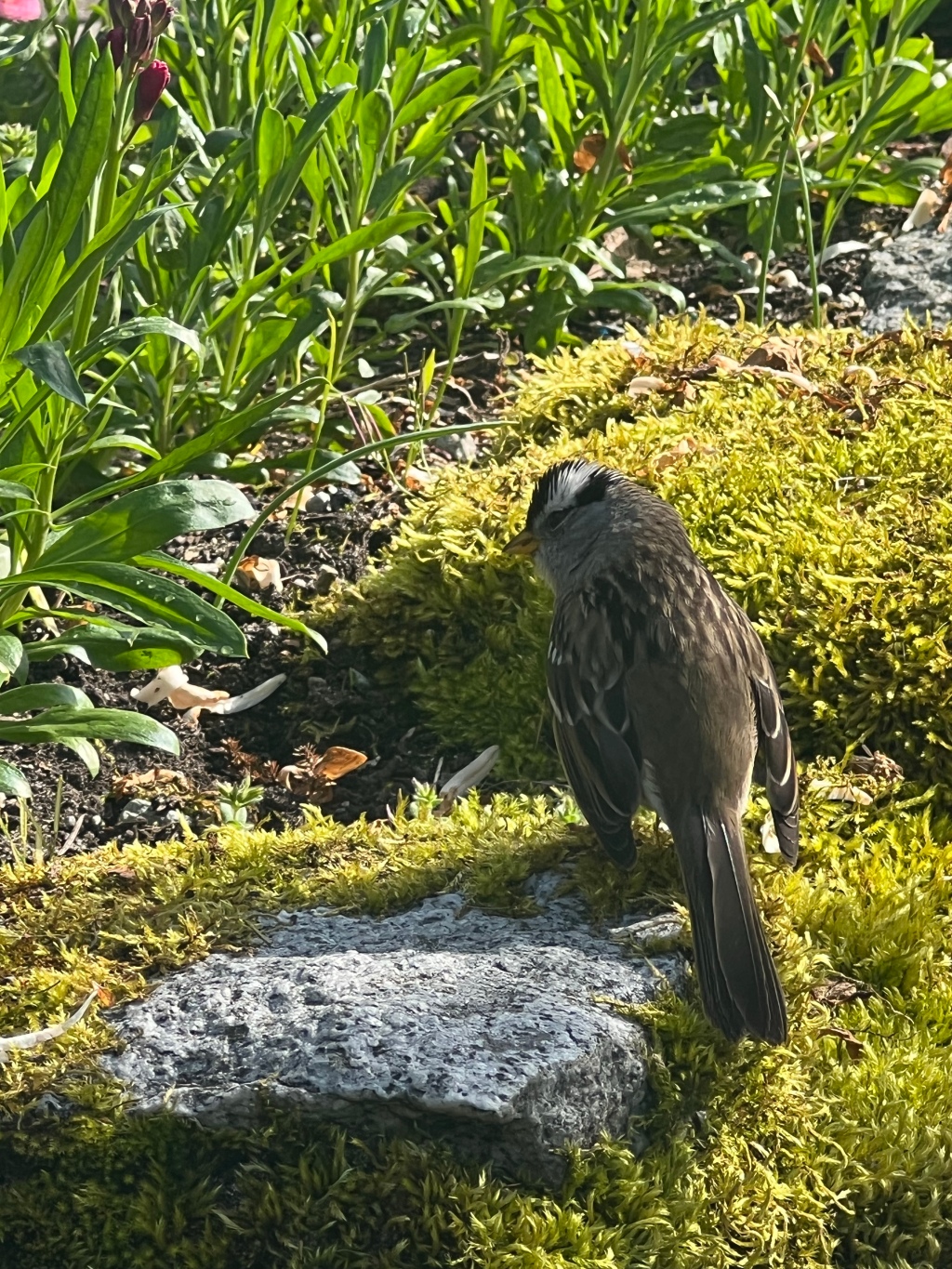
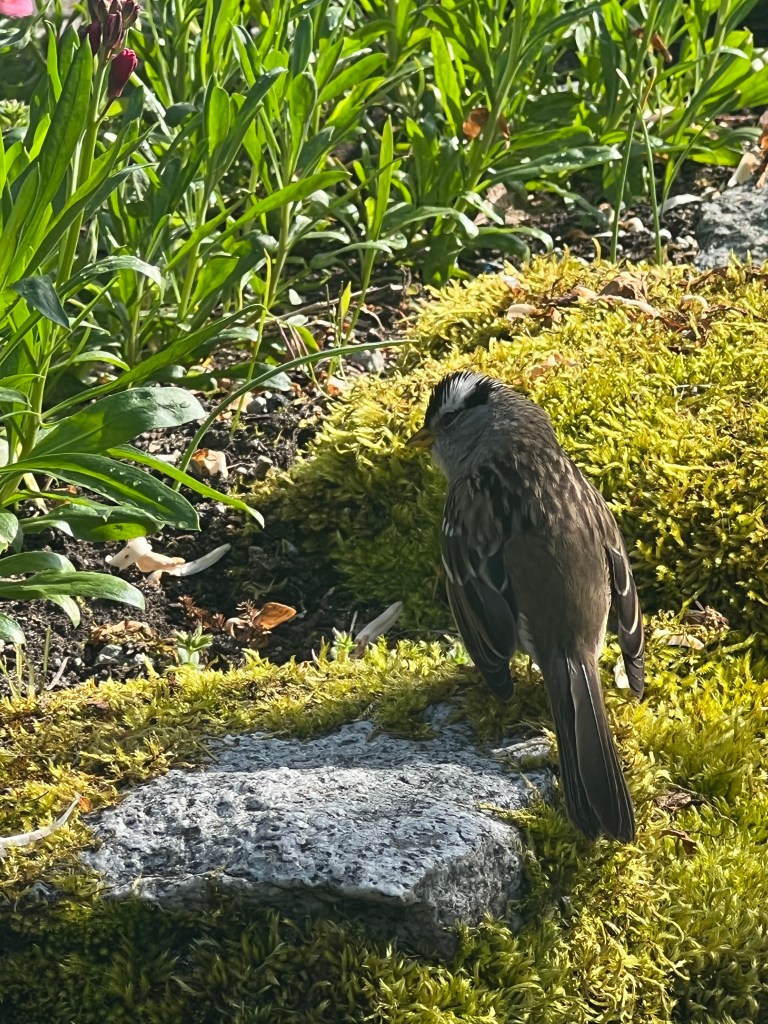
The borders of the gardens in Stanley Park were full of tulips of a variety of colours and a host of other spring flowers. There was a variety of moss growing on walls and in boarders. One of my first photos what this white crowned sparrow (Zonotrichia leucophrys) sunning itself on a moss covered stone.
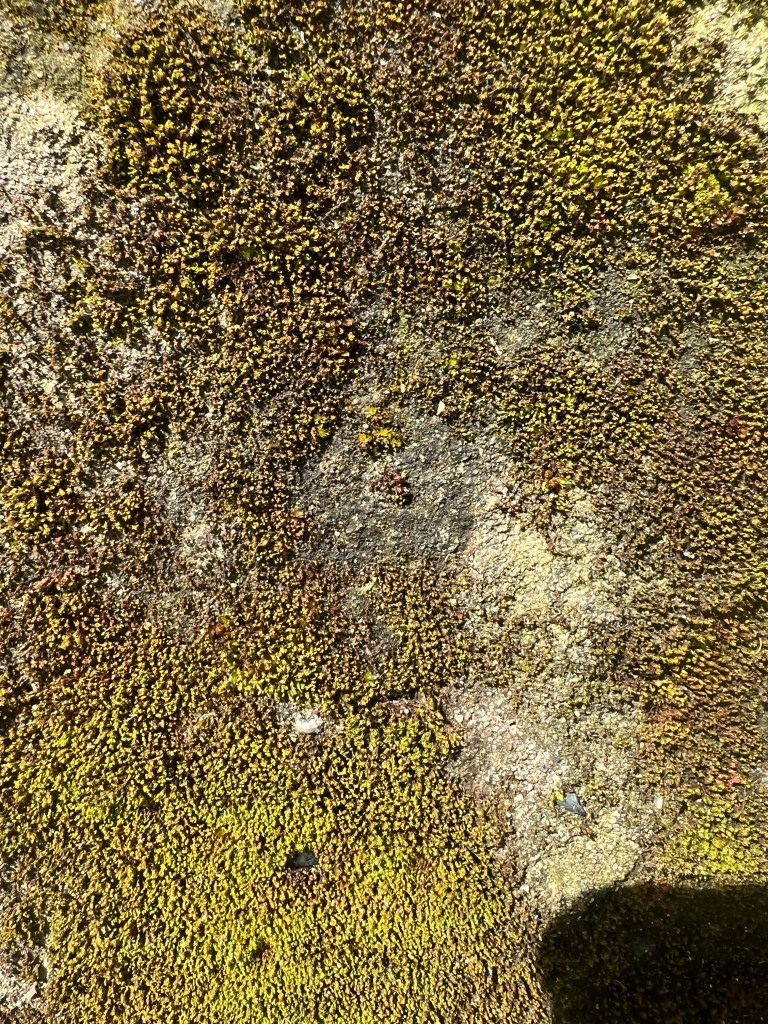
There was a huge variety of moss growing all over the park. The pictures below show the growth forms, colours and textures of the mosses I encountered. Many trees had at least one side of their trunks covered in furry moss either a golden green (Photo A) or a grey green colour (Photo B). I am just starting out on moss identification and am having a punt on these being a hypnum moss, but am happy to be corrected.
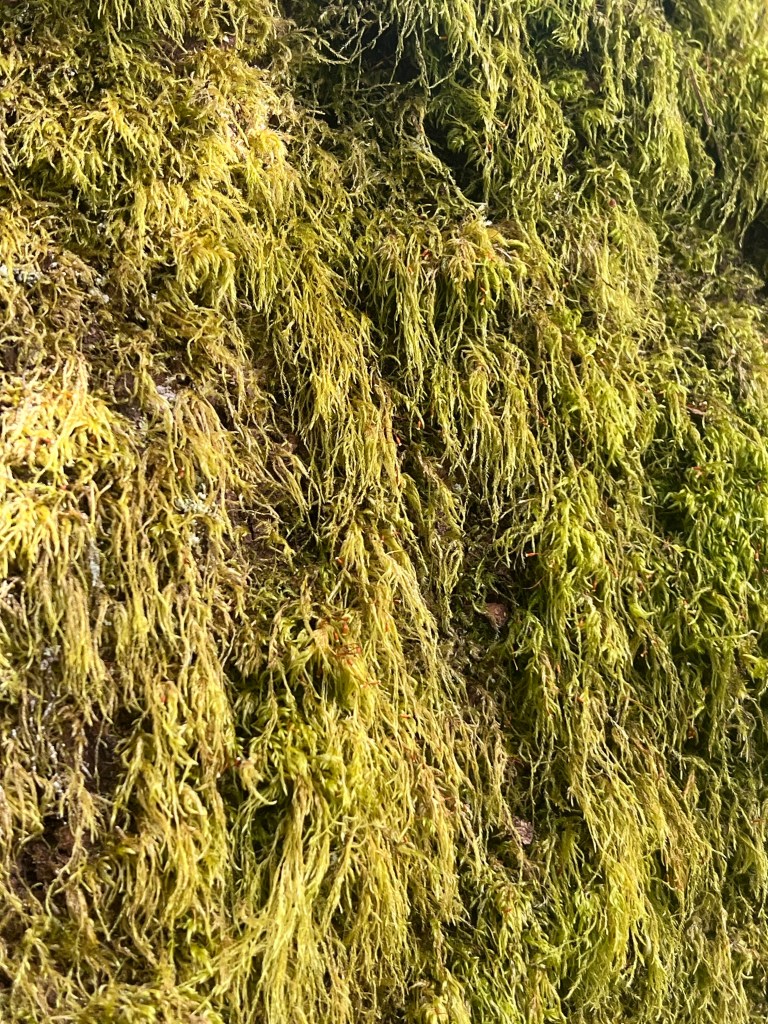
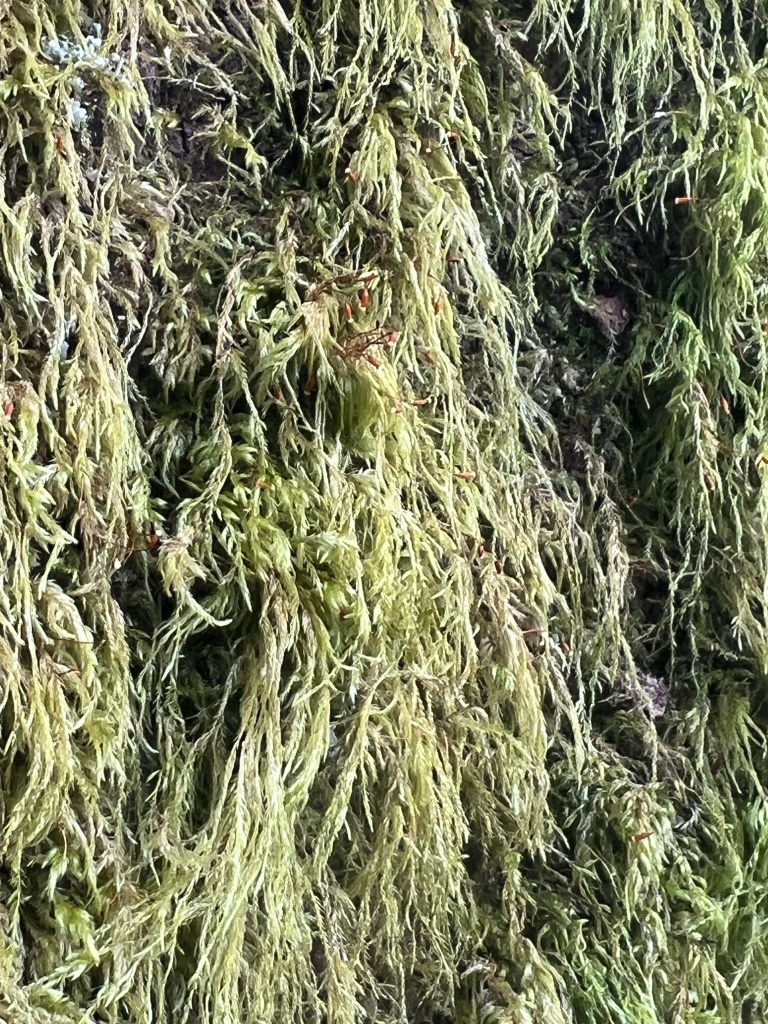


Other trunk mosses were curlier and seemed to contain more than one species (Photo C). I wondered if these were Menzies’ tree moss (Leucolepis acanthoneuron). There was a plentiful moss that formed a carpet stuck closely to stones and walls of a golden yellow hue, I am trying a genus and species of Hypnum cupressiforme (Photo D). Finally the clumping mosses on branches, epiphytic mosses (Photo E) were abundant, I am getting no where with a name or an identification. Any ideas?
Looking out for lichen
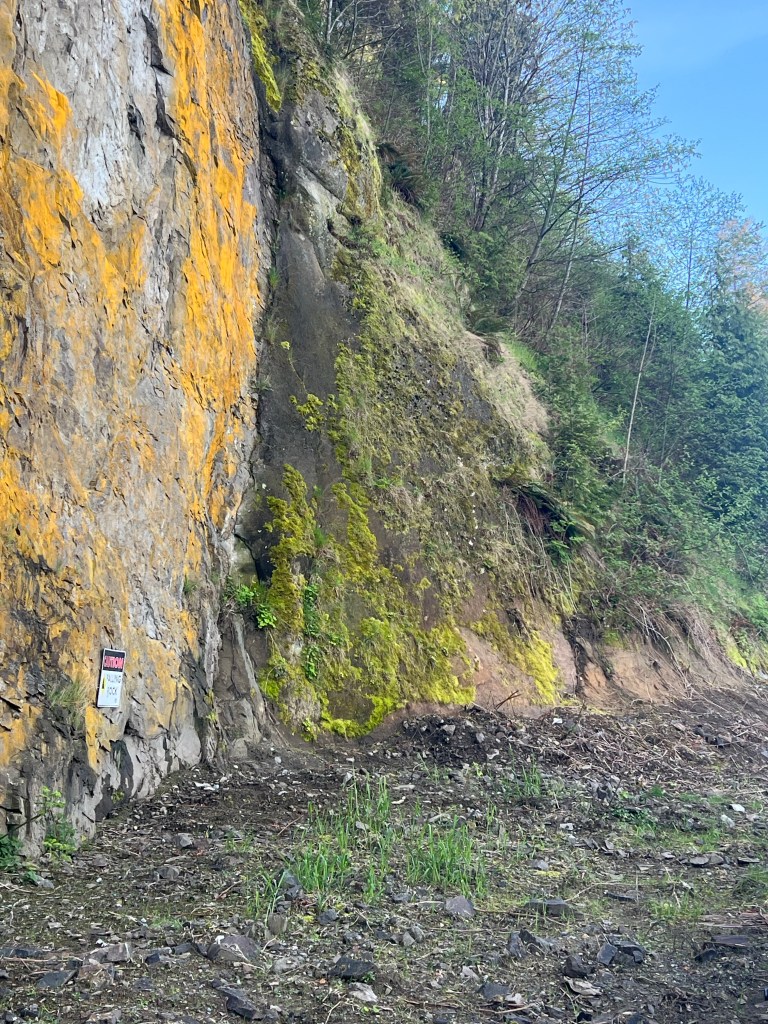
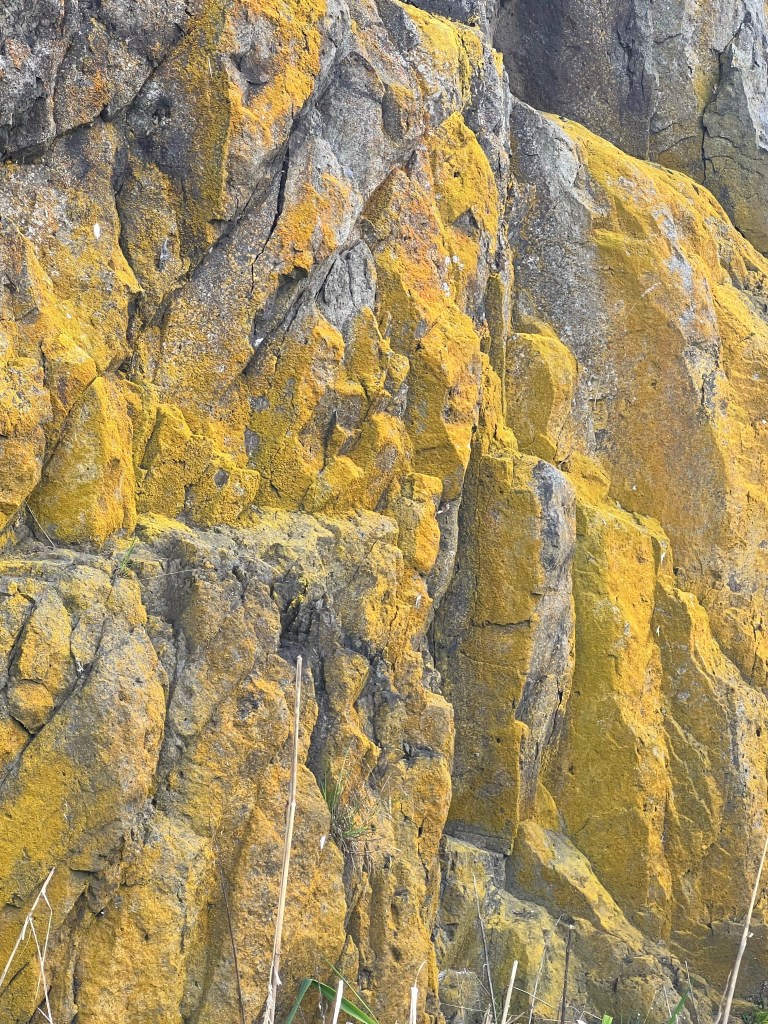
Riding along the sea paths, there were some very shady areas and small caves. On the bare rocks, grew a powder yellow lichen that stood out even in the darker areas Photos 1 & 2). Closer up, some of the lichens were a crust close to the rock (Photo 3) and others formed frilly lobes (Photo 4). I need an ID guide for these. However, just to look at they added colour and texture to the landscape.

Stanley Park as a nature reserve
Stanley Park is clearly a well cared for and a popular place for the people of Vancouver to stroll around, walk their dog, cycle, roller blade and play sports. It was a particularly sunny day when we visited and there was an abundance of moss. I looked at iNaturalist and Stanley Park has a lot of attention, with many people observing and recording their finds. They focus on birds mainly, although a few mosses have been recorded.
As I was cycling with other people, it was not easy to take a closer look at the mosses I have described. I know for identification I would need closer pictures of the leaves and stems as well as where possible the sporophytes. However, just the observing of moss and lichens, appreciating in its setting, its association with animals and other plants and of course its place within the ecosystem offers plenty of interest and joy.

You may be wondering what about the organisms that live in that moss. If you follow Moss Safari, you will know of the interest in the Big Five multicellular organisms that commonly inhabit moss. Alas, I was without a microscope and I am not allowed to bring moss back home, so, for now, the inhabitants of these mosses remains a mystery to me.
References
iNaturalist Little Mosses Project, Stanley Park Vancouver.
Mosses and Liverworts of the National Parks in Alaska
Want more? Follow Moss Safari
Please like and follow this blog and website
 Moss Safari