I’ve being studying the organisms that live in moss for the past few years and sharing the joy of those microscopic organisms. However, I haven’t given the moss itself such attention. In fact just one ‘focus’ in this blog back in 2021.
Plant Blindness
Plant blindness is the phenomenon where most people favour animals over plants, to the point that plants can be ignored. I was at the Association for Science Education Annual Conference last week and was reminded of this concept by Alistair Moore (University of York Science Education Group) and Dan Jenkins (Science and Plants for Schools).
Plant blindness has been defined as:
a) The inability to see or notice the plants in one’s environment (b) The inability to recognize the importance of plants in the biosphere and in human affairs; (c) The inability to appreciate the aesthetic and unique biological features of the life forms that belong to the Plant Kingdom; and (d) The misguided, anthropocentric ranking of plants as inferior to animals and thus, as unworthy of human consideration.
(Wandersee & Schussler, 1999, p. 1, cited in Stagg & Dillon, 2022)
In Moss Safari, moss could be seen as the object that the organisms live in and from which they are ‘squeezed’ from. So when doing a Moss Safari, how do I ensure that participants appreciate the moss as much as the animal life within it?
Putting the ‘Moss’ in the Moss Safari
I already have a significant feature of moss as an extreme environment in my Moss Safari sessions. The screen shots in below, highlight slides I use with primary school children about the structure of moss cushions and, for a secondary audience, the more detailed adaptations of moss to it’s habitat – the roof. These Slidedecks are available for free downloads here.
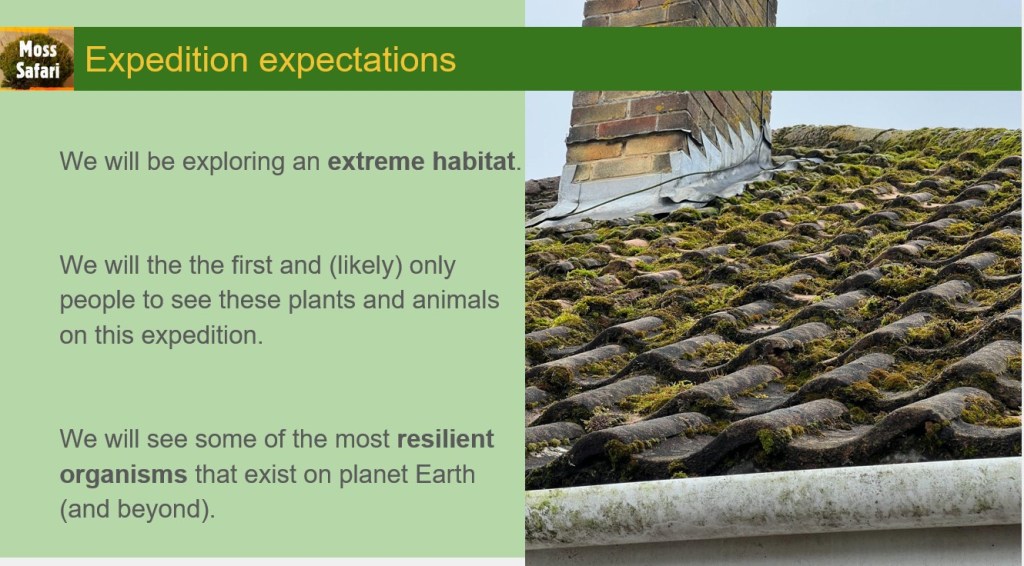
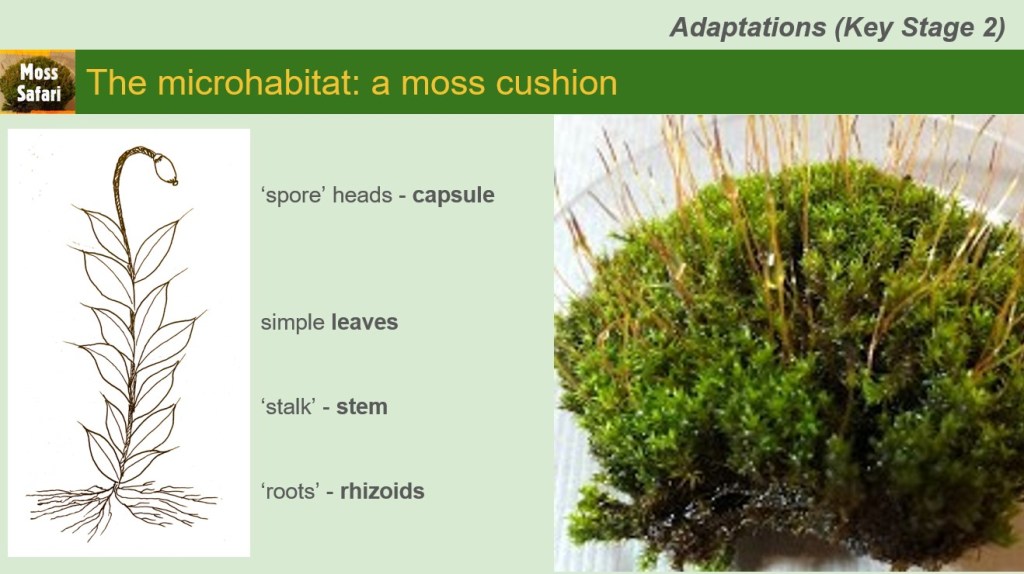

In addition, during a Moss Safari we will see many plants, including parts of moss, the leaves and ‘bulbs’ as well as filamentous algae. These are all moments to look at plants in more detail as well as the animals that live amongst the moss. Also keep in mind that moss has been around for a very long time, there are intricate co-evolutionary adaptations between moss and the organisms that dwell within it. My favourite is many of the micro-arthropods and tardigrades act as ‘pollinators’ of moss.
Seeing moss everywhere
Now whenever I am out and about, I see moss. I see it everywhere. On pavements, in the city, between cracks in roads, in supermarket car parks, on tree trunks, on branches, in flowerpots, on walls, in grass. It seems to be everywhere.
Not only that, I see it on television and in films. Forest fights take place surrounded by moss covered logs and branches. Interviews on the news take place in front of houses or walls, often with moss cushions growing on them. I see that moss.
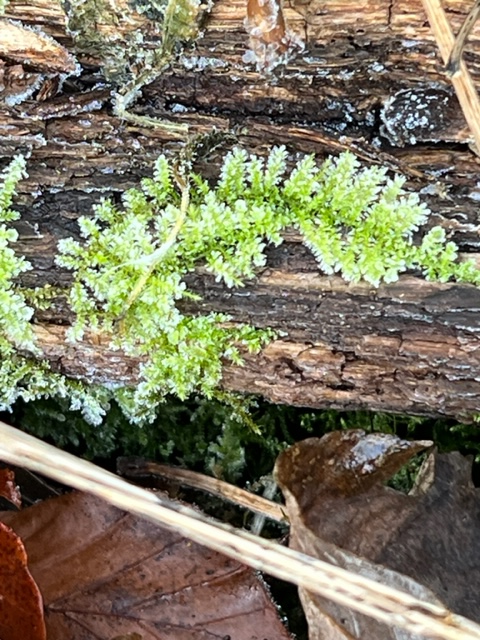
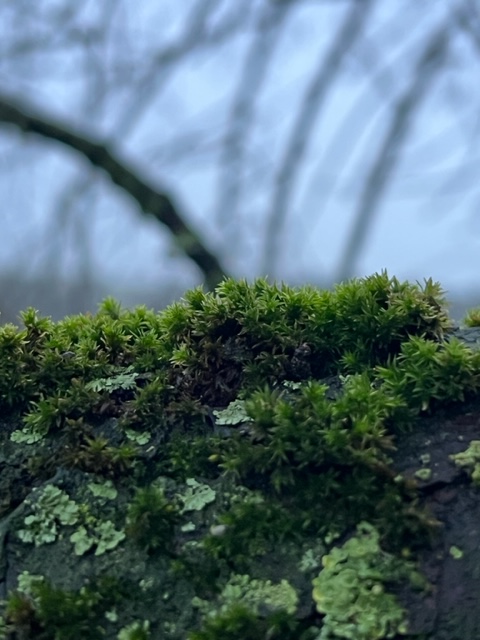
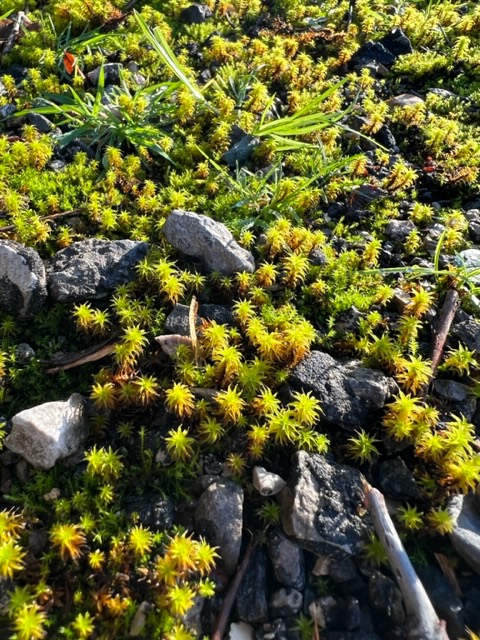
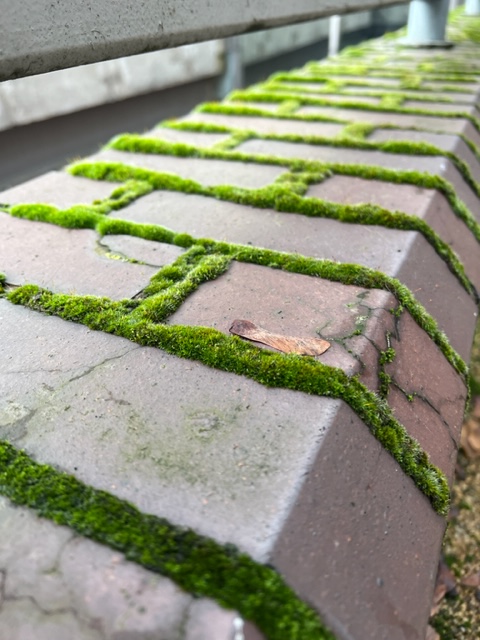
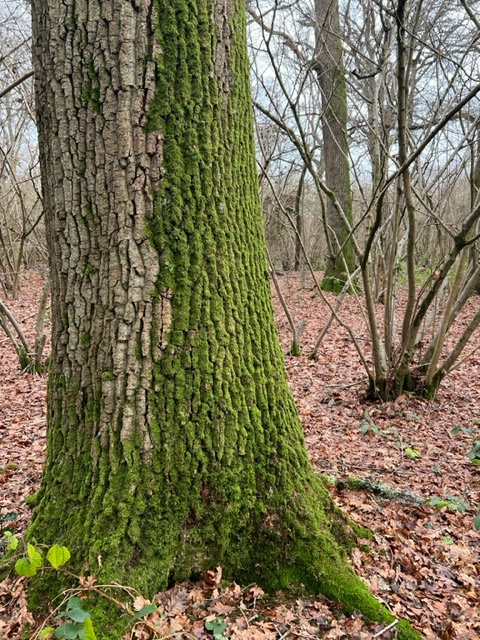

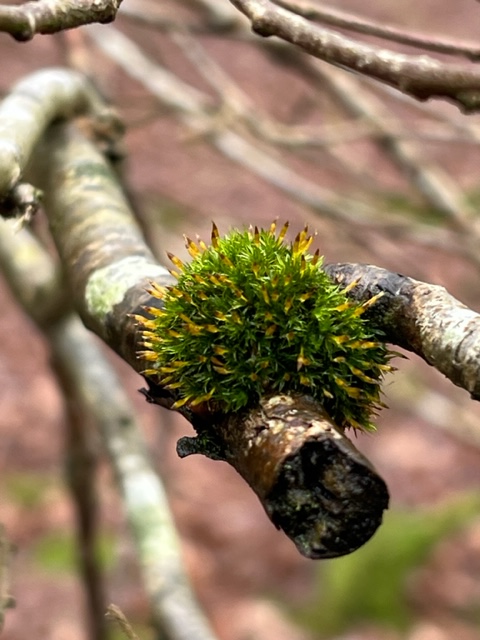


Now you will see moss everywhere
After experience a Moss Safari I find that people say they see moss more often. They often wonder what is living in it and appreciate moss for moss itself.
Friends have started sending me random photos of moss or signs concerning moss. See the images below! They are no longer blind to moss.
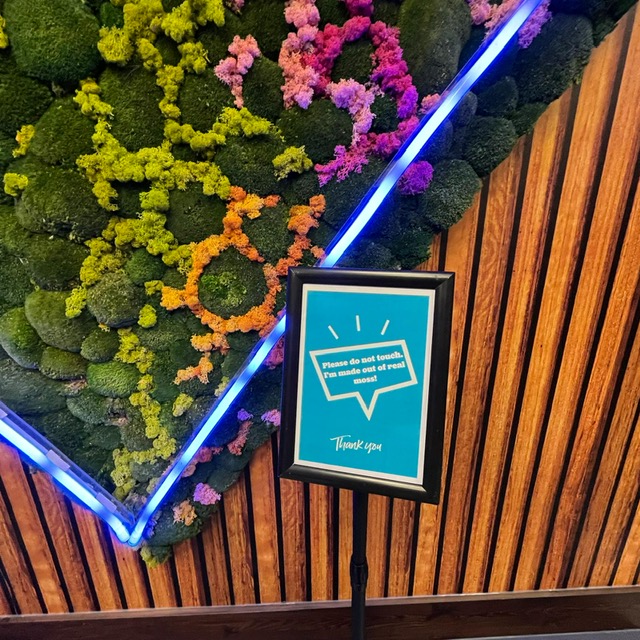

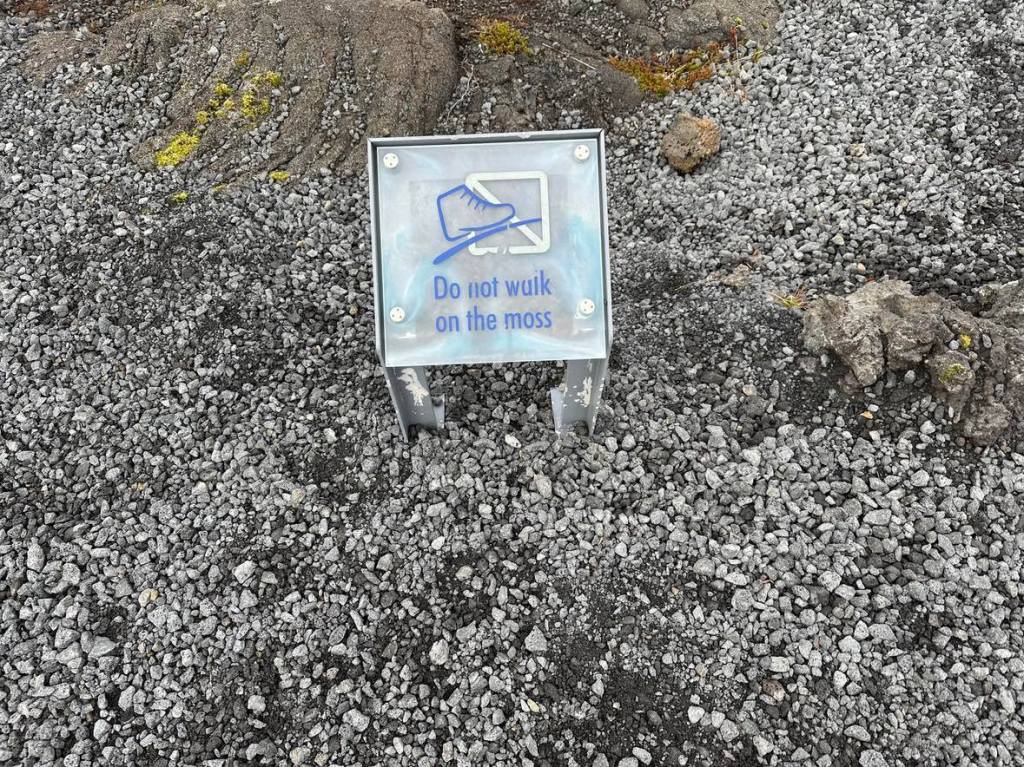
After reading this? Will you still be plant blind? Will you start seeing moss?
On my Twitterfeed @MossSafari, I am adding an occasional hashtag #mossmatters (already in existence) and #iseemoss. Share your moss pictures with me on there. Let’s cure plant blindness. See the green.
References
Stagg, B. C., & Dillon, J. (2022). Plant awareness is linked to plant relevance: A review of educational and ethnobiological literature (1998–2020). Plants, People, Planet, 4(6), 579-592.
 Moss Safari