Tardigrades – water bears or moss piglets
The tardigrade is probably the best known of the moss organisms. It’s the one that kids and adults cannot wait to see on the Moss Safari. Sadly, I can’t always guarantee on every Moss Safari, but when we see one, it is definitely a stop point and a watch and explore at different magnifications.
What to look out for
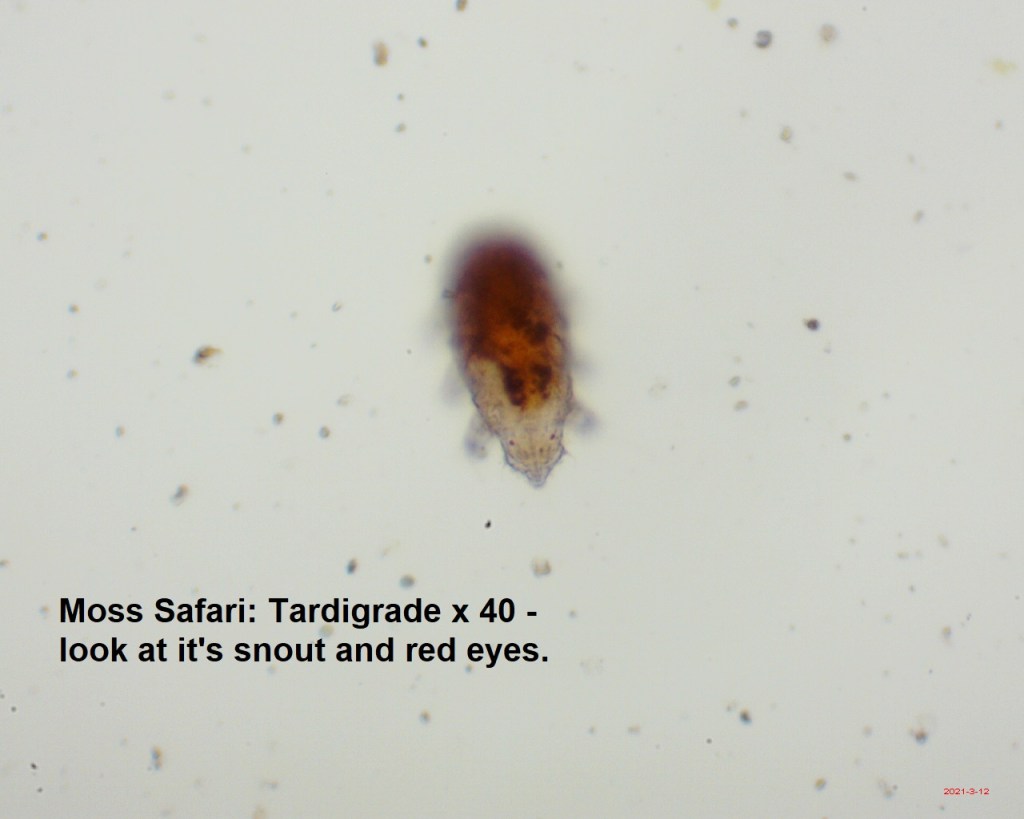
The first clue is movement within debris, tardigrades often cling to debris as they walk round. Frustratingly, if there is too much debris, a good view will be obscured. Also, be aware that the organism disturbing the debris could be a rotifer walking or even sometimes a large single celled protozoa. However, sometimes I am lucky enough to spot a tardigrade taking a stroll in the open across the slide. The have eight legs, often with large visible claws, a rounded head from which a pointed snout protrudes and you can often see their two red eyes (which are actually single cells). They have a distinctive walk: a slow, steady amble. They are at their most interesting when they are moving about. They are endearing, almost cuddly and fascinating to watch.
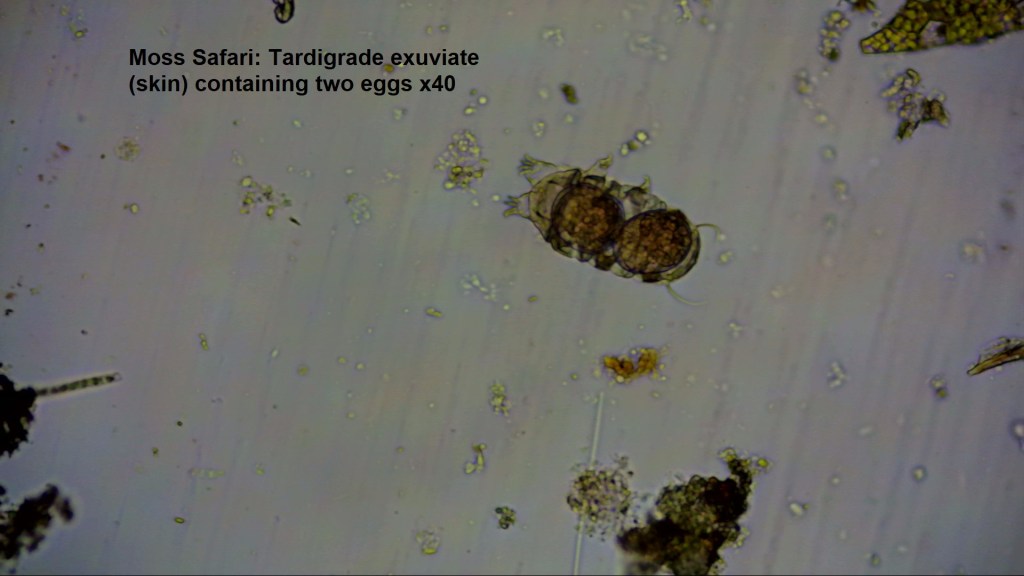
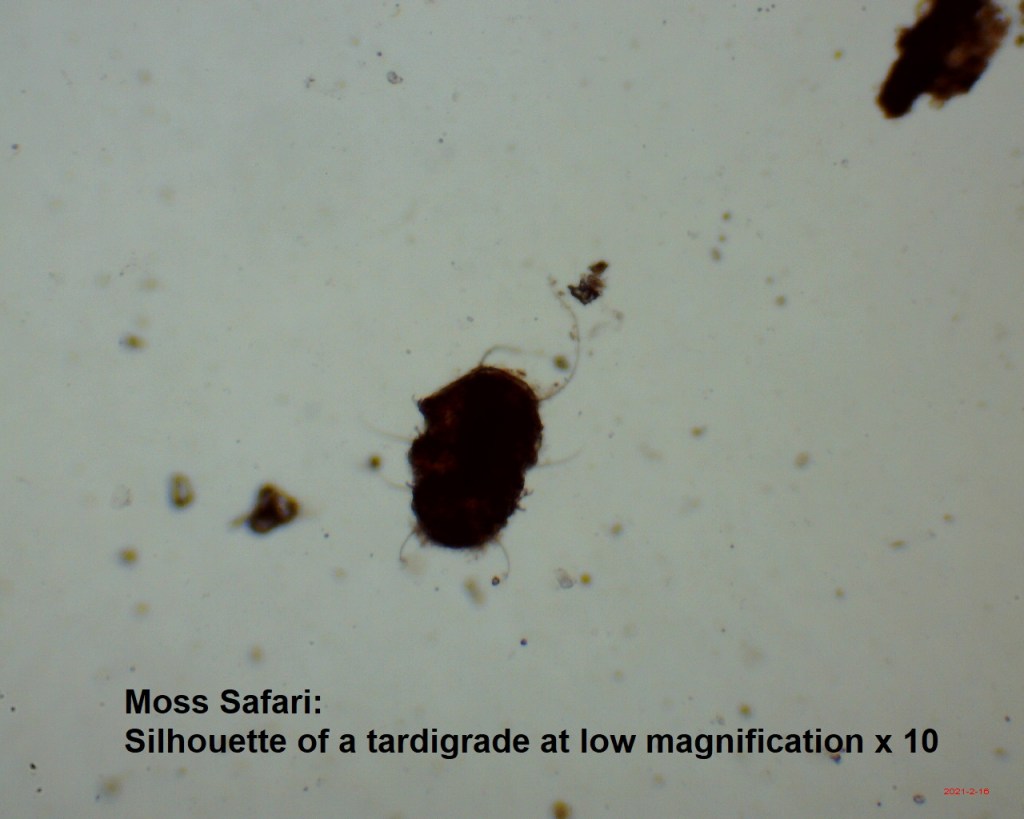
Tardigrades are not always moving. The outline of a tardigrade is quite unmistakable and you will often find them completely unmoving. They can go into a ‘suspended’ state, where they are either entering a ‘tun’ state or coming out of it. This is their adaptation to survive extreme conditions, particularly dehydration. You may also see a ‘ghost’ tardigrade, which is it’s shed skin (exuviate), and if you are lucky, it may contain some round objects, which are tardigrade eggs.
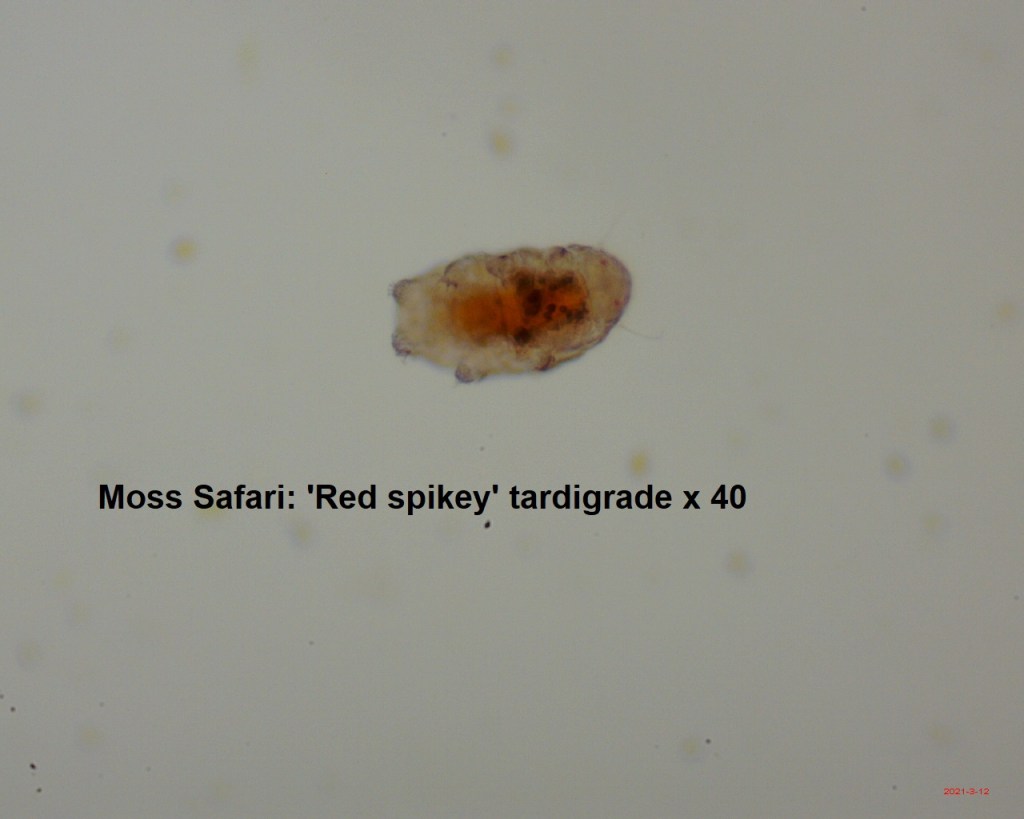
There are different species. I often see a ‘red spikey’ species and a ‘softer longer’ species.
Some Tardigrade facts
Tardigrades capture our imagination because they are cute and because they can survive extreme conditions. They are one of the most resilient organisms on Earth, when they are dehydrated, they can survive in a vacuum (space), exposure to high levels of UV radiation, and in extremely high or low temperatures.
Tardigrades can die. They can be eaten, squashed and get diseases like any other organism.
There are mostly female tardigrades that can reproduce asexually, however, males do exist and sexual reproduction can occur.
My learning
I am learning about the different species of tardigrade and how to identify them.


 Moss Safari